


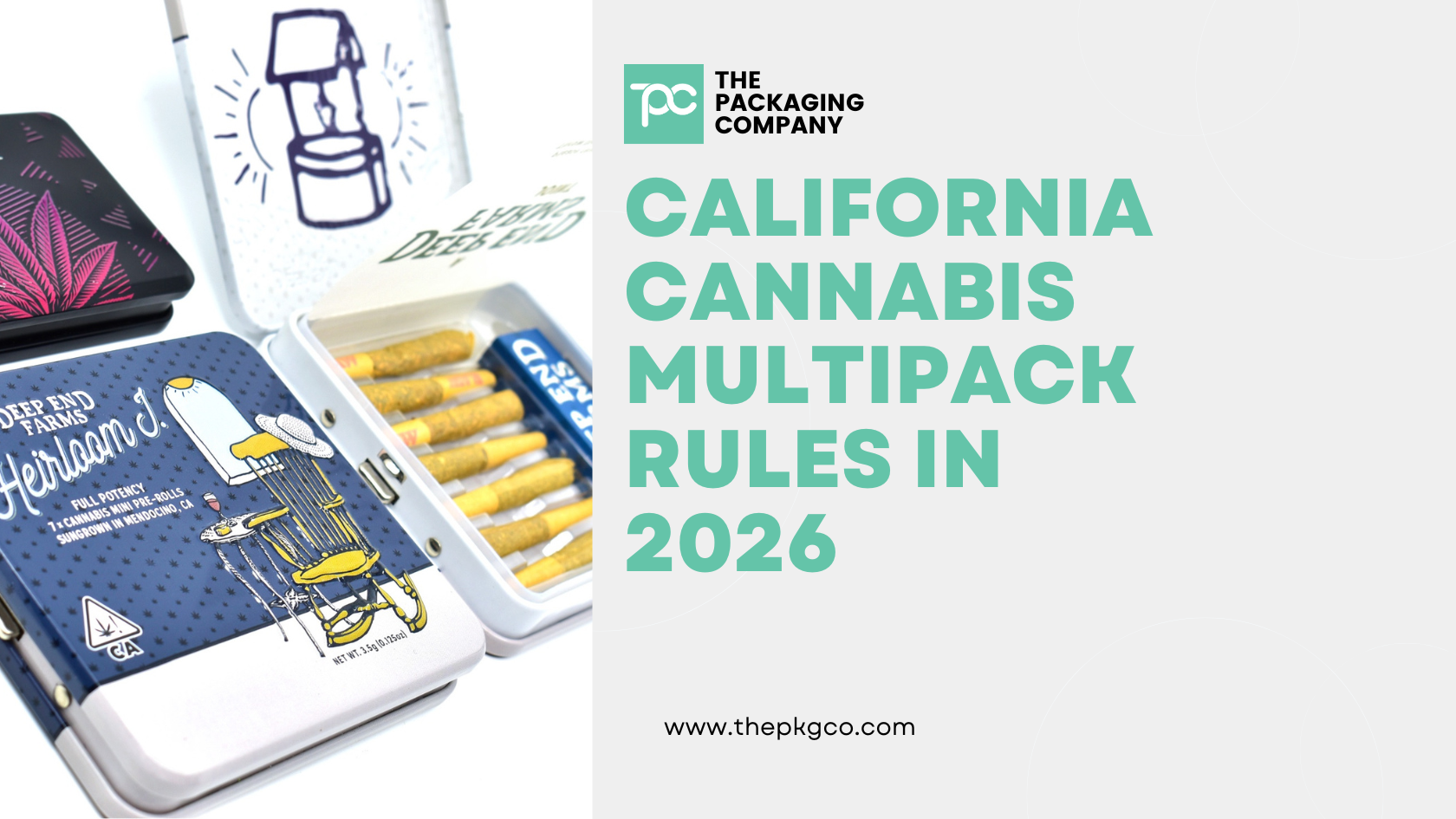
California pre-roll brands have a new regulatory concept to watch in 2026: the “multipack.”
The California Department of Cannabis Control has proposed regulations that would formally establish multipacks as a category of cannabis good and create specific testing, labeling, and track-and-trace requirements for them.
The important word is proposed.
As of August 2026, DCC-2026-01-R has not been listed by the Department as an approved regulatory action. The public comment period closed April 13, 2026, but brands should not treat the proposed text as current law until the rulemaking process is completed.
Still, pre-roll companies should pay attention now. If the proposal moves forward substantially as written, it could change how certain multipacks are assembled, tested, documented, labeled, and tracked.
First, California’s Proposed Definition of “Multipack” Is More Specific Than It Sounds
The proposed regulation defines a multipack as a final-form cannabis good that contains inputs from more than one batch.
That distinction matters.
In everyday cannabis language, a consumer might call any tin containing five pre-rolls a multipack. Under the proposed DCC definition, the regulatory category turns on whether the final package combines inputs from more than one batch.
A five-pack assembled entirely from one batch and a five-pack combining pre-rolls from three batches may therefore raise different questions under the proposed framework.
Brands should not assume the consumer-facing meaning of “multipack” and the proposed regulatory definition are identical.
DCC’s current rulemaking page and proposed text are available directly through the California Department of Cannabis Control.
The Proposal Would Allow Up to Three Batches in One Multipack
Under proposed section 17303.2, a multipack could not contain cannabis or cannabis goods from more than three batches in one final-form package.
The proposed rule would also require every batch inside the multipack to have the same product identity.
For a pre-roll company, that means the rule is not designed to create an unrestricted mixed assortment where unrelated products can simply be combined into one retail package.
If the final regulation follows this structure, production teams would need to know:
- How many batches are entering the finished multipack
- Whether each batch has the same product identity
- Which individual products came from which batch
- How those batches will remain identifiable during packaging and testing
That has implications well beyond artwork.
Products From Different Batches Would Need to Remain Physically Separate
One of the most packaging-specific provisions in the proposed text is the requirement that cannabis or cannabis products from each batch remain physically separate and distinct from products from the other batches in the multipack.
For pre-roll brands, this could make the internal packaging architecture important.
Imagine a five-pre-roll tin containing products from two or three batches.
If the proposed requirement applies to that finished configuration, simply placing all five pre-rolls loose inside one cavity may not provide the physical separation contemplated by the rule.
Possible packaging approaches could include:
- Individual cavities in a fitted tray
- Separated internal compartments
- Individual inner wraps where otherwise appropriate
- Another structure that keeps products from each batch physically distinct
The final compliance interpretation should come from the brand’s regulatory team or counsel.
But the packaging takeaway is already useful: if batch separation becomes a requirement, the insert may become a compliance component rather than simply a presentation component.
Each Batch Would Need Its Own Testing Trail
The proposed rule does not treat the finished multipack as one blended testing unit.
Under the proposed text, a laboratory sampler would collect a representative sample from each batch included in the multipack.
Each batch would be sampled separately, and each representative sample from each batch would receive a separate Certificate of Analysis.
The distributor’s quality-assurance review would also need to confirm that each batch within the multipack has a corresponding COA.
That creates a more complicated documentation chain than a single-batch package.
A brand planning multipacks would need a reliable relationship between:
- The finished retail SKU
- The batches inside it
- Each batch’s COA
- The package label
- The track-and-trace record
The more multipack SKUs an operator runs, the more important that data structure becomes.
Track and Trace Would Add a Multipack Category
DCC’s proposal would require a multipack cannabis good to be categorized as a multipack in the state track-and-trace system.
The licensee creating the multipack would also enter the number of batches included in the package.
This makes the production decision visible downstream.
The packaging floor, inventory system, compliance team, and track-and-trace process cannot operate as separate systems if the finished package contains multiple batches.
For an MSO or larger California operator, the operational question becomes:
Can we consistently connect the physical package being assembled to the correct batch data before it leaves production?
Labels Would Need Batch-Specific Information
The proposed regulations would also add multipack-specific labeling requirements.
The outer label would need specified information for each batch included in the multipack.
That creates a practical packaging-design problem.
More batch-specific information means more competition for label space.
For a small tube or compact tin, brands should think about:
- Usable print area
- Required regulatory information
- Variable data
- Batch identification
- Brand artwork
- Universal symbols
- Whether secondary packaging is useful
A package can have enough internal volume for five pre-rolls and still have too little exterior area for the intended labeling system.
That is why packaging dimensions should be evaluated alongside compliance copy before artwork is finalized.
Multipacks Would Still Have to Respect Package THC Limits
The proposal states that a multipack would remain subject to the applicable per-serving and per-package THC limits regardless of how many batches are included.
Combining multiple batches would not create a way around the limits applicable to the finished package.
For pre-roll brands, this reinforces an important planning principle:
Product count, potency, batch structure, and package design need to be considered together.
A packaging team should not develop a new 10-pack format in isolation and ask compliance to make it work afterward.
What the Proposal Does Not Mean
The proposed multipack regulation should not be interpreted as a new child-resistant certification standard.
California cannabis packaging already has packaging and child-resistance requirements that continue to apply to the finished product as applicable.
DCC-2026-01-R is focused on the regulatory treatment of multipacks, particularly products containing inputs from more than one batch.
So brands should separate two questions:
Is our retail package compliant with California’s applicable packaging requirements?
and
If this package qualifies as a multipack under the new proposal, what additional testing, labeling, tracking, and batch-separation requirements would apply?
They are related, but they are not the same question.
What Pre-Roll Brands Should Review Now
No brand needs to redesign every California multipack today based solely on a proposed rule.
But companies developing new product lines can avoid unnecessary future work by reviewing the proposal during packaging development.
Start with five questions:
1. Will this SKU ever combine pre-rolls from more than one batch?
If the answer is no, document that production approach instead of assuming the issue can never arise.
2. Can the internal package separate products by batch if needed?
For tins, this may influence the tray or insert design.
3. Is there enough exterior labeling space?
Evaluate variable and batch-specific information before approving decoration.
4. Can production connect every finished multipack to the correct batch records?
Packaging operations and track-and-trace procedures should match.
5. Can one physical package support both single-batch and multi-batch production?
A flexible packaging platform could reduce the need to retool if regulations or production methods change.
Why Pre-Roll Tins Are Worth Evaluating for Multipack Programs
Rigid tins give pre-roll brands room to organize several products inside one child-resistant outer package.
TPC’s child-resistant pre-roll packaging portfolio includes several tin and tube formats for singles and multipacks.
The Child-Resistant Snap Tin V5 measures 74 x 58 x 20 mm, uses a corner-press closure, is certified to 16 CFR §1700.20, and begins at a 5,000-unit MOQ.
TPC can also develop custom insert trays around the actual pre-roll dimensions and count.
For a California brand evaluating a multi-batch configuration, the tray discussion should happen after the regulatory team establishes what physical separation the final rule requires.
The important point is to involve packaging engineering early enough that the internal structure can respond to the compliance requirement.
Do Not Design to a Proposed Rule Without Watching What Happens Next
DCC’s proposal may change before it becomes effective.
As of August 2026, the Department continues to list DCC-2026-01-R as a proposed regular rulemaking action. The public comment period has closed, but the official rulemaking page does not currently list this action among recently approved regulations.
Brands should therefore monitor DCC for revised text, adoption documents, an effective date, or other changes before treating the February proposal as final.
For packaging teams, the right response is preparation rather than panic.
Understand how the proposed rule interacts with your products now so you know exactly what would need to change if it becomes effective.
Frequently Asked Questions
Are California’s new cannabis multipack rules in effect?
As of August 2026, DCC-2026-01-R is still listed by the California Department of Cannabis Control as a proposed regular rulemaking action. Public notice was issued February 27, 2026, and the comment period closed April 13, 2026. Brands should check DCC’s official rulemaking page for final adoption or an effective date before treating the proposed provisions as current requirements.
How does California’s proposed rule define a cannabis multipack?
The proposed text defines a multipack as a final-form cannabis good containing inputs from more than one batch. That is narrower than the everyday use of the word multipack, which may simply describe several units sold together. Brands should evaluate the batch structure of the finished SKU when determining whether the proposed category would apply.
How many batches could be included in a California cannabis multipack?
Under the February 2026 proposed text, one multipack could contain no more than three batches. All batches within the multipack would need to have the same product identity. This provision is proposed and should be rechecked against the final regulation if the rulemaking is adopted.
Would different batches inside a multipack need to be separated?
The proposed regulation says cannabis or cannabis products from each batch must remain physically separate and distinct from products from the other batches. For pre-roll packaging, that could influence internal tray, cavity, or compartment design. The final packaging approach should be reviewed against the adopted rule and the brand’s compliance interpretation.
Would every batch in a multipack need a separate COA?
Under the proposed framework, each batch within the multipack would be sampled separately and each representative sample would have a separate Certificate of Analysis. Distributor quality-assurance review would confirm a corresponding COA for every batch included in the multipack.
Does the proposed California multipack rule create a new CR packaging standard?
No. The proposal establishes additional treatment for qualifying multipacks around testing, labeling, tracking, and batch structure. Existing California packaging and child-resistant requirements continue to be separate considerations for the finished cannabis product.