



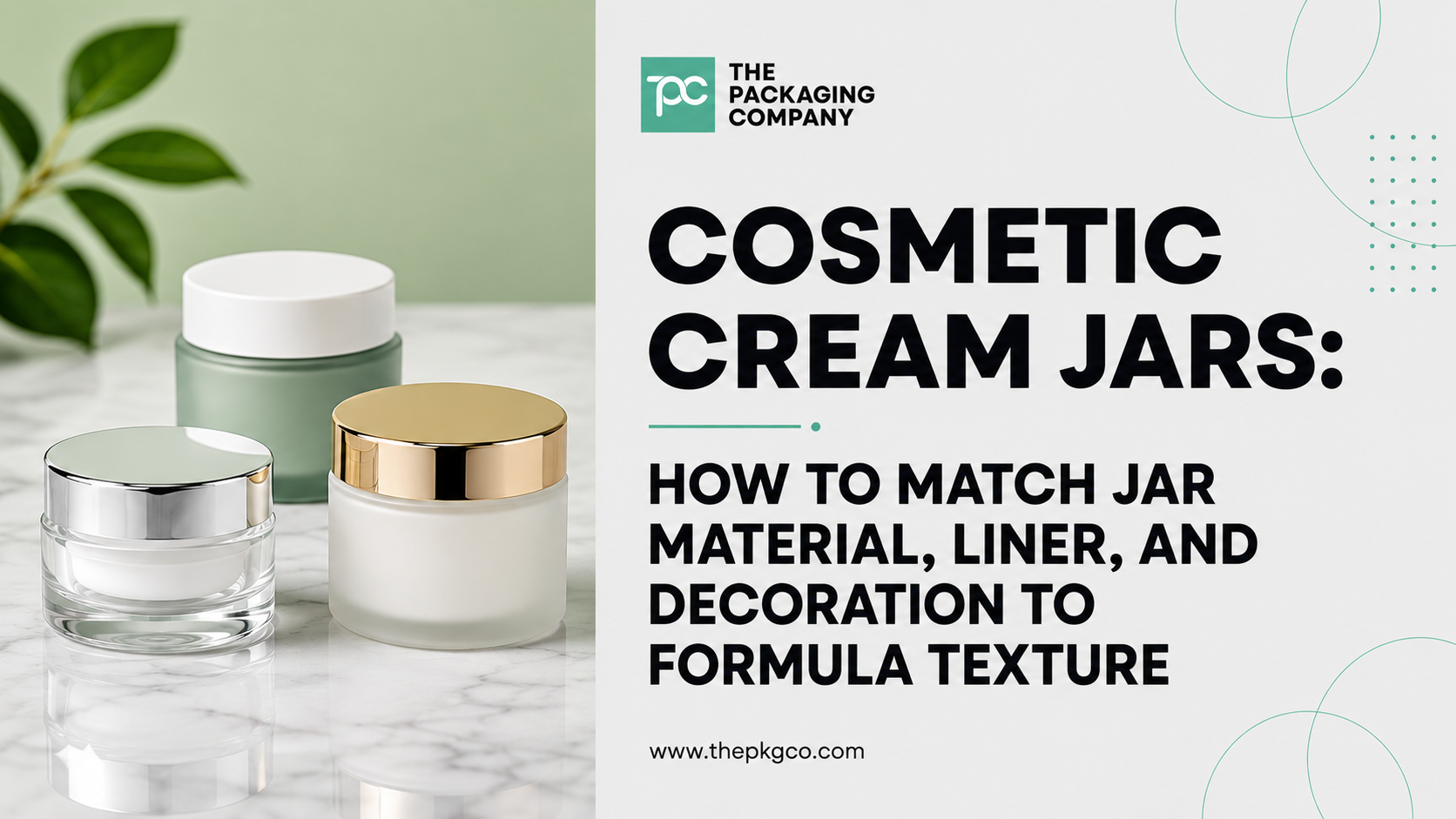
A cosmetic cream jar may look simple, but the wrong jar can make a strong formula feel messy, difficult to use, or poorly matched to the brand. A thick moisturizer, balm, mask, scrub, and gel cream do not all behave the same way inside packaging. Each texture places different demands on the jar material, opening size, liner, cap fit, seal, and decoration method.
For skincare and beauty brands, choosing cosmetic cream jars should start with the formula texture, not only the jar appearance. A jar that works well for a lightweight cream may not be the right fit for a dense balm or exfoliating scrub. A premium finish may look strong at launch, but if the product is oily or frequently handled with wet hands, decoration durability becomes just as important as shelf appeal.
This guide explains how cosmetic brands should match jar material, liner, closure, and decoration to the actual formula before placing a production order.
Why Formula Texture Should Guide Cream Jar Selection
Cosmetic jars are often used for products with thicker textures because they allow direct access to the formula. This includes creams, masks, balms, butters, scrubs, gels, and treatment products.
However, each formula type creates a different packaging requirement. A soft facial cream may need a smooth, premium jar with a clean inner liner. A balm may need a more secure closure and stronger material compatibility. A scrub may require a wider opening and a jar that can handle repeated wet-hand use.
Brands reviewing cosmetic jar packaging should compare the jar as a full component system: body, cap, liner, seal, opening, decoration, and material.
Match Jar Opening to How the Product Is Used
The opening size affects how customers access the product. A cream jar should make the formula easy to use without creating waste, mess, or frustration.
For thick creams and body butters, a wider opening helps customers scoop product more comfortably. For concentrated treatment balms or eye creams, a smaller jar may feel more controlled and appropriate. For masks and scrubs, the opening should allow enough access without making the jar feel bulky.
Brands should ask:
- Will customers use fingers, a spatula, or an applicator?
- Is the formula thick, soft, sticky, grainy, or oily?
- Does the opening allow clean access?
- Will product collect around the rim?
- Does the jar depth make it difficult to reach the formula?
A jar that looks premium in a product photo may still create a poor experience if the opening does not match the formula texture.
Choose Material Based on Formula and Brand Positioning
Material affects compatibility, weight, appearance, cost, shipping, and sustainability. Cosmetic cream jars are commonly available in glass, acrylic, PP, PET, and double-wall structures.
Glass cream jars
Glass jars can support premium skincare positioning because they feel heavier, stable, and refined. They may work well for luxury creams, masks, and balms. However, brands should consider breakage risk, shipping weight, and compatibility with the product’s use environment.
Acrylic cream jars
Acrylic jars can create a polished luxury appearance with thick walls and high clarity. They are often used when brands want a premium look with strong visual depth. For brands comparing acrylic cosmetic jars with glass options, the decision should include weight, cost, appearance, durability, and product positioning.
PP and PET cream jars
PP and PET jars are practical for lightweight, cost-efficient, or higher-volume skincare products. They can work well for daily moisturizers, body creams, masks, and personal care products. With the right finish and decoration, plastic jars can still look professional and brand-ready.
Review Formula Compatibility Before Production
Formula compatibility is one of the most important parts of cream jar selection. Certain ingredients can interact with jar materials, liners, coatings, or decoration.
Brands should pay special attention to formulas with:
- High oil content
- Fragrance
- Essential oils
- Acids or exfoliating ingredients
- Botanical extracts
- Strong pigments
- Sunscreen ingredients
- Active skincare ingredients
Compatibility testing can help identify swelling, discoloration, odor transfer, leakage, coating issues, or changes in product texture before the brand commits to a full order.
Do Not Ignore the Liner and Seal
The liner or seal can affect product protection, first-use experience, leakage resistance, and customer trust. For cosmetic cream jars, this detail should be reviewed early.
Common options may include inner liners, sealing discs, foam liners, induction seals, or pressure-sensitive seals depending on the jar and product requirement.
The right liner or seal depends on:
- Formula texture
- Oil content
- Leakage risk
- Shipping method
- Retail requirements
- Customer opening experience
- Whether tamper evidence is needed
A rich cream may need a different liner than a powdery scrub, oily balm, or lightweight gel mask. Brands should test the liner with the actual formula and shipping conditions.
Cap Fit Affects Daily Use
The cap is one of the most used parts of a cream jar. Customers open and close it repeatedly, sometimes with wet or product-covered hands. A cap that feels loose, rough, hard to align, or difficult to close can make the package feel lower quality.
Before approving a jar, brands should test:
- How smoothly the cap opens and closes
- Whether the cap threads align easily
- Whether the cap feels secure after repeated use
- Whether product residue affects closure performance
- Whether the cap finish matches the jar body
For premium skincare, cap feel can influence how customers judge product quality over time.
Match Decoration to Product Use Conditions
Decoration should be selected based on how the jar will be handled, stored, and used. Cream jars often sit in bathrooms, vanities, travel bags, spa rooms, or retail displays. They may come into contact with water, oils, creams, and repeated hand contact.
Common decoration options include:
- Silk screen printing
- Hot stamping
- Pressure-sensitive labels
- Matte coating
- Glossy coating
- Frosted finishes
- Custom color
- Metallic cap accents
Brands should test decoration durability on the actual jar material. A label that looks clean on day one may lift in humid conditions. A hot stamp may look premium but require careful testing for alignment and durability. A matte coating may feel elegant but show scratches more easily depending on handling.
Consider Formula Residue Around the Rim
Some cream formulas leave residue around the jar rim after repeated use. This can affect appearance, cap closure, and customer perception.
Thick creams, balms, scrubs, and masks are more likely to collect around the rim. Brands should test how the jar looks after multiple uses, not only when freshly filled.
During sampling, check:
- Whether product collects around the thread area
- Whether residue affects cap closure
- Whether the rim can be wiped clean easily
- Whether the jar still looks premium after repeated use
This is a small detail, but it can affect how customers feel about the product after purchase.
Choose Jar Size Based on Texture and Usage Rate
Jar size should match how the customer uses the product. A 50ml face cream, 100ml mask, 15ml eye balm, and 200ml body butter all have different needs.
Brands should consider:
- How much product customers use per application
- Whether the formula is used daily or occasionally
- Whether the product is for face, body, lips, or targeted areas
- Whether the jar needs to feel premium or practical
- Whether the product will be sold online, retail, spa, or professional channels
A larger jar may work for masks or body creams, while a smaller jar may better support concentrated treatments or balms.
Test the Complete Jar System Before Ordering
A cosmetic cream jar should be tested as a full system before production. The jar body, cap, liner, seal, formula, decoration, and shipping conditions all matter.
Before approving the order, brands should review:
- Formula compatibility
- Material feel
- Opening size
- Cap fit
- Liner or seal performance
- Decoration durability
- Product residue after use
- Leakage resistance
- Shipping performance
- Customer usability
Testing with the actual formula is the best way to confirm whether the jar is production-ready.
Final Recommendation
Cosmetic cream jars should be selected by matching the package to the formula texture, not only by choosing a jar that looks attractive. Material, opening size, liner, cap fit, decoration, and compatibility all affect the final customer experience.
For skincare and cosmetic brands, the right cream jar should protect the formula, support daily use, look consistent with the brand, and work smoothly through production and shipping.
The Packaging Company works with beauty and skincare brands to review cosmetic jars, material options, liners, decoration methods, sampling, MOQ, and wholesale packaging requirements for upcoming product launches and line expansions.
FAQ: Cosmetic Cream Jars
What products are best for cosmetic cream jars?
Cosmetic cream jars are commonly used for moisturizers, face creams, masks, balms, body butters, scrubs, gel creams, and thicker skincare formulas that benefit from a wide-mouth container.
What material is best for cosmetic cream jars?
The best material depends on the formula, brand positioning, budget, and shipping needs. Glass and acrylic can support premium positioning, while PP and PET may be more practical for lightweight or higher-volume products.
Why does the liner matter in a cream jar?
The liner or seal can affect leakage resistance, product protection, tamper evidence, and first-use experience. It should be tested with the actual formula before production.
Can oily creams affect jar decoration?
Yes. Oily or rich formulas can affect labels, coatings, hot stamping, or printed decoration if the packaging is not tested properly. Brands should test decoration durability with real handling conditions.
How should brands test cream jars before ordering?
Brands should test formula compatibility, opening size, cap fit, liner performance, decoration durability, leakage resistance, shipping performance, and customer usability before placing a production order.