



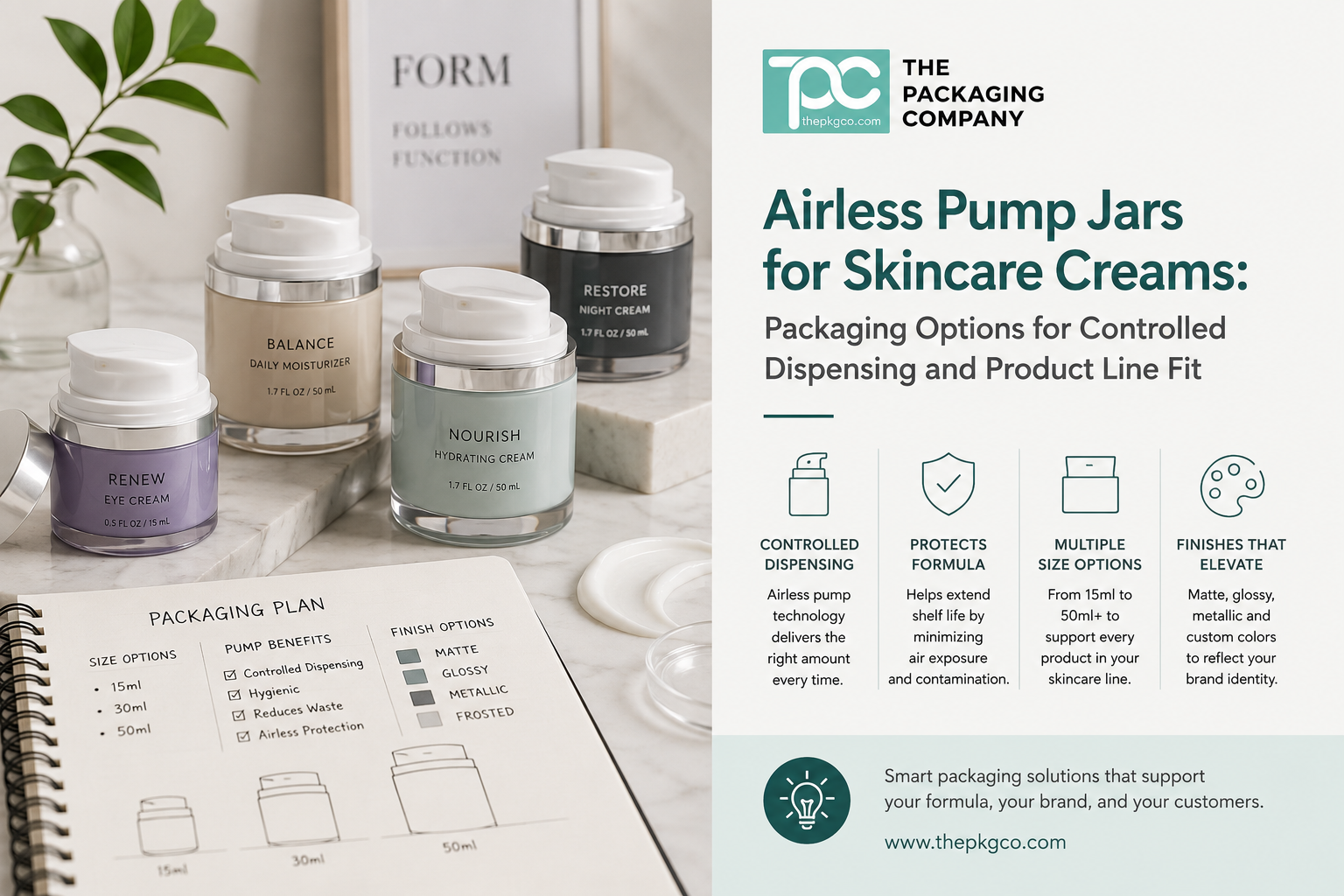
Airless pump jars offer skincare brands a practical alternative to traditional open jars and standard airless pump bottles. They are well suited for creams, moisturizers, masks, balms, and treatment products, combining the familiar look of a jar with cleaner, more controlled dispensing.
Airless pump jars are often used when a brand wants the visual weight of a jar, but also wants the customer to dispense product through a pump-style mechanism instead of opening the jar and accessing the formula directly. For skincare lines, this can create a cleaner and more modern packaging experience.
For brands comparing airless jars, the right packaging choice depends on product type, jar structure, pump style, decoration space, MOQ, empty component packing, and future reorder consistency.
What Is Airless Pump Jars?
An airless pump jar is a jar-shaped container with a built-in dispensing system. Instead of opening the jar and removing the product by hand, the customer presses the top surface or dispensing area to release a controlled amount.
This packaging differs from a traditional cosmetic jar because the product is not directly exposed or accessed through an open container. It also differs from an airless pump bottle because it retains the wide shape and premium presentation commonly associated with skincare jars.
For skincare brands, airless pump jars can be used as part of a broader airless packaging line that may also include pump bottles, refillable airless bottles, airless jars, and other airless cosmetic containers.
When Skincare Brands Use Airless Pump Jars
Airless pump jars are often considered for skincare products that need a jar-style appearance but a more controlled dispensing format. They can be a good direction for brands that want to elevate product presentation while keeping the packaging practical for daily use.
Common product types may include:
- Face creams
- Moisturizers
- Night creams
- Treatment creams
- Eye care products
- Masks and specialty skincare products
- Premium cream-based product lines
The final choice depends on product positioning, fill size, texture, brand presentation, and how the brand wants the customer to interact with the packaging.
Why Brands Choose Airless Pump Jars Instead of Traditional Jars
Traditional cosmetic jars are common for creams, masks, and moisturizers. However, some brands want packaging that feels more modern and controlled than an open jar format.
An airless pump jar can help brands create:
- A more controlled dispensing experience
- A cleaner-looking skincare packaging format
- A premium jar-style appearance
- Better product-line differentiation from standard cream jars
- A packaging option that coordinates with other airless products
This does not mean every skincare cream needs an airless pump jar. The packaging should still match the product, brand positioning, MOQ plan, and decoration needs.
Compare Airless Pump Jars With Airless Pump Bottles
Airless pump jars and airless pump bottles can both support skincare packaging, but they create different product experiences.
Airless pump bottles are often used for serums, lotions, primers, sunscreens, and lightweight skincare products. Airless pump jars are more commonly considered when the brand wants a wider cream jar presentation with pump-style dispensing.
Brands may compare both formats when building a skincare line. For example, a serum may use an airless pump bottle, while a moisturizer or night cream may use an airless pump jar. This helps the full product line stay within the same airless packaging family while giving each product the right structure.
Brands can also review airless pump bottles when comparing bottle-style and jar-style airless options.
Plan Jar Size and Product Line Fit
Before choosing an airless pump jar, brands should review how the jar fits into the full skincare line. A single hero cream may only need one jar size, but a larger skincare collection may require multiple packaging formats.
Brands should ask:
- Is this jar for one product or several cream-based products?
- Will the brand need different fill sizes?
- Should the jar coordinate with airless pump bottles or other packaging formats?
- Will future products use the same jar family?
- Does the jar size leave enough space for branding and required label information?
Planning the product line early helps brands avoid choosing one jar that looks good alone but does not fit future packaging needs.
Review Pump Style and Dispensing Direction
The pump or dispensing structure is one of the most important parts of an airless pump jar. It affects how the customer uses the product and how the jar feels during daily application.
Brands should review:
- Top surface design
- Dispensing area
- Pressing experience
- Cap or cover direction
- How the dispensing style fits the product type
- How the pump jar looks next to other packaging in the line
The selected pump jar should support the product experience and match the brand’s overall packaging direction.
Decoration and Label Space Matter
Decoration is a major part of airless pump jar planning. A pump jar may have different decoration surfaces than a standard jar or bottle, so brands should review artwork fit before production.
Important decoration details include:
- Logo placement
- Jar body decoration
- Top surface branding
- Label space
- Color matching
- Matte, glossy, frosted, or metallic finishes
- How decoration will repeat across future SKUs
For skincare brands with multiple products, the decoration should feel consistent across jars, bottles, tubes, and other packaging formats. A clear decoration system can help the full product line look more professional.
Match Airless Pump Jars With Brand Positioning
Airless pump jars can support different brand styles depending on shape, color, finish, and decoration. A premium skincare brand may choose a heavier-looking jar with a refined finish. A clinical skincare brand may prefer a clean white or neutral appearance. A minimalist brand may use simple decoration with limited color.
Brands should consider how the airless pump jar will appear:
- On the product page
- In product photography
- In retail displays
- As part of a skincare set
- Next to airless bottles, cosmetic jars, or squeeze tubes
The goal is to choose a packaging format that supports both the product and the brand’s visual identity.
Review MOQ Before Creating Too Many Variations
MOQ is an important part of airless pump jar planning. If a brand wants multiple jar sizes, colors, finishes, cap directions, or decoration versions, each variation may affect production planning.
Before confirming the packaging direction, brands should ask:
- Can multiple products use the same airless pump jar family?
- Can the same color or finish be used across several SKUs?
- Can product differences be handled through artwork or labels?
- Which products need unique packaging?
- Which products can share the same approved packaging structure?
This helps brands manage MOQ more clearly and keep the packaging line easier to reorder later.
Think About Empty Component Packing and Reorders
Airless pump jar planning should include future reorders from the beginning. Once the jar structure, dispensing system, decoration, color, and packing details are approved, those details should be recorded clearly.
A useful reorder file may include:
- Approved jar size and structure
- Pump or dispensing system details
- Cap or cover direction
- Decoration method
- Artwork version
- Color standard
- Carton packing details for empty components
- Production notes for future orders
Keeping these details organized helps skincare brands maintain packaging consistency when reordering the same airless pump jars later.
Related Airless Packaging Guides
Brands comparing airless packaging options can also review TPC’s related guides on airless containers for skincare packaging lines, glass airless pump bottles, refillable airless bottles, and troubleshooting airless pump bottles.
How The Packaging Company Supports Airless Pump Jar Projects
The Packaging Company works with skincare, beauty, and personal care brands that need airless jars, airless pump jars, airless pump bottles, and other airless cosmetic containers. TPC can help brands review jar style, dispensing direction, decoration fit, MOQ, empty component packing, and reorder consistency.
For brands building skincare lines across creams, serums, moisturizers, and treatment products, TPC can help organize airless packaging options so the final packaging system feels consistent across multiple SKUs.
Brands can explore airless jars, review broader airless packaging options, or contact The Packaging Company to discuss an airless pump jar project.
Airless Pump Jar Planning Checklist
- Confirm whether the product is a good fit for jar-style airless packaging
- Review jar size and product line fit
- Compare pump or dispensing style options
- Check decoration and label space
- Match the jar style with the brand position
- Review MOQ before creating too many variations
- Record approved specs for future reorders
FAQ
What is an airless pump jar?
An airless pump jar is a jar-style container designed with a dispensing system instead of a fully open jar opening. It allows skincare brands to keep a jar-style presentation while offering a more controlled dispensing experience.
What products use airless pump jars?
Airless pump jars are often considered for skincare creams, moisturizers, treatment creams, night creams, eye care products, masks, and other cream-based skincare products that need a premium jar-style presentation.
How is an airless pump jar different from an airless pump bottle?
An airless pump bottle usually has a taller bottle-style structure and is often used for serums, lotions, and lightweight products. An airless pump jar keeps a wider jar-style format and is commonly considered for creams, moisturizers, and jar-based skincare products.
What should brands review before choosing airless pump jars?
Brands should review jar size, dispensing style, decoration space, cap or cover direction, MOQ, empty component packing, brand presentation, and reorder consistency before choosing airless pump jars.