



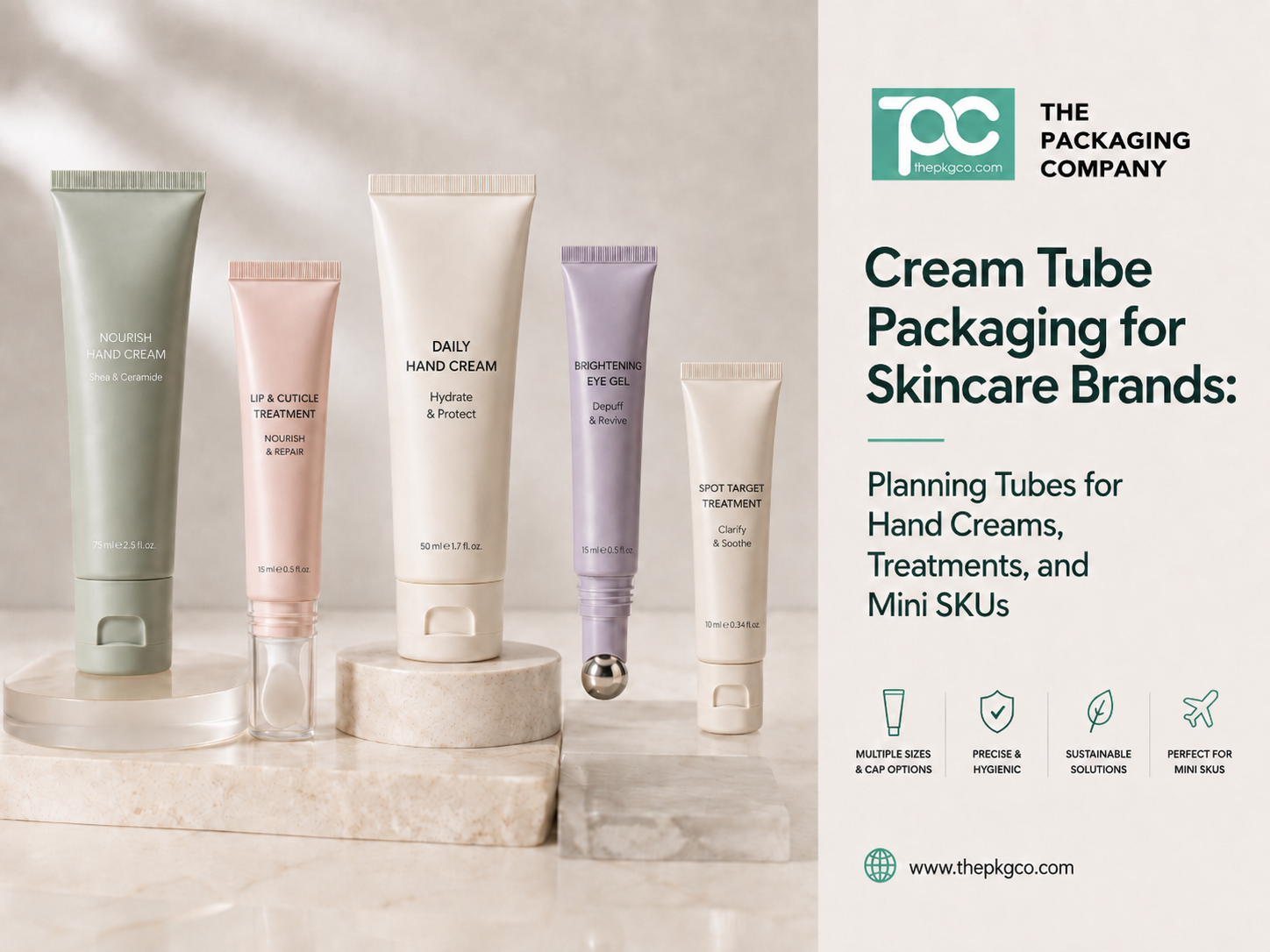
Cream tube packaging can be a practical option for skincare, hand care, body care, and personal care brands planning products that need flexible, easy-to-use packaging. Tubes are commonly used for hand creams, treatment creams, lotions, gels, masks, travel products, sample-size items, and mini SKUs.
For B2B buyers, choosing cream tube packaging is not only about selecting a tube shape. Brands also need to review product use, tube size, material direction, cap style, decoration space, MOQ, sample availability, packing details, and production timing before confirming a bulk order.
The Packaging Company helps beauty and skincare brands review squeeze tube packaging options for product launches, sample review, customization, and bulk production planning.
Why Skincare Brands Use Cream Tube Packaging
Cream tube packaging is useful when the product needs a format that is easy to hold, easy to dispense, and suitable for daily use. Many skincare and personal care products are used repeatedly, so the packaging needs to feel practical for the customer while still matching the brand’s product presentation.
Brands may use tubes for hand creams, body creams, facial creams, treatment products, lotions, gels, masks, foot creams, travel-size products, and sample kits. The exact tube direction depends on the product category, target capacity, cap style, decoration needs, and retail positioning.
For skincare brands, cream tubes can also support product-line planning. A brand may use tubes for creams and cleansers, jars for masks, airless bottles for serums, and droppers for specialty products. The packaging formats may be different, but they can still look connected through color, finish, logo placement, and decoration style.
Hand Cream Tube Packaging
Hand cream tube packaging is one of the clearest use cases for cream tubes. Hand creams often need packaging that is portable, easy to use, and suitable for frequent application. A tube format can work well for retail products, gift sets, travel products, and promotional items.
Brands planning hand cream tubes should review tube size, cap direction, label space, finish, color direction, and decoration method. A premium hand cream may need a softer finish or more refined decoration, while a daily-use personal care product may need a simpler and more practical tube direction.
When hand cream tubes are part of a larger product line, brands should also compare how the tube will look with jars, bottles, airless packaging, or other products in the same collection.
Treatment Creams and Targeted Products
Cream tube packaging can also support treatment-style skincare products. These may include targeted creams, gels, eye products, spot-care products, body treatments, or specialty skincare items that need a smaller or more controlled packaging format.
For targeted products, brands may need to compare standard tube openings with applicator-style tube options. A standard cap may work for general creams and lotions. A narrow tip, needle nose tube, or applicator tube may make more sense when the product requires more controlled placement.
Brands reviewing targeted tube formats can also compare related options such as needle nose tubes and other applicator squeeze tubes depending on the product concept and project requirements.
Mini SKUs, Travel Products, and Sample Sets
Cream tubes can be useful for mini SKUs, travel-size products, trial kits, and sample programs. Smaller tube formats allow brands to offer compact versions of creams, lotions, gels, masks, or treatment products.
A mini product should still feel like part of the brand. The tube size may be smaller, but the packaging should still support the product name, logo placement, color direction, and decoration style.
For sample sets or skincare kits, brands should review how the tube fits with other packaging formats. A kit may include a cream tube, airless bottle, jar, or dropper bottle. These components should work together visually and fit inside the planned carton, pouch, or kit structure.
Tube Size and Capacity Planning
Capacity is one of the first decisions in cream tube packaging. A hand cream may need a different size than a facial cream, treatment product, travel product, or sample-size SKU.
Brands should review the target capacity based on how the product will be sold, used, displayed, shipped, and reordered. A tube that is too small may not fit the retail strategy. A tube that is too large may not match the product use case or application amount.
For multi-SKU projects, brands should also compare how different tube sizes will look together. A consistent packaging system can help the product line look more organized, even when each SKU uses a different capacity.
Cap Direction and Tube Format
The cap or closure affects both function and presentation. Common tube directions may include flip-top caps, screw caps, specialty caps, applicator tips, or other closure options depending on the tube format and project requirements.
A flip-top cap may work well for daily-use creams, lotions, and personal care products. A screw cap may fit a more premium or controlled presentation. An applicator tip may support targeted skincare products or treatment-style formulas.
Brands should review how the cap looks with the full tube, how it supports the product category, and how it affects the available decoration area.
Material Direction for Cream Tubes
Cream tube packaging may use different material directions depending on the project. Brands may compare plastic cosmetic tubes, laminated tubes, aluminum tubes, eco-friendly tube directions, or other options based on the product line and production needs.
Material choice can affect the look, feel, flexibility, decoration method, and positioning of the package. For example, a clean skincare product may need a simple plastic tube with minimal decoration. A premium hand cream may use a more refined finish. A brand with sustainability goals may ask about recyclable or eco-friendly tube directions.
The right material should match the product category, brand presentation, MOQ plan, and production requirements.
Decoration Space and Artwork Planning
Cream tubes usually provide more front-facing decoration space than very small applicator tubes, but artwork still needs to be planned carefully. Brands should review the tube size, print area, label area, cap placement, and how the artwork wraps around the tube.
Decoration options may include labeling, direct printing, screen printing, hot stamping, matte or glossy finishes, metallic effects, color matching, and other options depending on the tube format and project requirements.
For mini tubes or sample-size tubes, space may be more limited. Brands may need to simplify the front design and move additional product information to secondary packaging, an insert, carton, or back label.
What Brands Should Prepare Before Requesting Samples
Before requesting cream tube packaging samples, brands should prepare basic project details. This helps the packaging supplier recommend options that match the product, launch plan, and order requirements.
- Product category, such as hand cream, facial cream, lotion, gel, mask, or treatment product
- Target tube capacity
- Preferred tube material direction
- Cap or applicator direction
- Color and finish direction
- Labeling, printing, or decoration requirements
- Estimated order quantity
- Number of SKUs
- Launch timeline
- Whether the tube needs to match jars, bottles, airless packaging, or other components in the product line
Sample Review and Production Planning
Brands should review physical samples before approving cream tube packaging for production. Sample review helps confirm tube size, cap style, tube feel, label space, decoration appearance, and how the tube fits with the rest of the product line.
MOQ and production timing should also be reviewed early, especially when a brand is planning multiple SKUs, mini products, travel sets, or seasonal launches.
TPC supplies empty packaging components. Brands, formulators, and filling partners are responsible for confirming formula compatibility, filling process, dispensing behavior, and finished-product performance with the actual product.
How TPC Supports Cream Tube Packaging Projects
The Packaging Company helps skincare, cosmetic, and personal care brands review cream tube packaging options for sample review, customization, MOQ planning, and bulk production.
Brands can compare tube style, capacity, material direction, cap options, decoration method, color direction, sample availability, empty component packing, and production details before moving forward.
For brands building a larger packaging line, TPC can also help compare related packaging formats such as airless packaging, cosmetic jars, bottles, droppers, and other custom cosmetic packaging options.
Beauty and skincare brands can contact The Packaging Company to discuss cream tube packaging, sample review, customization, MOQ, and production planning.
FAQ: Cream Tube Packaging
What is cream tube packaging used for?
Cream tube packaging is commonly used for hand creams, facial creams, body creams, lotions, gels, masks, treatment products, travel-size products, sample sets, and mini skincare SKUs.
What should skincare brands review before choosing cream tubes?
Brands should review product category, target capacity, tube material, cap direction, decoration space, estimated order quantity, number of SKUs, sample availability, and production timing before choosing cream tubes.
Can cream tubes be customized?
Yes. Cream tubes can be customized through tube color, cap color, labeling, printing, finishes, metallic effects, hot stamping, and other decoration options depending on the tube format and project requirements.
Are cream tubes good for hand creams and mini SKUs?
Yes. Cream tubes can work well for hand creams, travel products, mini SKUs, trial kits, and sample sets because they are flexible, portable, and easy to adapt across different product sizes.
How are cream tubes different from applicator squeeze tubes?
Standard cream tubes usually use a regular tube opening or cap for broader application. Applicator squeeze tubes use a more specific tip or applicator feature for targeted or controlled application.
Does TPC fill cream tubes?
TPC supplies empty packaging components. Brands, formulators, and filling partners are responsible for confirming formula compatibility, filling process, dispensing behavior, and finished-product performance with the actual product.