


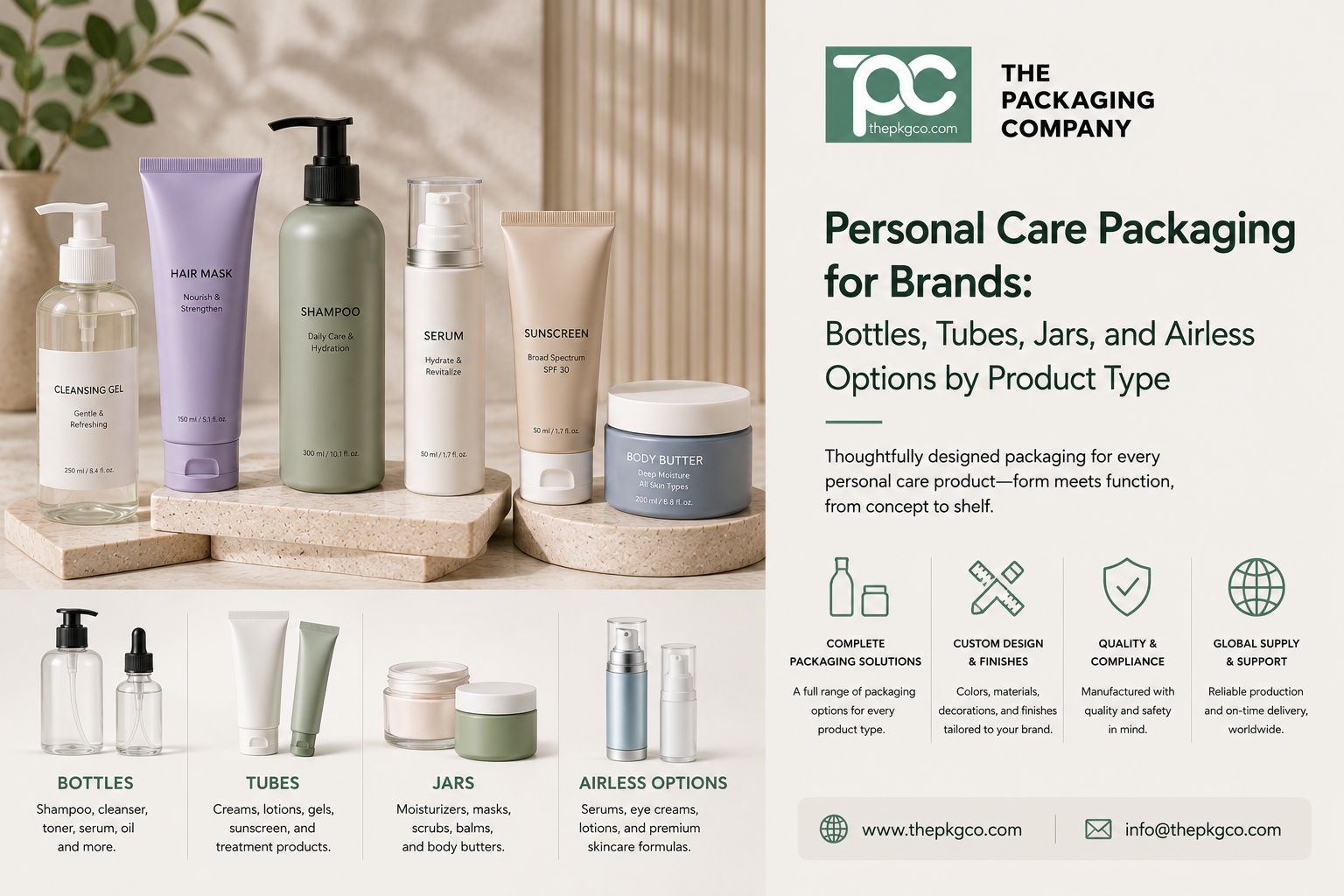
Personal care packaging is not one single packaging format. A brand may need bottles for lotions, tubes for creams, jars for masks, airless packaging for treatment products, and smaller formats for samples or travel sizes.
For beauty, skincare, hair care, wellness, and personal care brands, the right packaging choice depends on the product type, texture, application method, decoration direction, sample review process, MOQ, and bulk production requirements.
This guide explains how brands can review personal care packaging by product type and how different packaging formats support different product lines.
Why Personal Care Packaging Depends on Product Type
Personal care products can include lotions, creams, gels, serums, oils, balms, cleansers, masks, treatments, and hair care products. Because each formula is used differently, packaging should be reviewed based on the way customers open, dispense, apply, store, and carry the product.
A product that needs controlled dispensing may work better in a pump bottle or airless pump bottle. A thick cream may work better in a squeeze tube or jar. A facial oil or serum may need a dropper bottle. A mask, balm, or body care product may need a jar with enough opening space for use.
That is why personal care packaging should not be selected only by appearance. Brands should review function, product use, decoration, production requirements, and product-line consistency before moving into samples or bulk production.
Bottles for Lotions, Cleansers, Sprays, and Liquid Products
Bottles are commonly used for personal care products such as lotions, cleansers, toners, sprays, body care products, hair care products, and liquid skincare formulas.
Brands reviewing cosmetic bottles should consider bottle shape, material, capacity, neck finish, closure direction, pump or sprayer compatibility, decoration area, and carton direction.
Bottle packaging may be a good fit for:
- Body lotions
- Facial cleansers
- Toners and mists
- Shampoos and conditioners
- Body wash products
- Liquid hand care products
- Spray or pump-dispensed personal care products
Before requesting samples, brands should prepare the product type, target capacity, closure direction, decoration requirements, estimated quantity, and number of SKUs.
Squeeze Tubes for Creams, Gels, Treatments, and Travel Sizes
Squeeze tubes are a strong option for personal care products that need controlled dispensing, easy handling, and flexible use across full-size products, mini SKUs, and samples.
Brands reviewing squeeze tube packaging may compare plastic tubes, applicator tubes, aluminum tubes, eco-friendly tube options, and small squeeze tubes depending on the product category.
Squeeze tubes may be used for:
- Hand creams
- Body creams
- Facial cleansers
- Gels and treatment products
- Sunscreen products
- Hair treatment products
- Travel-size personal care products
- Sample and trial-kit packaging
For tube projects, brands should review tube size, cap style, applicator direction, material direction, decoration placement, MOQ, sample approval, and whether the tube needs to match other packaging in the same product line.
Jars for Creams, Masks, Balms, and Body Care Products
Jars are often used when the product has a thicker texture or when the customer needs a wider opening for use. This can include creams, masks, balms, body butters, scrubs, and treatment-style products.
Brands reviewing cosmetic jars should consider jar material, capacity, lid direction, liner or seal direction, decoration area, carton packaging, and how the jar fits the product’s retail or e-commerce presentation.
Jars may be a good fit for:
- Face creams
- Body butters
- Hair masks
- Clay masks
- Balms
- Scrubs
- Thicker treatment products
For personal care brands, jars can also support premium product presentation when paired with the right lid, finish, color, and decoration direction.
Airless Packaging for Treatment Products and Controlled Dispensing
Airless packaging can be useful for personal care and skincare products where brands want controlled dispensing, a cleaner dispensing experience, and a more premium packaging presentation.
Brands reviewing airless packaging may compare airless pump bottles, airless jars, refillable airless options, mono-material airless bottles, and dual-chamber airless packaging depending on product needs.
Airless formats may be reviewed for:
- Facial serums
- Treatment lotions
- Eye care products
- Premium skincare products
- Lightweight creams
- Products that need controlled dispensing
Before approving airless samples, brands should review bottle capacity, pump output, actuator direction, decoration placement, packaging feel, carton direction, and finished-product requirements with their filling partner.
Dropper Bottles for Serums, Oils, and Liquid Skincare Products
Dropper bottles are commonly used for facial serums, facial oils, essential oils, tinctures, and lightweight liquid skincare products that need controlled dispensing.
For personal care brands, dropper bottle packaging may support premium presentation, smaller fill sizes, and product lines where dosage control and packaging appearance matter.
Brands should review glass color, pipette direction, cap style, bottle capacity, decoration area, sample requirements, MOQ, and compatibility with the actual product and filling process.
How Brands Should Choose Packaging Across a Product Line
Many personal care brands do not need only one packaging format. A complete product line may include several formats for different products.
For example:
- A lotion may use a pump bottle
- A cream may use a squeeze tube
- A mask may use a jar
- A serum may use a dropper bottle or airless pump bottle
- A travel-size product may use a small tube or mini bottle
The packaging does not need to be identical across every SKU, but it should feel consistent as a product line. Brands can create consistency through color, material direction, cap style, decoration, label design, carton design, and overall packaging presentation.
What Brands Should Prepare Before Requesting Samples
Before requesting samples for personal care packaging, brands should prepare project information that helps the supplier understand the product and production direction.
- Product type and formula category
- Target fill size or capacity
- Preferred packaging format
- Material direction
- Closure, pump, cap, applicator, or dispensing needs
- Decoration requirements
- Estimated order quantity
- Number of SKUs
- Launch timeline
- Whether the packaging should match other products in the line
This helps narrow the review from a general packaging search into a more useful sourcing conversation.
MOQ, Decoration, and Bulk Production Review
Personal care packaging projects often involve multiple decisions before bulk production. Brands should review MOQ, decoration method, material direction, sample needs, artwork requirements, carton direction, and production timeline early in the process.
Decoration may include printing, labeling, color matching, hot stamping, matte finishes, metallic finishes, frosted effects, or other brand-specific design directions depending on the packaging format.
For multi-SKU personal care lines, brands should also review whether the same decoration direction can be applied across bottles, tubes, jars, airless packaging, and other formats.
How TPC Supports Personal Care Packaging Projects
The Packaging Company supports brands reviewing personal care packaging for skincare, beauty, hair care, wellness, and cosmetic product lines. Packaging options may include bottles, squeeze tubes, jars, dropper bottles, airless packaging, and broader custom cosmetic packaging solutions.
TPC can help brands review packaging format, size, material direction, decoration options, samples, MOQ, and bulk production requirements before moving forward with a project.
TPC supplies empty packaging components. Brands, formulators, and filling partners are responsible for confirming formula compatibility, filling process, dispensing behavior, sealing or leakage performance, compliance requirements, and finished-product performance with the actual product.
Final Recommendation
Personal care packaging should be selected based on product type, use case, dispensing needs, decoration direction, MOQ, and production requirements. Bottles, tubes, jars, dropper bottles, and airless packaging each support different product categories.
For brands building a product line, the goal is not only to choose one package. The goal is to create packaging that works for the product, supports the brand presentation, and can move through sample review and bulk production clearly.
Brands can contact The Packaging Company to review personal care packaging options for bottles, tubes, jars, dropper bottles, airless packaging, samples, MOQ, decoration, and bulk production.
FAQ: Personal Care Packaging
What is personal care packaging?
Personal care packaging refers to packaging used for products such as lotions, creams, gels, cleansers, serums, oils, balms, masks, hair care products, and other beauty or wellness products.
What packaging formats are commonly used for personal care products?
Common personal care packaging formats include bottles, squeeze tubes, jars, dropper bottles, airless pump bottles, airless jars, applicator tubes, and sample-size packaging.
How should brands choose personal care packaging?
Brands should choose personal care packaging based on product texture, dispensing needs, customer use, decoration direction, MOQ, sample review, production timeline, and finished-product requirements.
Can personal care packaging be customized?
Yes. Personal care packaging can be customized with different materials, sizes, colors, finishes, caps, pumps, applicators, printing, labeling, and decoration options depending on the project requirements.
Does TPC fill personal care packaging?
TPC supplies empty packaging components. Brands, formulators, and filling partners are responsible for confirming formula compatibility, filling process, dispensing behavior, sealing or leakage performance, compliance requirements, and finished-product performance with the actual product.