



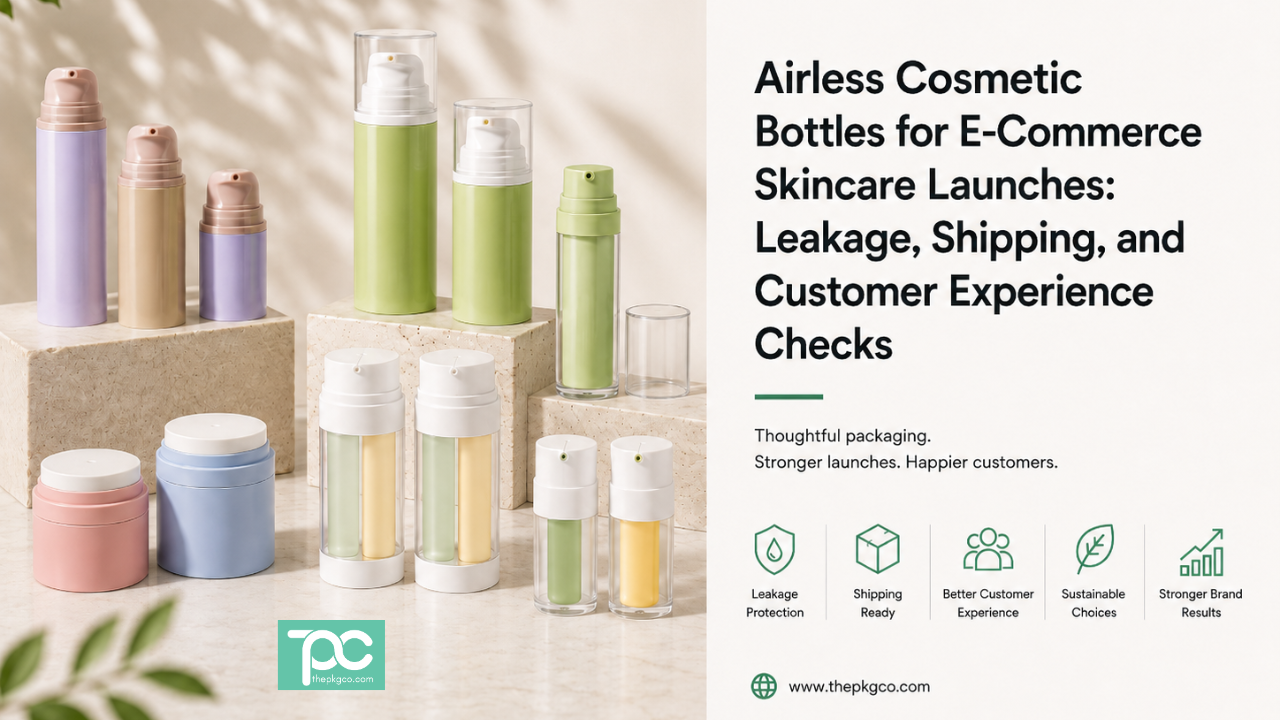
An airless cosmetic bottle may look ready for launch after sample approval, but e-commerce adds a different level of packaging risk. The product may be shipped individually, handled by multiple carriers, exposed to movement, stored at different angles, and opened by customers without retail staff nearby to explain anything.
For skincare brands selling online, packaging should be tested for more than appearance. Leakage, pump performance, shipping protection, priming, cap fit, and customer instructions all affect the final experience.
This guide focuses on e-commerce and shipping checks for airless cosmetic bottles, not a basic comparison between airless and standard pump bottles.
Why E-Commerce Changes Airless Packaging Requirements
Airless packaging is commonly used for serums, moisturizers, eye creams, sunscreens, and treatment products. Brands choose airless containers because they can support controlled dispensing and a cleaner product presentation.
But e-commerce creates additional packaging pressure. A bottle that works well in a controlled sample review may still need stronger testing before being shipped directly to customers.
Brands reviewing airless packaging solutions should confirm whether the selected bottle can survive shipping, arrive clean, and work properly on first use.
Check Leakage Before Shipping Products to Customers
Leakage is one of the most important risks for e-commerce skincare packaging. Even a small leak can damage cartons, labels, inserts, and customer trust.
Before launch, brands should test:
- Upright storage
- Side storage
- Upside-down storage
- Temperature exposure
- Vibration or movement
- Cap and actuator protection
- Filled sample shipping
Leakage can be caused by pump fit, cap design, fill level, formula viscosity, seal issues, or shipping movement. Testing should happen with filled samples, not only empty packaging.
Review Pump Performance After Transit
An airless pump should not only work before shipping. It should also work after the bottle has moved through fulfillment and delivery.
Brands should test whether the pump:
- Primes within a reasonable number of presses
- Dispenses the correct amount
- Does not clog after movement
- Does not leak around the actuator
- Still feels stable after shipping
- Works consistently across multiple samples
For online customers, first-use performance matters. If the customer receives a bottle and the pump does not dispense properly, they may assume the product is defective.
Use the Actual Formula During Testing
Airless cosmetic bottles should be tested with the real formula before e-commerce launch. A thick lotion, serum, sunscreen, primer, and gel cream can each move differently during shipping.
Testing with the actual formula helps confirm:
- Formula movement inside the bottle
- Dispensing consistency
- Leakage risk
- Residue around the pump
- Compatibility with the packaging material
- How the product appears after shipping
This is especially important when working with an airless bottle manufacturer or supplier on a new skincare formula.
Confirm Cap and Actuator Protection
The cap and actuator should be protected during shipping. If the actuator is pressed during transit, product can leak or the pump may arrive messy.
Brands should review:
- Cap fit
- Actuator movement
- Whether the cap stays secure
- Whether protective clips are needed
- Whether the outer carton prevents pressure on the pump
- Whether the product can be shipped without accidental dispensing
For e-commerce orders, the package may be handled in ways the brand cannot control, so actuator protection should be part of the approval process.
Plan the Outer Carton and Mailer Together
The primary bottle is only one part of the e-commerce packaging system. The outer carton, inserts, mailer, and protective materials also affect the customer experience.
Brands should ask:
- Does the bottle need an individual carton?
- Will the carton protect the pump?
- Will inserts hold the bottle in place?
- Will the product move inside the shipper?
- Does the final package feel premium when opened?
- Does the packaging protect decoration and labels?
A strong e-commerce launch needs both product protection and a clean unboxing experience.
Review Decoration After Shipping
Airless cosmetic bottles may use labels, direct printing, matte finishes, glossy finishes, metallic accents, or custom colors. These details should be checked after shipping simulation.
Inspect for:
- Scratches
- Label lifting
- Ink rubbing
- Cap scuffing
- Color inconsistency
- Product residue around decoration
- Damage from carton movement
The bottle should still look retail-ready when the customer opens the package.
Think About Customer Instructions
Some airless bottles require several pumps before the first dispense. This may be normal, but the customer may not know that.
Brands should consider adding simple instructions to the product page, carton, insert card, or FAQ section.
Helpful instructions may include:
- How many pumps may be needed for first use
- How to store the product
- How to keep the pump clean
- What to do if the pump needs priming
- How much product to use per application
Clear instructions can reduce customer confusion and unnecessary support requests.
Check Product Reviews for Packaging Complaints
For e-commerce brands, customer reviews often reveal packaging issues quickly. If customers mention leaking, broken caps, hard-to-prime pumps, messy dispensing, or scratched bottles, those comments can affect conversion.
Before launch, brands should try to prevent the most common packaging complaints through sample testing and shipping review.
Common complaints include:
- “The pump does not work.”
- “The bottle leaked in the box.”
- “The cap arrived cracked.”
- “The label was peeling.”
- “Too much product comes out.”
- “I had to pump too many times before it worked.”
These problems can often be reduced through better packaging approval before launch.
E-Commerce Airless Bottle Checklist
Before launching airless cosmetic bottles online, brands should confirm:
- Leakage testing with filled samples
- Pump performance after transit
- Formula compatibility
- Cap and actuator protection
- Outer carton fit
- Mailer or shipper protection
- Decoration durability
- Label condition after shipping
- First-use priming instructions
- Customer support readiness
Final Recommendation
Airless cosmetic bottles can be a strong packaging choice for e-commerce skincare launches, but brands should test the full customer journey before production. The bottle should dispense correctly, survive transit, arrive clean, and create a positive first-use experience.
The Packaging Company works with skincare and cosmetic brands to review airless containers, airless cosmetic bottles, MOQ, sampling, pump fit, decoration, and production requirements. Brands preparing an online skincare launch can speak with our packaging team before placing a bulk order.
FAQ: Airless Cosmetic Bottles for E-Commerce
Are airless cosmetic bottles good for e-commerce skincare launches?
Yes. Airless cosmetic bottles can work well for e-commerce skincare products, but brands should test leakage, pump performance, cap protection, shipping durability, and customer instructions before launch.
What causes airless bottles to leak during shipping?
Leakage may come from pump fit, cap design, fill level, formula viscosity, seal issues, actuator movement, or shipping pressure during transit.
Should brands test airless bottles with the real formula?
Yes. Real formula testing helps confirm dispensing performance, leakage risk, compatibility, residue, and customer experience before production.
Do airless cosmetic bottles need first-use instructions?
Some airless bottles may require several pumps to prime. Simple instructions on the product page, carton, or insert card can reduce customer confusion.
What should e-commerce skincare brands check before approving airless packaging?
Brands should check leakage, pump function, formula compatibility, cap protection, outer carton fit, decoration durability, shipping performance, and first-use customer experience.