


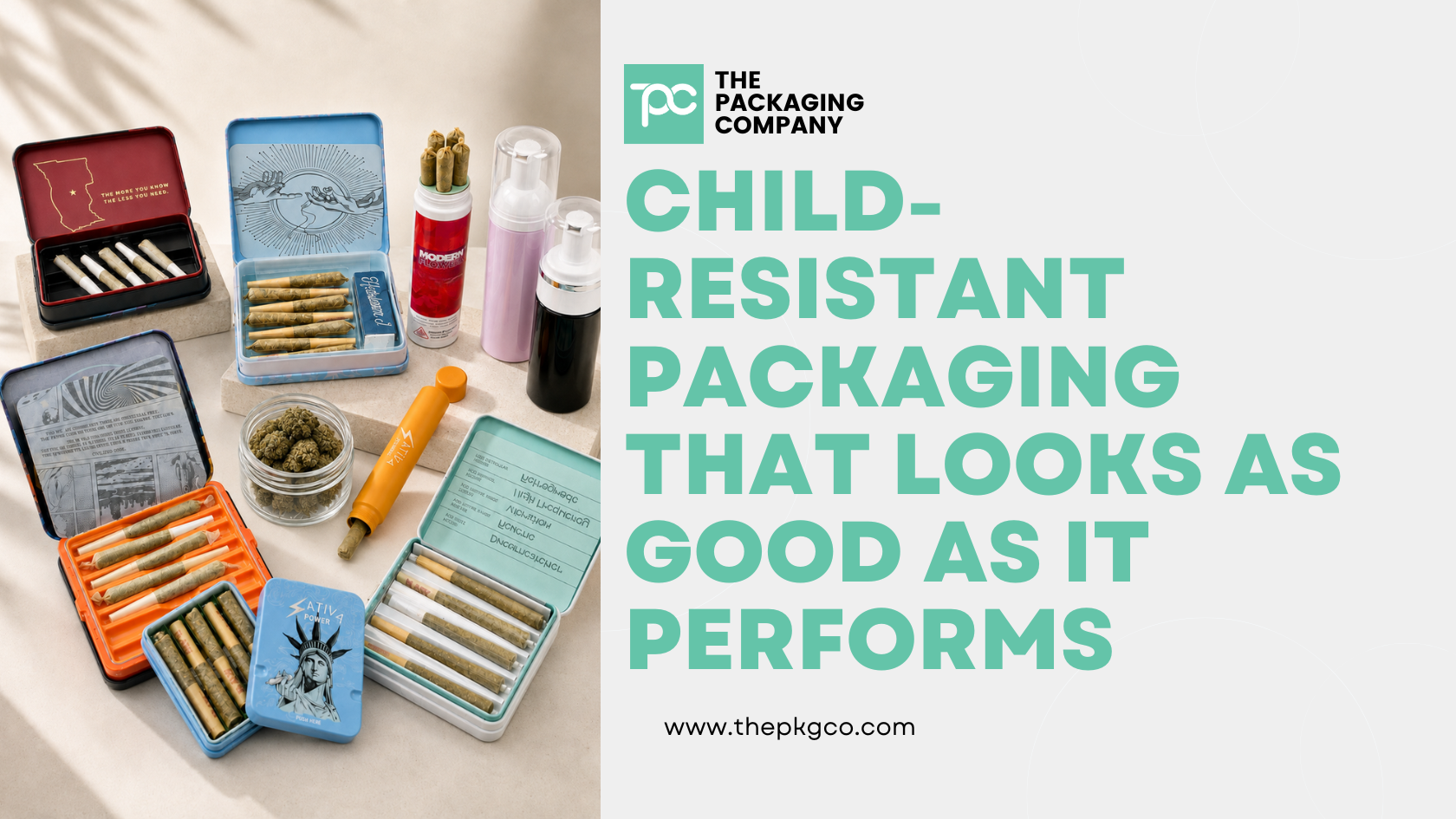
For the first several years of cannabis legalization, most brands treated CR packaging as a constraint to work around. The package had to be child-resistant, so it was. Everything else the packaging needed to do (communicate brand identity, create shelf presence, signal price tier) was layered on top of the compliance requirement as an afterthought.
That era is over. The cannabis brands building durable retail positions in 2026 are treating the primary CR container as the first brand touchpoint, not the last consideration. The format, the decoration, the finish, and the structure of the package are all active brand decisions, not just compliance outcomes.
This shift is visible on dispensary shelves. The brands that figured it out are recognizable from three feet away. The brands that haven’t are competing on price and hoping the budtender has a good day.
Here is what brand-forward CR packaging actually looks like, and what the technical options are for making it happen.
What Brand-Forward CR Packaging Gets Right
A few brands have built their retail presence substantially on packaging that does more than hold the product.
Houseplant, the cannabis brand co-founded by Seth Rogen, built a distinctive visual identity around bold colors and simple, striking typography across a range of stackable custom tins and boxes. What made it work was consistency and intentionality. The tins were designed to be retained after purchase and displayed. The packaging became a brand presence object in consumers’ homes, not just a container that got thrown away. That ongoing brand exposure comes at no additional marketing cost.
Dosist took the pharmaceutical-cosmetic route: clinical whites, precise typography, minimal graphic noise. The packaging communicates precision and wellness before the consumer has read a word. For an audience that came to cannabis through a wellness lens rather than a recreational one, the packaging speaks their language without trying to.
Kiva Confections built a premium edibles brand on packaging that functions as a gift object. Structured, decorative, and clearly positioned above mass-market edible options in both format and finish. The packaging communicates that someone thought carefully about it.
What these brands share is that the packaging decision was a brand decision, made deliberately and with a clear understanding of the consumer they were trying to reach. The CR requirement did not constrain the brand identity. It was incorporated into it.
Decoration Options by Container Type
The decoration method available to a brand depends entirely on the container format chosen. Different containers support different decoration techniques, and the quality ceiling of the decoration is a function of the container choice, not the design budget.
Tins: Lithographic Printing
Lithographic printing on tinplate is the highest-quality decoration method available in cannabis packaging. Offset printing is applied to the metal sheet before the tin is formed, producing saturated colors, sharp typography, and photographic reproduction that applied labels on plastic or glass cannot approach.
Because the printing is on the metal itself rather than on an applied label, there is no label edge to peel, no substrate to separate from, and no visual distinction between the printed surface and the container. The decoration is the container.
Decoration options on TPC’s tin line include:
Full-surface lithographic printing on both lid and body panels.
Embossing and debossing for three-dimensional logo or texture elements.
Matte, semi-gloss, and gloss finishes on the printed surface.
Spot UV treatment on specific design elements over a matte field.
Custom interior colorways (the inside of the tin can be a different color from the exterior).
Interior lid printing for secondary brand messaging or product information revealed at opening.
Wax paper or tissue liners printed with brand elements.
Custom foam or tray inserts in brand colors, with logo debossed into the foam if desired.
The large flat rectangular surface of a tin lid is one of the most design-friendly surfaces in cannabis packaging. For brands with strong graphic identities, investing in the tin format unlocks a decoration quality that bags and tubes simply cannot replicate.
Glass Jars and Tubes: Screen Printing and Applied Labels
Decoration on glass CR containers is accomplished through either direct silk-screen printing or applied pressure-sensitive labels.
Silk-screen printing applies ink directly to the glass surface without a label substrate. The result is a clean, premium presentation without label edges, more durable under handling than applied labels, and appropriate for brands positioning at the premium end of the jar or tube category. Setup costs are higher than for labels, and minimum quantities reflect the additional production step.
Applied labels are the standard decoration method for glass jars and tubes. High-quality label printing with premium laminations (soft-touch matte, gloss, spot UV) can produce strong brand presentation, and labels offer the most flexibility for SKU variation on a single container format. A single glass jar format can serve multiple SKUs by changing the label, which consolidates MOQ at the container level and allows label quantities to be adjusted per SKU.
For glass jars specifically, the label wraps around a cylindrical surface. The design must account for the seam line where the label meets itself, the shoulder taper where the jar body transitions to the neck, and the base area typically reserved for lot code and date information. These are different constraints from designing for flat packaging surfaces and require attention during the layout process.
Bags: Full-Surface Flexographic and Rotogravure Printing
CR mylar bags are printed across the full surface of both front and back panels using flexographic or rotogravure printing depending on run quantity and design complexity.
Rotogravure (rotogravure printing, often called roto) is the highest-quality print method for flexible packaging. It uses engraved cylinders to apply ink at very fine detail levels, producing photographic reproduction and consistent color across large production runs. The setup cost (cylinder engraving) is significant and amortizes best at higher volumes. For established brands running consistent designs at volume, roto produces the strongest print quality.
Flexographic printing uses flexible printing plates rather than engraved cylinders. Lower setup cost than roto, appropriate for shorter runs and designs where photographic detail is less critical. Most CR mylar bags in the cannabis market are flexographically printed.
Finish options on bags include standard matte, gloss, soft-touch matte lamination, metallic foil stamping, spot UV, and holographic treatments. The finish communicates as much as the design. A soft-touch matte bag at $30 retail positions differently from a standard gloss bag at $30 retail even with the same design.
Topical Tubes and Bottles: Silk-Screen Printing and Applied Labels
CR squeeze tubes are decorated using silk-screen printing directly on the tube surface. The cylindrical surface has specific layout constraints: the seam area, the shoulder, the cap overhang zone, and the crimp base all limit the usable print area. TPC’s CR Squeeze Tube supports custom color on the tube body, shoulder, and CR cap.
For CR pump bottles, roll-on bottles, and dropper bottles, applied labels are the standard. Label quality and finish options follow the same principles as for glass jars. Premium laminations (soft-touch, spot UV) are available and appropriate for brands positioning at higher price points.
Secondary Packaging: The Brand Moment Before the Product Is Revealed
For brands where the packaging experience is part of the product value (premium concentrates, luxury edibles, limited-edition vape kits), a secondary outer packaging element creates a brand moment before the primary container is even opened.
Secondary packaging options that work with CR primary containers include:
Outer sleeves that wrap around a tin or jar, extending the printable surface and creating a gift-ready presentation without changing the primary container format.
Rigid or semi-rigid outer boxes with the primary CR container nested inside. For concentrate SKUs where a 9ml glass jar is the primary container, an outer box communicates the brand story and positions the product at a level the jar alone cannot reach. The outer box does not need to be CR certified if the primary container already is.
Custom tissue and liner papers inside tins or boxes, printed with brand elements, that wrap the product and create a reveal moment at opening.
Important note: paper and cardboard are not appropriate as primary cannabis packaging. Paper absorbs moisture, which affects cannabis flower and concentrates. Primary packaging should always be glass, metal, or appropriate barrier plastic. Secondary packaging (outer sleeves, boxes, tissue liners) in paper or cardboard is appropriate because the primary container is doing the barrier and protection work.
TPC can discuss secondary packaging options for brands looking to elevate their primary CR container format. Contact our team to explore what is available for your specific product and format.
Building Brand Identity Into the Container Choice
The most powerful brand-packaging decisions are made at the container level, not at the design level. A brand that chooses a tin and then designs beautifully for that tin will outperform a brand that chooses a bag for cost reasons and tries to design its way to premium positioning.
The container communicates before the design does. Weight is perceived before color. Material is registered before typography. The sensory signals of the container (how it feels in the hand, how it sounds when it opens, how it presents when it is first opened) are the ones that form the first brand impression, and they are determined by the container choice.
For cannabis brands building or refreshing their packaging programs, the sequence that produces the strongest results is:
Confirm the product dimensions, fill weight, and barrier requirements.
Select the container format that matches both the functional requirements and the price point’s brand signal requirement.
Design the decoration system to work across all SKUs in the line (fixed brand elements, variable SKU elements, consistent finish language).
Evaluate secondary packaging options if the product and price point support them.
Sample the complete assembled package, with actual product, before approving production.
TPC works with brands through this entire sequence. Custom insert trays, foam configurations, interior decoration options, and secondary packaging are all available in conversation with our team.
Browse TPC’s full child-resistant packaging line or contact our team to start that conversation.
Frequently Asked Questions
What is the highest-quality decoration method available for CR cannabis packaging? Lithographic printing on tinplate is the highest quality decoration method in the category. Offset printing applied to the metal sheet before forming produces saturated color, sharp typography, and photographic reproduction that applied labels on plastic or glass cannot match. It also eliminates label edges and creates a decoration surface that is inseparable from the container. For brands where decoration quality is a brand priority, the tin format unlocks a level of decoration quality that other formats cannot reach.
Can I achieve premium-looking packaging on a mylar bag? Yes, with the right finish investment. Soft-touch matte lamination, spot UV on design elements, metallic foil stamping, and holographic treatments all elevate a bag format above the commodity baseline. However, at price points above $25 retail, the bag format itself creates a brand signal mismatch that finish quality cannot fully overcome. Premium finishes on bags are appropriate at mid-tier price points where the economics of rigid format alternatives do not work.
What decoration options are available on TPC’s CR tins? Full lithographic printing on lid and body, embossing and debossing, matte and gloss surface finishes, spot UV, custom interior colorways, interior lid printing, and custom foam or tray inserts in brand colors with logo debossing. The complete decoration capability of a tin format is significantly broader than what is available on other CR packaging types.
Does secondary packaging need to be CR certified? No, if the primary container already satisfies the CR requirement. An outer box, sleeve, or liner that wraps a CR-certified tin or glass jar does not independently need to meet the CR standard. The primary CR container is the compliant package. The secondary packaging is the brand layer on top of it.
What should I consider when designing for a cylindrical surface like a tube or jar? Account for the seam line where the label meets itself, the shoulder area where the body transitions to the neck, and the cap overhang zone where the cap covers part of the tube surface when closed. The usable print area is the circumference minus the seam width, running from below the cap overhang to above the crimp or base. Map required compliance content to the actual dimensions before briefing a designer.
Can TPC help with secondary outer packaging for a premium concentrate or edible SKU? Yes. TPC can discuss secondary packaging options including outer boxes, sleeves, and liner materials for brands looking to add a brand layer above the primary CR container. Contact our team to explore what is available for your specific product format and price point.