



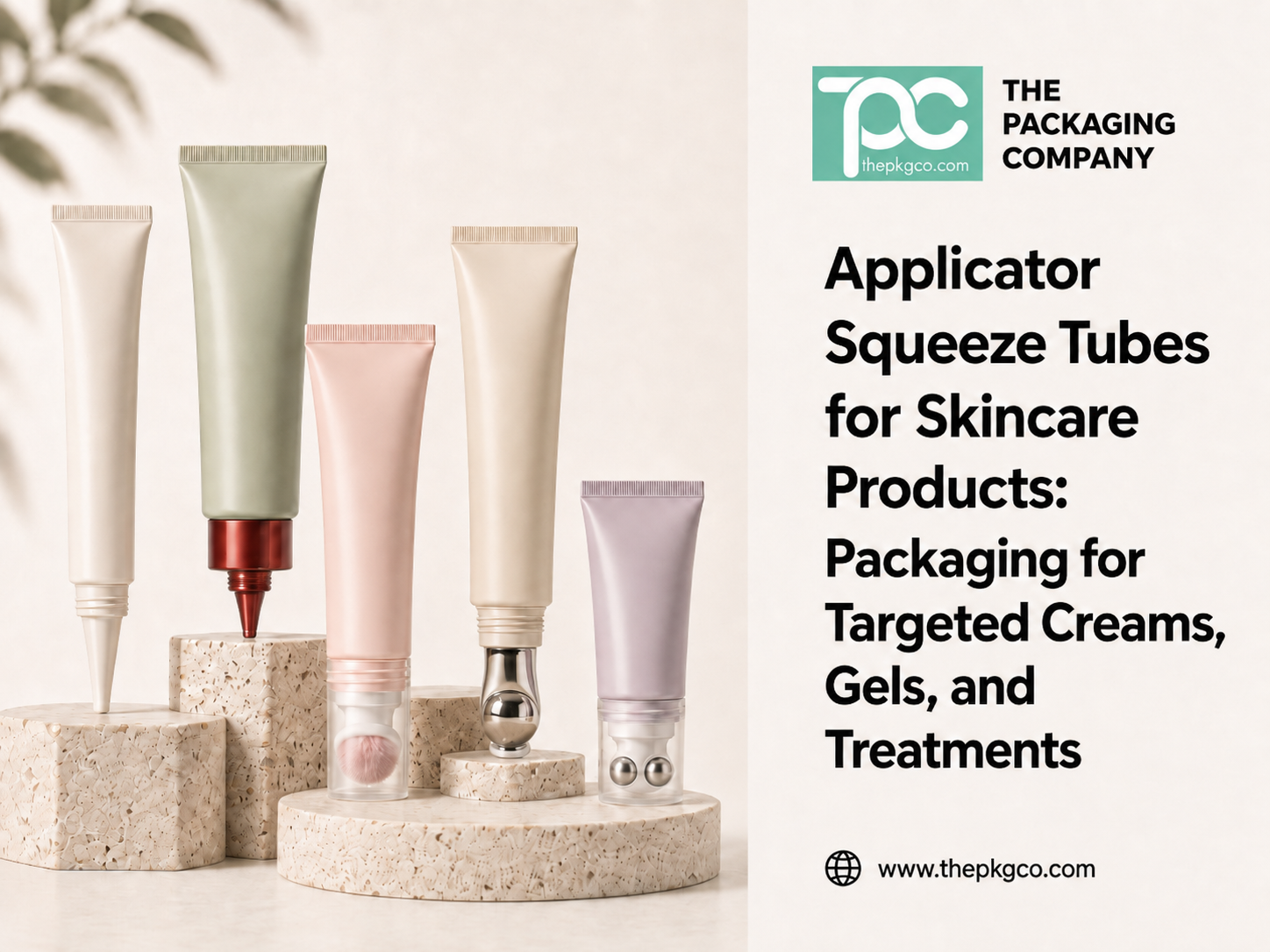
Applicator squeeze tubes can be a useful packaging option for skincare products that need more controlled or targeted application. Instead of using a standard tube opening, these tubes may include a needle nose tip, narrow nozzle, soft applicator, angled tip, brush, roller, or other applicator direction depending on the product and project requirements.
For skincare brands, the applicator is not only a small packaging detail. It affects how the product is presented, how customers understand the use case, how much label space is available, and how the tube fits into the rest of the packaging line.
Brands developing targeted creams, gels, eye products, lip products, spot-care products, masks, or treatment-style skincare products may consider applicator squeeze tubes when a standard tube does not fully support the product experience.
What Are Applicator Squeeze Tubes?
Applicator squeeze tubes are cosmetic or skincare tubes designed with an application feature at the dispensing end. The applicator helps direct the product to a more specific area instead of dispensing it through a regular tube opening.
This type of packaging can be useful when the product needs a more precise, controlled, or specialized presentation. The exact applicator style depends on the product category, brand direction, tube structure, cap direction, and production requirements.
Common applicator directions may include needle nose tips, narrow nozzle tips, angled applicators, brush applicators, roller applicators, massage-style tips, or other targeted tube formats. Brands should review physical samples before confirming the final packaging direction.
When Applicator Squeeze Tubes Make Sense
Applicator squeeze tubes make sense when the product use case requires more than a basic squeeze tube. A standard squeeze tube may work well for cleansers, lotions, creams, and body care products. However, some skincare products need a more focused dispensing or application experience.
For example, a targeted cream may need a narrow tip. An eye product may need a softer or more controlled applicator. A gel product may need a tube format that helps apply the product to a specific area. A lip or spot-care product may need packaging that communicates precision.
The strongest reason to use applicator squeeze tubes is when the packaging supports the product story. If the product is positioned as targeted, precise, cooling, massaging, or treatment-focused, the applicator can become part of the product presentation.
Needle Nose Squeeze Tubes for Targeted Application
Needle nose squeeze tubes are one of the clearest examples of applicator squeeze tube packaging. The narrow tip can help present the product as more targeted than a standard tube.
This format may be considered for products such as targeted creams, gels, specialty skincare products, scalp products, lip products, or other formulas where a narrow dispensing point supports the application concept.
For brands comparing needle nose tubes, the key details to review include tube size, tip shape, cap style, decoration space, material direction, and sample availability.
The brand, formulator, or filling partner should also confirm whether the actual product can be filled, dispensed, and used properly with the selected tube and applicator format.
Applicator Style Affects Product Positioning
The applicator style can change how a skincare product is perceived. A narrow tip may feel precise. A brush may feel cosmetic or treatment-focused. A roller or massage-style applicator may feel more elevated or experience-driven.
This is why brands should not choose an applicator tube only because it looks different. The applicator should match the product category, customer use case, and brand positioning.
A simple skincare gel may only need a narrow tip. A premium eye product may need a more refined applicator. A product used across a larger area may not need an applicator at all and may work better in a standard squeeze tube.
The best packaging choice is the one that supports the product clearly without making the customer experience confusing.
Tube Size and Capacity Should Match the Product Use
Applicator squeeze tubes are often used for products that do not need the same capacity as a daily-use cleanser or body lotion. Many targeted skincare products use smaller tube sizes because the customer applies less product during each use.
However, capacity should still be planned carefully. A tube that is too small may not support the brand’s sales strategy. A tube that is too large may make the applicator format feel less precise or less appropriate for the product.
Brands should review the product category, expected usage amount, retail positioning, kit placement, and reorder plan before choosing a tube size.
When applicator tubes are part of a larger skincare line, brands should also compare how the smaller tube will look next to jars, airless bottles, droppers, or standard tubes in the same collection.
Cap and Closure Direction Matters
Applicator squeeze tubes need the right cap or closure direction. The cap helps protect the applicator, affects how the product looks on shelf, and changes how the customer interacts with the tube.
Some applicator tubes may use a small screw cap. Others may use an overcap, specialty cap, or cap shape designed around the applicator. The right option depends on the tube style and project requirements.
Brands should review how the cap looks with the full tube, how it fits the product positioning, and how it affects the available decoration area.
A premium targeted product may need a cleaner cap design. A functional product may prioritize simplicity. A kit or travel product may need a format that packs well with other components.
Label Space Can Be Limited on Applicator Tubes
Applicator squeeze tubes may have less usable decoration space than standard tubes, especially when the tube is small or the applicator area takes up more visual space.
This means artwork should be planned early. Brands may need to simplify the front label, adjust logo placement, reduce supporting claims, or use secondary packaging for additional product information.
Decoration options may include direct printing, labeling, color matching, matte or glossy finishes, metallic effects, hot stamping, or other options depending on the tube structure and project requirements.
The packaging should clearly communicate the product name, brand, and application purpose. If the applicator is important to the product story, the design should make that easy for customers to understand.
Sample Review Is Important Before Production
Applicator squeeze tubes should be reviewed as physical samples before production. Product images may not show how the applicator feels, how the cap fits, how the tube stands or lays down, or how much decoration space is actually available.
Sample review helps brands compare tube shape, applicator style, cap direction, finish, label area, and overall product presentation.
This step is especially important when the applicator is part of the product concept. If the applicator looks too large, too small, too basic, or too hard to understand, the packaging may not support the intended product positioning.
Brands should also involve their formulator or filling partner when reviewing the packaging. TPC supplies empty packaging components. The brand, formulator, or filling partner should confirm formula compatibility, filling process, dispensing behavior, and finished-product performance with the actual product.
MOQ and Production Planning for Applicator Tubes
Applicator squeeze tubes may require more planning than a basic tube because the applicator, cap, tube body, decoration method, and packing details all need to work together.
Before requesting samples or moving toward production, brands should prepare basic project details. These may include product category, target capacity, preferred applicator style, tube material direction, cap direction, color direction, decoration method, estimated order quantity, launch timeline, and whether the tube is part of a larger product line.
This helps the packaging review process move more clearly. It also helps the supplier understand whether the project needs a standard tube option, a custom direction, or a more specialized applicator format.
Brands should confirm MOQ and timing early, especially when planning multiple SKUs, seasonal kits, sample programs, or product-line extensions.
How Applicator Tubes Fit Into a Skincare Line
Applicator squeeze tubes can work as one part of a larger skincare packaging system. A brand may use applicator tubes for targeted products, standard squeeze tubes for cleansers, jars for creams or masks, airless bottles for serums, and droppers for oils or specialty products.
The packaging formats may be different, but the brand can still connect them through color, finish, typography, logo placement, and decoration style.
For brands building a full line, the applicator tube should not be selected separately from the rest of the packaging system. It should support both the individual product and the larger brand presentation.
Brands reviewing squeeze tube packaging can compare applicator tubes with standard tubes, small plastic tubes, large plastic tubes, laminated tubes, and other custom cosmetic tube options.
How TPC Supports Applicator Squeeze Tube Projects
The Packaging Company helps beauty and skincare brands review squeeze tubes and applicator tube options for product launches, sample review, customization, and bulk production planning.
Brands can review tube style, target capacity, applicator direction, cap options, material direction, decoration method, color direction, MOQ, sample availability, empty component packing, and production details before moving forward.
For brands building a larger packaging line, TPC can also help compare related packaging formats such as cosmetic tubes, airless bottles, jars, droppers, and other custom cosmetic packaging options.
Beauty and skincare brands can contact The Packaging Company to discuss applicator squeeze tubes, sample review, customization, MOQ, and production planning.
FAQ: Applicator Squeeze Tubes
What are applicator squeeze tubes?
Applicator squeeze tubes are cosmetic or skincare tubes designed with an application feature such as a needle nose tip, narrow nozzle, brush, roller, soft tip, angled tip, or other targeted applicator direction.
What skincare products can use applicator squeeze tubes?
Applicator squeeze tubes may be used for targeted creams, gels, eye products, lip products, spot-care products, masks, treatment-style skincare products, and other products that need more controlled application.
How are applicator squeeze tubes different from standard squeeze tubes?
Standard squeeze tubes usually dispense through a regular tube opening. Applicator squeeze tubes include a more specific applicator feature that can support targeted, precise, or specialized product use.
What should brands review before ordering applicator squeeze tubes?
Brands should review applicator style, tube size, capacity, cap direction, material direction, decoration space, color direction, MOQ, sample availability, packing details, and production timing before ordering applicator squeeze tubes.
Can applicator squeeze tubes be customized?
Yes. Customization include tube color, cap color, decoration method, label or print direction, matte or glossy finish, metallic effects, and other options depending on the applicator tube format and project requirements.
Does TPC fill applicator squeeze tubes?
TPC supplies empty packaging components. Brands, formulators, and filling partners are responsible for confirming formula compatibility, filling process, dispensing behavior, and finished-product performance with the actual product.