


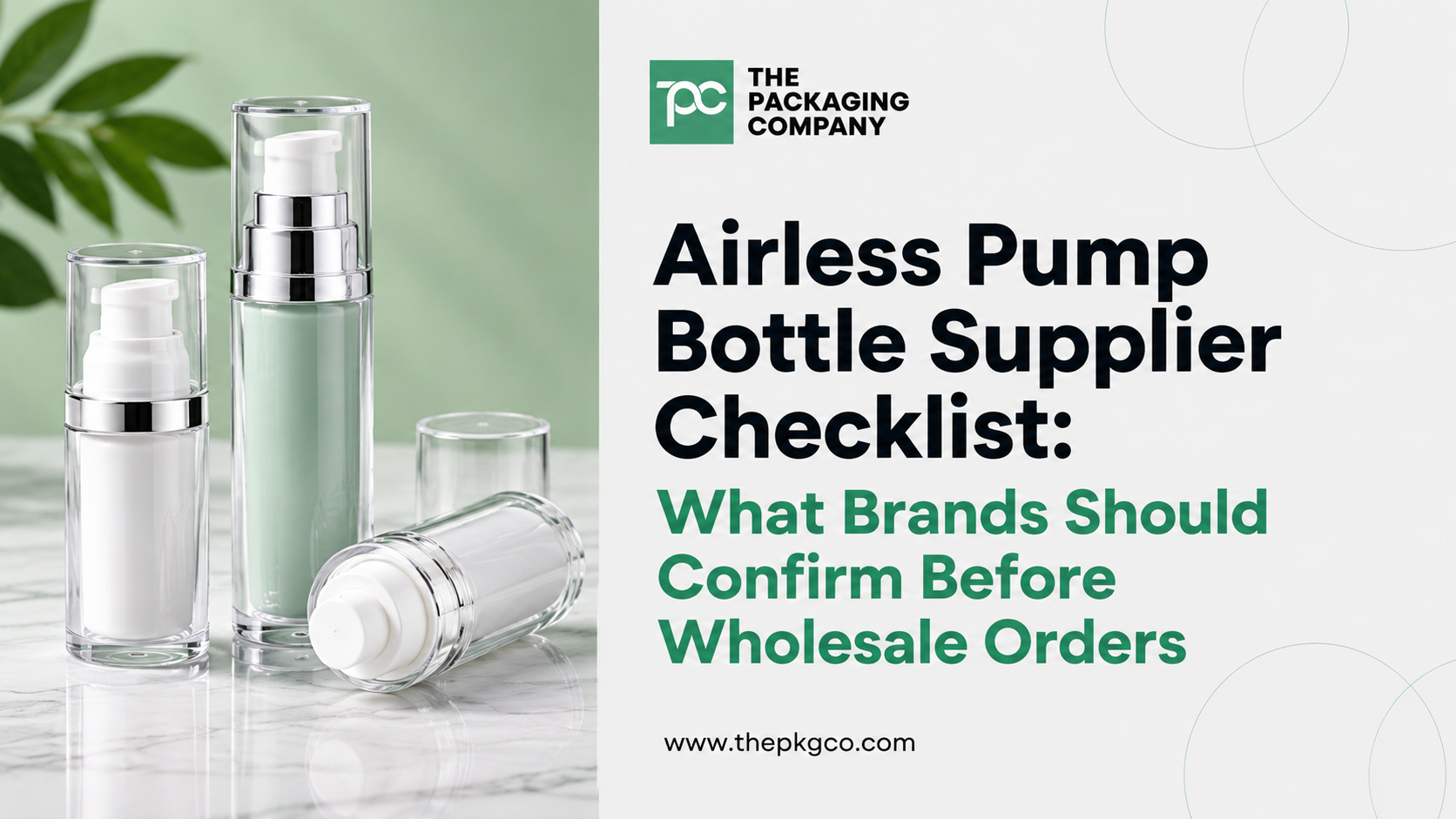
When a skincare or cosmetic brand is ready to order airless pump bottles in bulk, the supplier decision becomes more important than the bottle photo. A bottle may look clean and premium in a catalog, but the real question is whether the supplier can support sampling, MOQ, customization, production quality, delivery coordination, and future reorders.
This is where many brands run into problems. They choose an airless pump bottle based on appearance or unit price, then later discover the MOQ does not fit the launch plan, the decoration timeline is longer than expected, the sample was not tested properly, or the supplier cannot provide consistent reorders.
For brands comparing an airless pump bottle supplier, the goal should not be finding the cheapest bottle. The goal should be finding a supplier that can support the full wholesale ordering process from sample review to production delivery.
Why Supplier Capability Matters for Airless Pump Bottle Orders
Airless pump bottles are commonly used for serums, moisturizers, eye creams, lotions, sunscreens, primers, and treatment products. They are popular because they support controlled dispensing, cleaner application, and a more premium packaging experience.
However, airless packaging is more technical than a basic bottle and cap. The pump, actuator, piston, body, cap, decoration surface, and filling process all need to work together. For wholesale orders, the supplier also needs to manage production quality, customization, packaging specifications, carton packing, shipping, and reorder support.
Brands reviewing airless pump bottles for cosmetics should evaluate the supplier’s process, not only the product style.
1. Confirm Whether the Supplier Supports Wholesale Airless Pump Bottle Orders
Not every packaging seller is set up to support wholesale or production-level orders. Some suppliers mainly offer small quantities or catalog-style purchasing. Others can support larger orders, custom decoration, project planning, sampling, and production coordination.
Before moving forward, brands should ask:
- Do you support wholesale airless pump bottle orders?
- What is the starting MOQ?
- Can you support custom decoration?
- Can you provide samples before production?
- Can you support repeat orders?
- Do you provide specifications for internal review?
- Can you help coordinate production details through delivery?
This helps separate a true airless pump bottle supplier from a basic catalog seller.
2. Understand the MOQ Before Designing the Package
MOQ should be discussed early. Many brands start by choosing a bottle style and decoration concept, then later find out the minimum order quantity is higher than expected.
MOQ can change based on the bottle structure, material, color, decoration method, custom mold requirements, and production schedule.
At The Packaging Company, MOQ for airless packaging can start from 5,000 units, depending on the bottle style, material, customization level, decoration method, and project requirements.
Before approving a packaging direction, brands should confirm:
- MOQ for stock airless pump bottles
- MOQ for custom printing
- MOQ for custom color
- MOQ for special finishes
- MOQ for PCR, mono-material, or specialty options
- MOQ for repeat orders
This is especially important for brands comparing airless pump bottle wholesale options. A lower unit price may not be helpful if the MOQ is too high for the launch plan.
3. Review Stock, Semi-Custom, and Custom Options
Airless pump bottle orders usually fall into three levels: stock, semi-custom, and fully custom.
Stock airless pump bottles
Stock bottles are usually the most practical option for brands that need a faster launch, lower development complexity, or a more controlled first order. Brands can often customize the package with labels, printing, or color accents depending on the supplier’s capabilities.
Semi-custom airless pump bottles
Semi-custom options may include custom color, matte or glossy finish, silk screen printing, hot stamping, or custom cap decoration. This can help the package feel more branded without requiring full tooling.
Fully custom airless pump bottles
Fully custom options may involve custom molds, unique shapes, custom components, or a more complex packaging system. This may make sense for established brands with larger volume, longer timelines, and a clear product line strategy.
A good airless pump bottle manufacturer should help brands choose the right level of customization based on budget, timeline, MOQ, and reorder needs.
4. Ask What Is Included in the Sampling Process
Sampling is one of the most important steps before a wholesale order. A product image does not prove that the bottle works for the formula, decoration, filling process, or customer experience.
Brands should ask the supplier:
- Are stock samples available?
- Are decorated samples available?
- Can we test multiple bottle sizes?
- Can we test different pump systems if needed?
- How long does sampling take?
- What sample approvals are needed before production?
- Can pre-production samples be reviewed before bulk manufacturing?
For airless pump packaging, sampling should review both appearance and function. The bottle should look right, dispense properly, and fit the brand’s filling and production plan.
5. Confirm Basic Pump and Formula Fit Without Repeating the Full Technical Review
Formula compatibility still matters, but supplier selection should focus on whether the supplier can guide the review properly. The supplier should ask about product type, texture, and intended use before recommending an airless pump bottle.
Brands should be ready to share basic information such as:
- Product type: serum, cream, lotion, gel, sunscreen, or treatment
- General formula texture
- Target fill size
- Expected pump output
- Whether the formula is thick, oily, active-based, or sensitive
The supplier does not need every confidential formula detail at the first conversation, but they should know enough to recommend suitable packaging options and sampling steps.
6. Check Whether the Supplier Can Support Decoration at Production Scale
Decoration is often where packaging projects become more complicated. A mockup may look simple, but production decoration depends on the bottle material, surface shape, finish, print area, color, and MOQ.
Brands should ask:
- What decoration methods are available?
- Can the bottle support silk screen printing?
- Can it support hot stamping?
- Can labels be applied cleanly?
- Can custom color be matched?
- Can matte, glossy, or frosted finishes be produced?
- Does decoration affect production lead time?
- Will decorated samples be provided before approval?
The supplier should be able to explain what is realistic before the brand finalizes artwork. This helps avoid late-stage design changes and production delays.
7. Ask About Specifications and Production Details
Before placing a wholesale order, brands should request basic packaging specifications. These details help the design team, purchasing team, product development team, and filling partner stay aligned.
Useful information may include:
- Bottle dimensions
- Capacity details
- Material information
- Pump output, if available
- Decoration area
- Carton packing details
- Sample approval requirements
- Production lead time
- Shipping timeline
A reliable supplier should be able to provide enough information for internal approval before the brand commits to production.
8. Review Filling and Assembly Support
Airless pump bottles may require specific filling or assembly steps. The supplier should be able to explain whether the bottle is top-filled, bottom-filled, or requires special handling.
Brands should confirm:
- How the bottle should be filled
- Whether the piston requires setup before filling
- Whether the pump is assembled before or after filling
- Whether the filling partner should test samples first
- Whether post-fill pump testing is recommended
This is especially important when working with contract fillers. Packaging that works in a sample review still needs to work during production filling.
9. Evaluate Defect Control Before Bulk Production
Defect control matters because small issues become expensive after filling. A scratched bottle, loose pump, poor cap fit, misaligned print, or inconsistent color can weaken the customer experience and create delays.
Brands should ask how the supplier manages:
- Pump function consistency
- Leakage resistance
- Cap fit
- Surface scratches
- Color consistency
- Decoration alignment
- Carton packing
- Production inspection
For premium skincare and cosmetic products, packaging consistency directly affects how customers judge the brand. A strong supplier should take defect control seriously before the product reaches the filling line.
10. Confirm Lead Time and Launch Schedule Fit
Airless pump bottle production should be planned around the full launch timeline. Sampling, decoration approval, production, shipping, filling, and final assembly all take time.
Before confirming the order, brands should ask:
- How long does sampling take?
- How long does decoration approval take?
- What is the production lead time?
- How long does shipping take?
- Does custom color affect timing?
- Does decoration affect timing?
- What is the latest date to approve samples for the target launch?
A supplier should help brands understand realistic timing instead of only promising fast production.
11. Plan for Reorders Before the First Order Is Placed
Many brands focus only on the first packaging order. But if the product sells well, reorder consistency becomes just as important.
Before choosing a supplier, brands should ask:
- Will this bottle remain available for future orders?
- What is the reorder MOQ?
- What is the reorder lead time?
- Can the supplier keep decoration consistent across runs?
- Can the same cap, pump, and bottle structure be maintained?
- What happens if a component becomes unavailable?
This is important for skincare brands building a long-term product line. A beautiful airless pump bottle is less useful if the supplier cannot support repeat production.
12. Compare Supplier Communication, Not Just Price
Price is important, but it should not be the only factor. A lower quote may create more risk if the supplier cannot explain sampling, customization, filling requirements, production timeline, or reorder support.
Brands should evaluate whether the supplier communicates clearly about:
- MOQ
- Sampling
- Customization
- Production lead time
- Material options
- Filling requirements
- Quality expectations
- Reorders
A strong airless pump bottle supplier should help brands make better production decisions, not only sell a bottle.
What TPC Can Provide for Airless Pump Bottle Projects
The Packaging Company supports skincare, cosmetic, and personal care brands with wholesale and custom airless packaging options. For brands preparing a new launch or product line expansion, TPC can help review bottle options, MOQ, customization, sampling, production needs, and delivery coordination.
TPC’s airless packaging support include:
- Airless pump bottle options for skincare and cosmetic products
- Wholesale airless packaging support
- MOQ starting from 5,000 units depending on project requirements
- Custom decoration and finishing options
- Material review, including standard, PCR, and specialty options where available
- Pre-production sampling support
- Production coordination through delivery
- Support for brands comparing airless pump bottle wholesale options
For brands looking for an airless pump bottle supplier that can support both packaging options and production planning, TPC can help compare the right solution before sampling and bulk orders.
Wholesale Supplier Checklist for Airless Pump Bottles
Before choosing an airless pump bottle supplier, brands should confirm:
- Starting MOQ and reorder MOQ
- Stock, semi-custom, and custom options
- Sample availability and approval steps
- Decoration capabilities
- Basic formula and pump fit review
- Material options and specifications
- Filling and assembly guidance
- Production lead time
- Quality control expectations
- Carton packing and shipping support
- Reorder consistency
- Supplier communication quality
Final Recommendation
Choosing an airless pump bottle supplier for wholesale orders requires more than comparing unit price and bottle appearance. Brands should review MOQ, sampling, customization, specifications, filling support, defect control, production timing, and reorder planning before placing a bulk order.
The best supplier should help the brand move from packaging idea to production with fewer risks and clearer expectations.
For brands comparing airless pump bottle wholesale options, custom airless pump packaging, or airless packaging solutions, The Packaging Company can help review materials, decoration options, MOQ, sampling, and production requirements for upcoming skincare and cosmetic product launches.
FAQ: Airless Pump Bottle Supplier Checklist
What should I ask an airless pump bottle supplier before ordering?
Ask about MOQ, sample availability, decoration options, bottle materials, production lead time, filling requirements, quality control, shipping support, and reorder planning.
What is the MOQ for airless pump bottles at TPC?
At The Packaging Company, MOQ for airless packaging can start from 5,000 units depending on the bottle style, material, customization level, decoration method, and project requirements.
What is the difference between stock and custom airless pump bottles?
Stock airless pump bottles use existing formats and can be suitable for faster launches. Custom options may include custom color, decoration, finishes, or tooling, but they usually require higher MOQ and longer lead time.
Why is sampling important before wholesale airless bottle orders?
Sampling helps brands confirm bottle appearance, pump function, decoration quality, formula fit, filling process, and customer experience before placing a larger production order.
How do I compare airless pump bottle wholesale suppliers?
Compare suppliers based on MOQ, product options, sampling support, customization capability, specifications, production communication, quality control, lead time, and reorder consistency.