



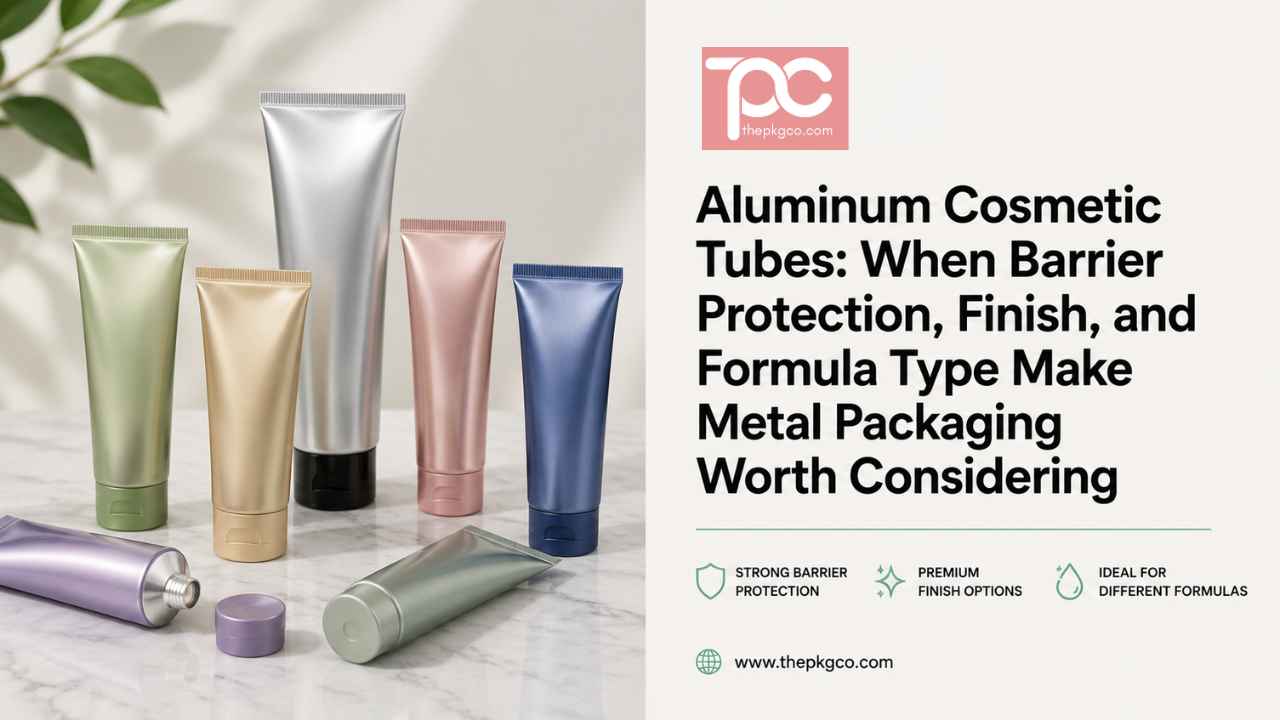
Aluminum cosmetic tubes are not the right choice for every beauty product. They behave differently from standard tube formats during filling, shipping, and customer use. But for certain formulas, brand positions, and product categories, aluminum can offer advantages that are worth reviewing.
The decision should not be framed as a broad plastic-versus-metal comparison. Instead, beauty brands should ask whether the product needs the specific packaging direction that aluminum tubes can provide: a metal tube feel, controlled dispensing, a more protective packaging format, and a distinct product presentation.
This guide explains when aluminum cosmetic tubes and aluminum tubes packaging may make sense for skincare, beauty, personal care, balm, cream, and treatment-style products.
Why Brands Consider Aluminum Tubes
Aluminum tubes are often considered when the product needs a more protective packaging direction or when the brand wants a more technical, apothecary, clinical-style, or premium appearance.
Unlike many standard cosmetic squeeze tubes, aluminum tubes have a different tactile experience. They crease as the customer uses them, hold their shape after squeezing, and create a more traditional treatment-product feel.
Brands reviewing squeeze tube packaging should consider aluminum when the product benefits from this specific usage experience and positioning.
Aluminum Tubes Packaging vs Plastic Squeeze Tubes
Aluminum tubes packaging and plastic squeeze tubes can both support cosmetic tube packaging projects, but they offer different user experiences, decoration options, and production considerations.
| Packaging Type | Common Uses | Best For | What Brands Should Review |
|---|---|---|---|
| Aluminum cosmetic tubes | Balms, creams, treatment products, concentrated formulas, and specialty cosmetic products | Brands that want a premium metal tube feel or a more protective packaging direction | Inner coating direction, cap fit, creasing, decoration durability, sample review, filling process, and shipping protection |
| Plastic squeeze tubes | Lotions, cleansers, sunscreens, gels, creams, body care, travel sizes, and samples | Brands that want flexible cosmetic tube packaging for broader product lines | Tube size, cap style, decoration area, material direction, MOQ, sample approval, and product-line consistency |
| Applicator tubes | Eye creams, lip care, targeted treatments, scalp products, and gels | Products that need controlled or targeted application | Applicator type, dispensing feel, cap direction, decoration placement, and finished-product review |
Best Product Fits for Aluminum Cosmetic Tubes
Aluminum cosmetic tubes are most often worth reviewing for products where packaging protection, controlled dispensing, or product positioning matter.
Common product fits include:
- Balms
- Ointment-style products
- Treatment creams
- High-value hand creams
- Specialty skincare products
- Concentrated cosmetic formulas
- Premium personal care products
- Products with a technical, apothecary, or treatment-focused brand direction
The best fit depends on product texture, usage experience, brand positioning, filling process, and finished-product requirements.
Barrier Direction and Internal Coating Review
One reason brands consider aluminum cosmetic tubes is the potential for a stronger packaging barrier direction compared with some standard tube formats. Depending on the tube structure and internal coating, aluminum tubes may help support products where light exposure, air exposure, or packaging protection is part of the review process.
However, aluminum should not be treated as an automatic solution for every formula. Brands should confirm formula compatibility, internal coating direction, filling process, dispensing behavior, sealing or leakage performance, and finished-product requirements with the actual product.
Before choosing aluminum, ask:
- Does the product need a more protective tube format?
- Is light or air exposure part of the packaging review?
- Does the product require an internal coating or liner direction?
- Will the formula interact with the tube material or coating?
- Will the filling partner need special handling requirements?
- Does the product category support the premium metal tube look?
Cap Direction, Closure Fit, and Dispensing Experience
Cap direction is an important part of aluminum tubes packaging. The cap should support the way the customer opens, uses, stores, and dispenses the product. For some products, a standard screw cap may be enough. For others, brands may want a more specific cap style, nozzle direction, or applicator concept.
Before approving samples, brands should review:
- Cap size and cap style
- Thread fit and closure feel
- Opening size and dispensing control
- How the tube feels during repeated use
- Whether the tube creases in a way that fits the product category
- Whether the cap and tube finish match the brand presentation
Aluminum tubes usually crease and hold their shape as customers squeeze them. For certain balms, ointment-style products, and treatment creams, that behavior may fit the expected user experience. For brands that want the tube to stay smooth during use, another squeeze tube format may be a better fit.
Finish and Decoration Options
Aluminum tubes can support strong visual identity when decoration is planned correctly. The natural metal surface, matte finishes, printed graphics, labels, and minimal design styles can all create a premium look.
Decoration options may include:
- Direct printing
- Labels
- Matte or satin finishes
- Metallic surface effects
- Minimalist clinical-style branding
- Custom cap and closure direction
- Color and finish coordination with other packaging formats
Decoration should be tested after squeezing because aluminum changes shape during use. The design should still look acceptable as the tube creases.
Consider Dents, Creases, and Shipping
Aluminum tubes can dent or crease more visibly than some plastic tubes. This is not always a problem. In many balm, ointment-style, or treatment categories, creasing is expected.
However, shipping and retail handling should be reviewed carefully. If the tube dents before it reaches the customer, the product may feel damaged rather than premium.
Brands should review:
- Carton protection
- Inner packing requirements
- Retail display conditions
- E-commerce shipping risks
- How the tube looks after repeated use
- How decoration holds up after handling and squeezing
What Brands Should Prepare Before Requesting Samples
Before requesting aluminum cosmetic tube samples, brands should prepare clear project details. This helps the supplier recommend packaging options that fit the product category, decoration direction, MOQ, and production timeline.
- Product type, such as balm, cream, treatment product, ointment-style product, or specialty cosmetic product
- Target tube size or fill capacity
- Preferred cap or closure direction
- Inner coating or liner direction, if required
- Color, finish, label, printing, or decoration requirements
- Estimated order quantity
- Number of SKUs
- Launch timeline and sample approval schedule
- Whether the aluminum tube needs to match jars, bottles, airless packaging, or other packaging formats
Sampling Before Bulk Production
Aluminum tubes should be reviewed with the actual product and filling process before production. Brands should review compatibility, dispensing, internal coating direction, decoration durability, cap fit, and shipping protection.
Testing should include:
- Tube size and capacity
- Cap fit and closure feel
- Dispensing behavior
- Internal coating direction
- Decoration placement and durability
- Creasing after repeated use
- Carton packing and shipping protection
- Formula compatibility and finished-product requirements with the brand, formulator, and filling partner
Testing should not be limited to how the tube looks when new. Brands should also review how the tube looks and performs after repeated squeezing, storage, and shipping simulation.
Brands interested in sustainable tube materials can also review related options such as sustainable beauty sugarcane squeeze tubes, depending on their product and sustainability goals.
MOQ, Customization, and Bulk Order Details
For brands sourcing aluminum tubes packaging at production scale, MOQ and production requirements may vary depending on tube size, cap style, finish, decoration method, order quantity, and customization complexity.
TPC can support brands reviewing:
- Aluminum cosmetic tubes for skincare, beauty, and personal care products
- Metal cosmetic tubes for premium or treatment-style product lines
- Custom cosmetic tubes with decoration and finish support
- Bulk aluminum tube packaging for multi-SKU programs
- Cap, finish, printing, labeling, and sample review details
- RFQ preparation for production-scale packaging orders
For brands comparing aluminum tubes with other tube formats, related options may include squeeze tubes, eco-friendly squeeze tubes, and broader custom cosmetic packaging options.
When Aluminum Is Worth Reviewing
Aluminum cosmetic tubes may be worth considering when the packaging supports the product’s function, price point, and brand story. They are not automatically better than other tube formats, but they can be the right option when the product and positioning support the choice.
They may be a good fit when:
- The product needs a more protective tube format
- The product has a balm, cream, treatment, or specialty cosmetic direction
- The brand wants a premium metal tube feel
- The creasing behavior fits the customer experience
- The decoration style works well on metal
- The product price point supports the packaging direction
If the product is a high-volume basic lotion, cleanser, or daily-use formula, aluminum may not always be necessary. For a specialty cream, balm, treatment product, or premium personal care item, aluminum tubes packaging may be worth reviewing during sample development.
Final Recommendation
Aluminum cosmetic tubes are best suited for products that benefit from a metal tube presentation, controlled dispensing, sample review, and a more treatment-focused customer experience. They are not automatically better than other cosmetic tube packaging formats, but they can be the right choice when the product and brand positioning support the direction.
TPC supplies empty packaging components. Brands, formulators, and filling partners are responsible for confirming formula compatibility, filling process, dispensing behavior, sealing or leakage performance, compliance requirements, documentation requirements, and finished-product performance with the actual product.
Brands can contact The Packaging Company to review aluminum cosmetic tubes, metal cosmetic tubes, cosmetic tube packaging, samples, MOQ, decoration, and bulk production details.
FAQ: Aluminum Cosmetic Tubes
What are aluminum cosmetic tubes used for?
Aluminum cosmetic tubes are commonly used for balms, creams, treatment-style products, specialty skincare, premium personal care products, and products that may benefit from a metal tube presentation or more protective packaging direction.
What is aluminum tubes packaging?
Aluminum tubes packaging refers to tube packaging made with aluminum material and used for products such as balms, creams, ointment-style products, specialty cosmetics, and premium personal care items. Brands should review tube size, cap direction, internal coating direction, decoration, samples, and filling requirements before production.
Do aluminum cosmetic tubes crease during use?
Yes. Aluminum tubes typically crease and hold their shape as customers squeeze them. Brands should review whether this usage experience fits the product category and brand presentation.
Can aluminum cosmetic tubes be customized?
Yes. Aluminum cosmetic tubes can support custom decoration such as printing, labels, matte or satin finishes, metallic effects, cap direction, and other finish options depending on project requirements.
What should brands test before approving aluminum cosmetic tube samples?
Brands should review tube size, cap fit, dispensing behavior, inner coating direction, decoration durability, creasing after repeated use, carton packing, shipping protection, and finished-product requirements with the actual formula and filling process.
Does TPC fill aluminum cosmetic tubes?
TPC supplies empty packaging components. Brands, formulators, and filling partners are responsible for confirming formula compatibility, filling process, dispensing behavior, sealing or leakage performance, compliance requirements, documentation requirements, and finished-product performance with the actual product.