


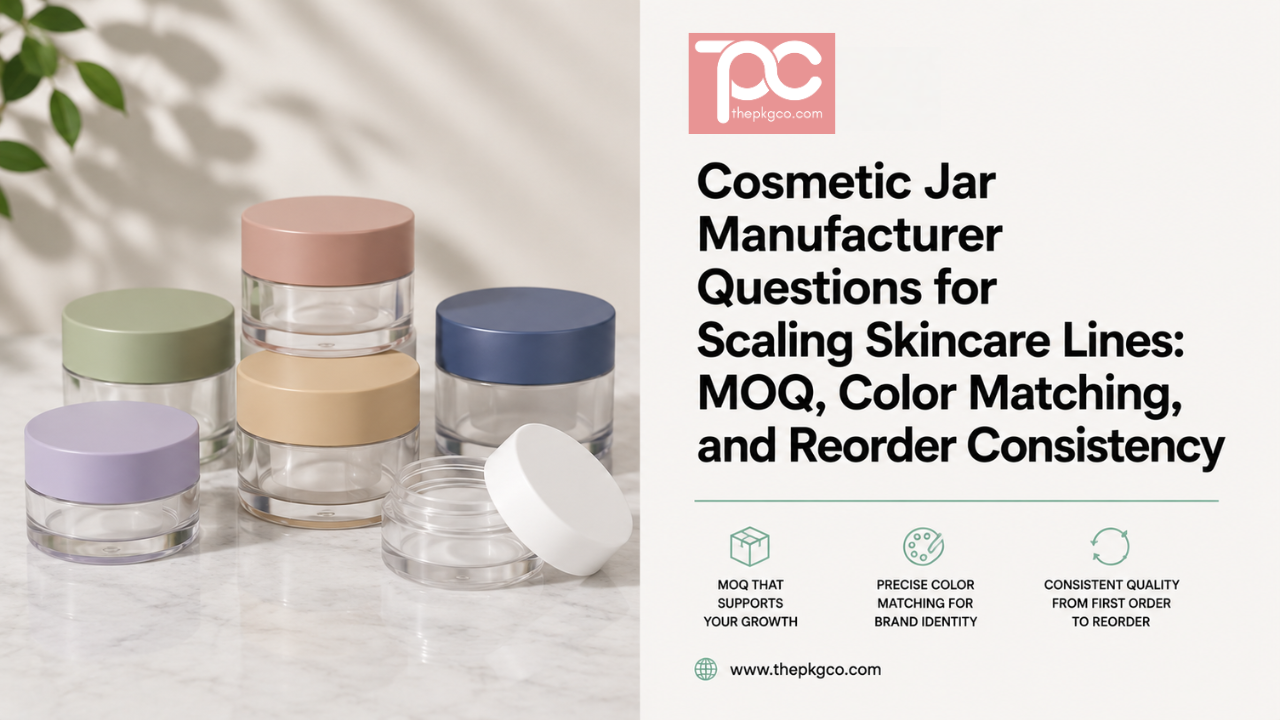
A skincare brand may start with one cream jar, but scaling usually creates new packaging challenges. The brand may add a mask, balm, eye cream, body butter, refill size, or travel jar. Suddenly, the question is no longer whether one jar looks good. The question is whether the packaging system can stay consistent across multiple SKUs and future reorders.
This is where a cosmetic jar manufacturer becomes important. For scaling brands, jar packaging needs to support MOQ planning, color matching, cap consistency, decoration repeatability, and component availability across production runs.
This guide focuses on what skincare brands should ask before scaling a jar-based product line.
Why Scaling Requires Different Manufacturer Questions
Choosing a jar for one product is different from building a full jar packaging system. One jar may be easy to source, decorate, and reorder. A full skincare line requires more coordination.
Brands reviewing cosmetic jar packaging should think about how the manufacturer can support growth from one SKU to multiple SKUs.
Important scaling questions include:
- Can the same jar family support multiple sizes?
- Can the cap and finish stay consistent?
- Will color matching be repeatable?
- Can the manufacturer support reorders?
- Does MOQ change by jar size or decoration method?
Ask About MOQ by Jar Size
MOQ can vary by jar size, material, color, cap, and decoration. A 50ml face cream jar may have one MOQ, while a 15ml eye balm jar or 100ml mask jar may have another.
Before scaling, brands should ask:
- What is the MOQ for each jar size?
- Can multiple sizes be ordered together?
- Does custom color increase MOQ?
- Does decoration increase MOQ?
- What is the MOQ for reorder runs?
This prevents brands from building a product line around jar sizes that do not fit their production budget.
Confirm Color Matching Across SKUs
Color consistency becomes more important as a skincare line grows. A cream jar, mask jar, and balm jar may be different sizes, but they should still feel like one brand family.
Brands should ask the manufacturer:
- Can the same custom color be matched across different jar sizes?
- Can the cap color match the jar body?
- Will color vary between glass, acrylic, PP, or PET?
- How is color approved before production?
- Can production batches be matched on reorders?
This matters especially for luxury cosmetic jars, where small color differences can make the line feel inconsistent.
Review Cap and Component Consistency
The jar body is only one part of the package. The cap, liner, seal, inner disc, and decoration all affect the final product experience.
Before scaling, brands should confirm:
- Can the same cap style be used across multiple jar sizes?
- Are liners available for each format?
- Are caps and jars sourced from the same production system?
- Can the manufacturer maintain cap fit over reorders?
- What happens if one component becomes unavailable?
A mismatch between cap finish and jar body can make a skincare line feel less polished.
Ask About Decoration Repeatability
Decoration should be repeatable across multiple SKUs. A logo that looks strong on a large jar may not work on a smaller jar. A label that fits a body cream jar may not fit an eye balm jar.
Brands should ask:
- Can the logo placement scale across jar sizes?
- Can the same decoration method be used for all SKUs?
- Will hot stamping or printing look consistent?
- Are there minimum print area limits?
- Can pre-production proofs be reviewed?
This helps avoid a line where every product looks slightly different for the wrong reasons.
Plan Reorder Timing Before the First Launch
Scaling brands should not wait until inventory is low to think about reorders. Packaging lead time affects product availability, especially when custom decoration or color matching is involved.
Ask the manufacturer:
- What is the reorder lead time?
- Are components stocked or made to order?
- Can reorders match the first production run?
- How far ahead should the brand reorder?
- Can the same jar family support future SKUs?
Reorder planning helps avoid stockouts, packaging substitutions, and inconsistent production runs.
Ask About Scaling From Stock to Custom
Some skincare brands start with stock jars and later move into custom color, custom caps, or more premium decoration. A good manufacturer should help brands understand when that transition makes sense.
Ask:
- Can stock jars be customized later?
- Can the same jar family support upgraded decoration?
- What MOQ applies to custom color?
- When does custom tooling make sense?
- Can packaging evolve without changing the full product identity?
Final Recommendation
When scaling a skincare line, cosmetic jar manufacturer questions should focus on MOQ, color matching, cap consistency, decoration repeatability, component availability, and reorder planning. The best manufacturer should help the brand build a packaging system that can grow without losing consistency.
For brands preparing to scale cosmetic jars, custom jar packaging, or premium skincare packaging, The Packaging Company can help review materials, decoration options, MOQ, sampling, and production requirements. Brands can speak with our packaging team to discuss upcoming product line needs.
FAQ: Cosmetic Jar Manufacturer Scaling Questions
What should brands ask a cosmetic jar manufacturer before scaling?
Brands should ask about MOQ by size, color matching, cap consistency, decoration repeatability, component availability, reorder timing, and future SKU support.
Why does MOQ matter when scaling cosmetic jars?
MOQ affects budget, inventory planning, and whether multiple jar sizes can be produced together. Custom colors and decoration may increase MOQ.
How can brands keep cosmetic jars consistent across SKUs?
Brands can maintain consistency through matching cap colors, coordinated materials, repeated decoration methods, shared logo placement, and color matching across production runs.
Why is reorder consistency important for skincare packaging?
Reorder consistency helps prevent changes in color, cap fit, decoration, or material that could make the product line look inconsistent over time.
Can a brand start with stock jars and upgrade later?
Yes. Many brands start with stock jars and later move into custom colors, finishes, or decoration once volume and demand are more predictable.