



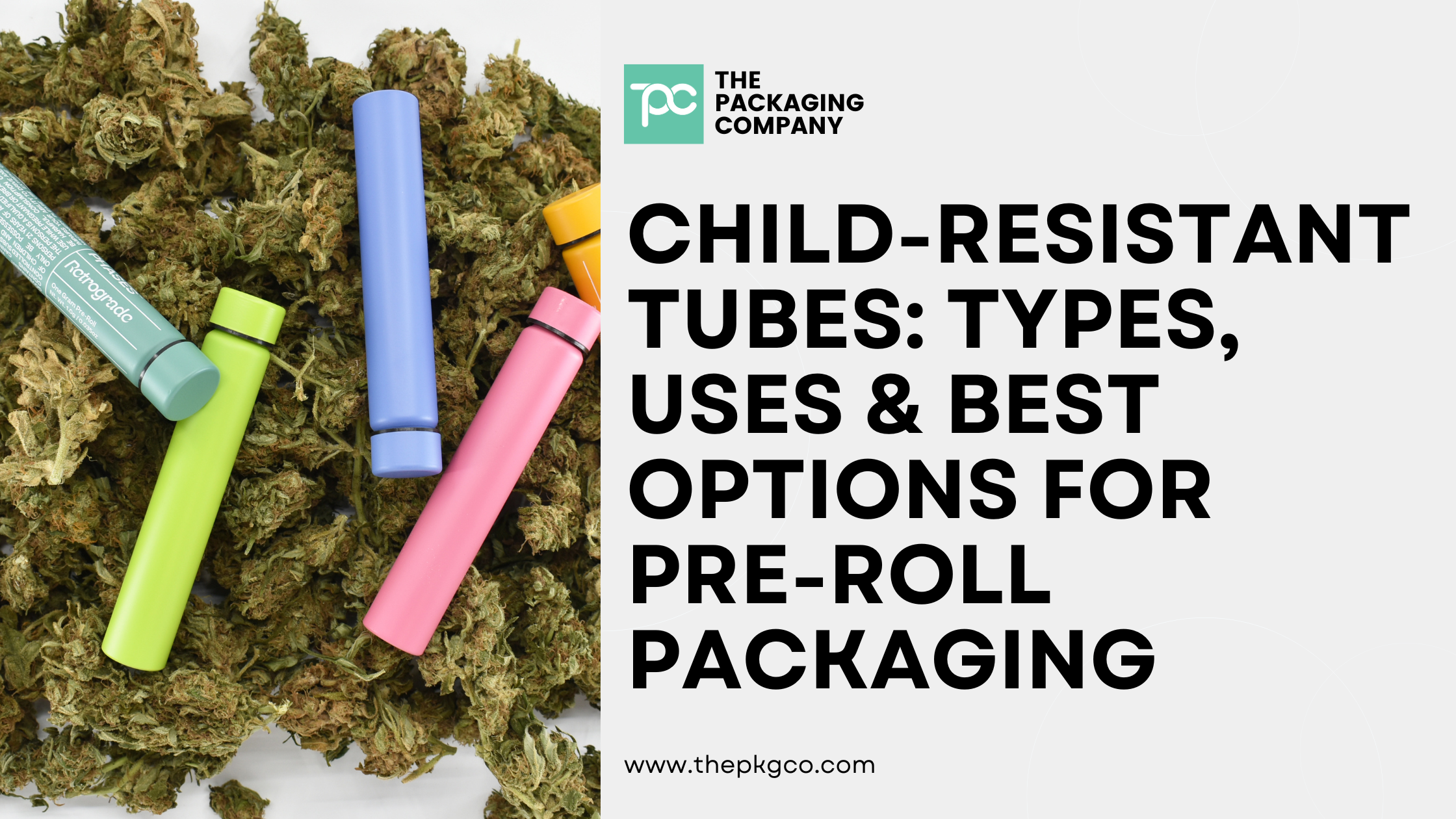
What are child-resistant tubes?
Child-resistant (CR) tubes are certified packaging formats designed to prevent access by children while remaining usable for adults. In cannabis, they are most commonly used for pre-rolls, where maintaining freshness, structure, and compliance all matter at once.
While most CR tubes meet regulatory requirements, not all are built to perform consistently once you move into real production volumes.
Why CR tube selection matters more now
As the cannabis market matures, packaging expectations are changing.
According to market insights from firms like Headset and Brightfield Group, brands are:
- Competing more heavily on shelf differentiation
- Moving toward premiumization in pre-rolls
- Prioritizing product freshness and experience
That means packaging is no longer just compliance — it’s part of the product itself.
Types of child-resistant tubes (used in cannabis)
Here’s a clear breakdown of what’s actually used across the industry:
1. Pop-Top Tubes (Budget Tier)

How they work:
Squeeze sides → lid pops open
Where they’re used:
- Entry-level brands
- High-volume, low-cost SKUs
Pros:
- Cheapest option
- Widely available
Cons:
- Weak seal over time
- Inconsistent closure performance
- Lower perceived value on shelf
These are common, but typically not used by brands focused on long-term positioning or product quality.
2. Plastic or Glass Twist-Cap Tubes (Mid-Tier Standard)
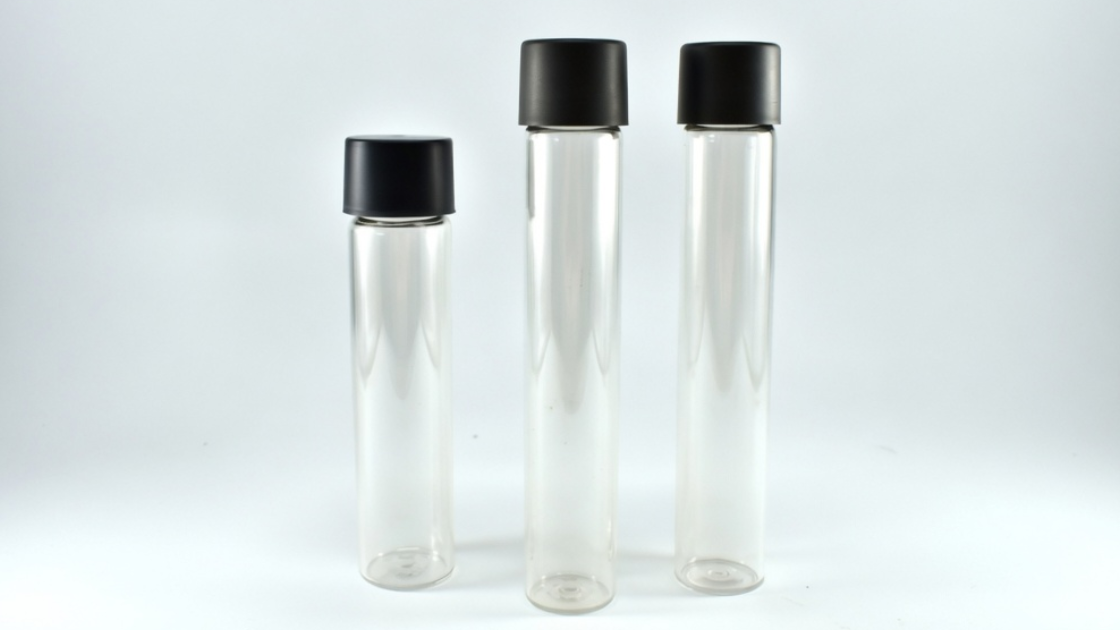
How they work:
Push-and-turn or twist-lock closure
Where they’re used:
- Most mid-tier cannabis brands
- Standard retail SKUs
Pros:
- Reliable compliance
- More consistent than pop-tops
- Familiar user experience
Cons:
- Limited freshness retention compared to premium formats
- Can feel standard or commoditized
This is the most common format you’ll see in dispensaries today.
Examples:
3. Aluminum Pre-Roll Tubes (Premium Tier)
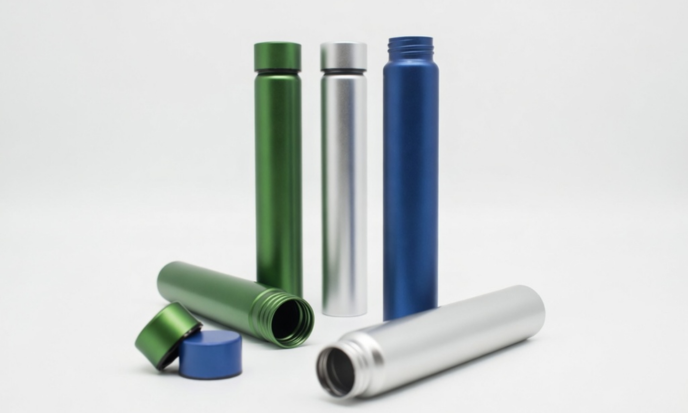
How they work:
Engineered CR closure with rigid aluminum body
Where they’re used:
- Premium pre-roll brands
- Multi-pack SKUs
- Products positioned for higher shelf value
Pros:
- Strongest protection (crush-resistant)
- Better odor control + freshness
- Higher perceived value
- More consistent across production runs
Cons:
- Higher upfront cost
- Requires more intentional sourcing
This is where the market is moving for brands that care about product experience and differentiation.
Examples:
Quick comparison (featured snippet optimized)
| Tube Type | Tier | Best For | Main Limitation |
|---|---|---|---|
| Pop-top | Budget | Entry-level SKUs | Weak seal, low durability |
| Plastic/Glass twist | Mid-tier | Standard retail products | Limited differentiation |
| Aluminum tubes | Premium | High-end pre-rolls | Higher upfront cost |
What most brands don’t realize about CR tubes
The biggest issues don’t show up in samples — they show up in production:
- Tubes that seal fine individually but vary across batches
- Closures that loosen after repeated use
- Pre-rolls drying out due to inconsistent sealing
- Packaging that feels cheap compared to product quality
These problems often appear after thousands of units are already filled
How to choose the right CR tube for your brand
Instead of asking:
“What’s the cheapest option?”
Ask:
- Will this hold freshness across thousands of units?
- Does this match my brand positioning?
- Will this perform consistently in production?
- Does this improve or hurt shelf perception?
Where the market is heading
Pre-rolls are one of the fastest-growing segments in cannabis (BDSA reports continued growth in pre-roll category share year-over-year).
With that growth:
- More brands are entering
- Shelf competition is increasing
- Packaging is becoming a key differentiator
The shift is clear:
From “compliant packaging” → to “performance + presentation”
Internal: Choosing the right CR system
For a full breakdown of CR packaging formats, compliance, and production considerations, click here.
Final takeaway
Child-resistant tubes all pass compliance — but they don’t all perform the same.
The difference between a smooth production run and costly issues often comes down to:
- consistency
- sealing
- material quality
- and how the packaging system was chosen upfront