



Introduction: When Sustainability Meets Real Production Constraints
You’ve likely heard the push toward sustainable packaging—refillable systems, reduced plastic, circular design. But when it comes to actually implementing it, most cosmetic brands run into the same friction:
- Will refillable packaging affect product stability?
- Is it compatible with my current formulation?
- Will it increase production complexity or cost?
Refillable airless bottles promise sustainability without compromising performance—but only if selected correctly. This guide breaks down exactly how to evaluate, compare, and choose the right refillable airless packaging for your product and business model.
What Makes a Refillable Airless Bottle Different?
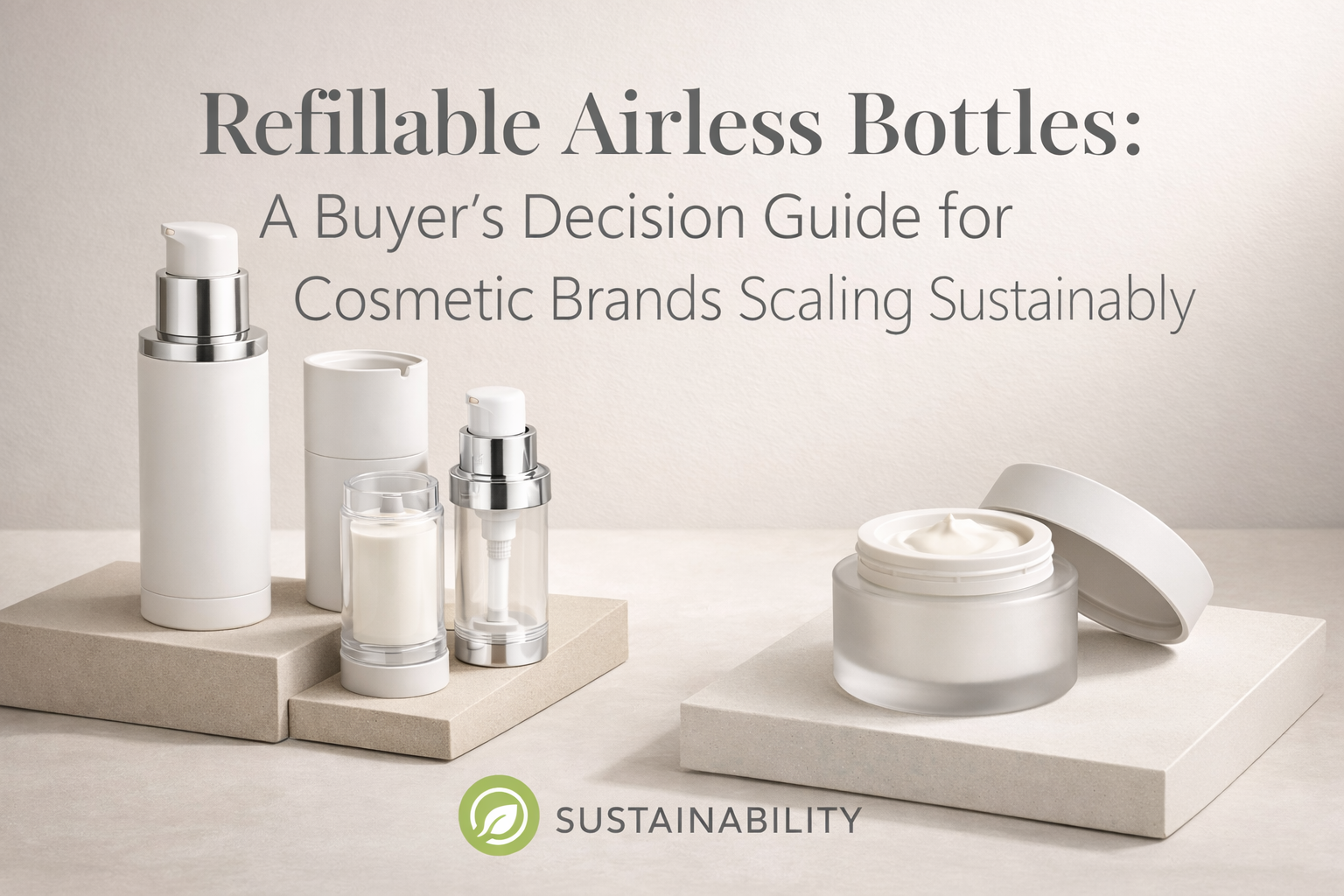
Unlike traditional airless pump bottles, refillable airless systems are designed with separable components, allowing the inner container (cartridge) to be replaced while keeping the outer shell.
Key structural difference:
- Standard airless bottle: Single-use sealed system
- Refillable airless bottle: Outer shell + replaceable inner cartridge
This design allows brands to:
- Reduce packaging waste
- Maintain product protection (airless system remains intact)
- Create long-term customer retention through refill programs
When Should You Choose Refillable Airless Packaging?
Refillable airless bottles are not suitable for every product. They perform best under specific conditions.
Ideal use cases:
- Skincare with repeat purchase cycles
(moisturizers, serums, creams) - Premium or luxury product lines
where packaging longevity adds perceived value - Products with stable formulations
that can be transferred or refilled without degradation - Brands with sustainability positioning
targeting eco-conscious consumers
Less suitable for:
- One-time use or low-margin products
- Highly reactive formulations requiring sterile sealing
- Products with inconsistent viscosity
Types of Refillable Airless Bottles
Not all refillable systems are built the same. Understanding the differences helps avoid costly mistakes.
1. Cartridge-Based Refillable System
- Inner bottle (cartridge) is fully replaceable
- Outer shell is reused multiple times
- Most common format in cosmetic packaging
Best for:
Premium skincare brands scaling refill programs
2. Pouch Refill System
- Uses flexible refill pouches inserted into outer container
- Reduces plastic usage significantly
Best for:
Brands prioritizing sustainability over premium aesthetics
3. Refillable Pump Mechanism Systems
- Pump component remains fixed
- Only product chamber is replaced
Best for:
Mid-range products balancing cost and sustainability
Material Considerations: Sustainability vs Performance
Choosing materials for refillable airless bottles is not just about eco-labeling—it directly impacts functionality and recyclability.
Common material options:
Plastic (PP, PET)
- Lightweight and cost-effective
- Compatible with most airless pump systems
- Can include PCR (post-consumer recycled) content
Glass Outer Shell + Plastic Inner Cartridge
- Premium aesthetic
- Improved brand perception
- Still requires plastic for functionality
Mono-Material Designs
- Made from a single type of plastic
- Easier to recycle
- Increasingly adopted in sustainable packaging
👉 Many brands are now combining PCR airless bottles and mono-material airless packaging to improve sustainability without compromising performance.
Compatibility with Cosmetic Formulations
One of the most overlooked factors when selecting refillable airless bottles is formulation compatibility.
Consider:
Viscosity
- Thick creams → require stronger pump output
- Lightweight serums → need precise dosing
Ingredient sensitivity
- Vitamin C, retinol, and natural extracts benefit from airless protection
- Refillable systems must still maintain airtight integrity
Stability during refill
- Ensure the refill process does not introduce contamination
- Cartridge-based systems are preferred for hygiene
Cost Considerations: Short-Term vs Long-Term ROI
Refillable packaging is often perceived as expensive—but that’s only part of the picture.
Initial costs:
- Higher tooling investment
- More complex design
- Slightly higher unit cost for outer packaging
Long-term advantages:
- Reduced cost per refill unit
- Increased customer lifetime value
- Lower packaging waste and logistics cost
Example:
A brand selling a $50 moisturizer:
- Standard packaging → repurchase = full unit cost
- Refillable system → repurchase = lower refill cost
👉 This improves:
- customer retention
- perceived brand value
- sustainability positioning
Operational Considerations for Brands
Before implementing refillable airless bottles, brands should evaluate operational readiness.
Key questions:
- Can your supply chain support dual components (outer + refill)?
- Will your fulfillment process handle refill SKUs?
- Do you need additional packaging for refill units?
Branding opportunity:
Refillable packaging allows you to:
- Design premium outer shells
- Offer limited edition or seasonal designs
- Build a stronger brand identity
How to Choose the Right Refillable Airless Bottle Supplier
Choosing the right supplier is critical—not just for quality, but for scalability.
Evaluate based on:
- Experience with airless systems
- Ability to provide refill-compatible designs
- Material options (PCR, mono-material)
- Customization capabilities (branding, finishes)
- Production consistency and lead time
Common Mistakes to Avoid
Even experienced brands make these mistakes when transitioning to refillable packaging:
1. Prioritizing sustainability over functionality
If the pump fails, sustainability doesn’t matter.
2. Ignoring user experience
Refill systems must be intuitive and easy to use.
3. Overcomplicating the design
More parts = higher cost and operational friction.
4. Not planning for scale
Refill systems must work not just for launch, but for growth.
Where Refillable Airless Packaging Is Headed
Refillable airless bottles are no longer niche—they are becoming a standard expectation in premium skincare.
Trends include:
- Increased use of mono-material designs
- Growth of refill subscription models
- Integration with smart packaging and tracking
Brands that adopt early gain:
- sustainability credibility
- long-term cost efficiency
- stronger customer loyalty
Conclusion
Refillable airless bottles offer a powerful combination of sustainability, performance, and brand differentiation—but only when implemented with the right strategy.
By understanding system types, material options, formulation compatibility, and supplier capabilities, cosmetic brands can confidently adopt refillable packaging without compromising product quality or operational efficiency.
If you’re evaluating refillable airless packaging for your next product line, working with an experienced packaging partner can help you identify the right system, materials, and customization options to match your brand and production needs. Contact US!