



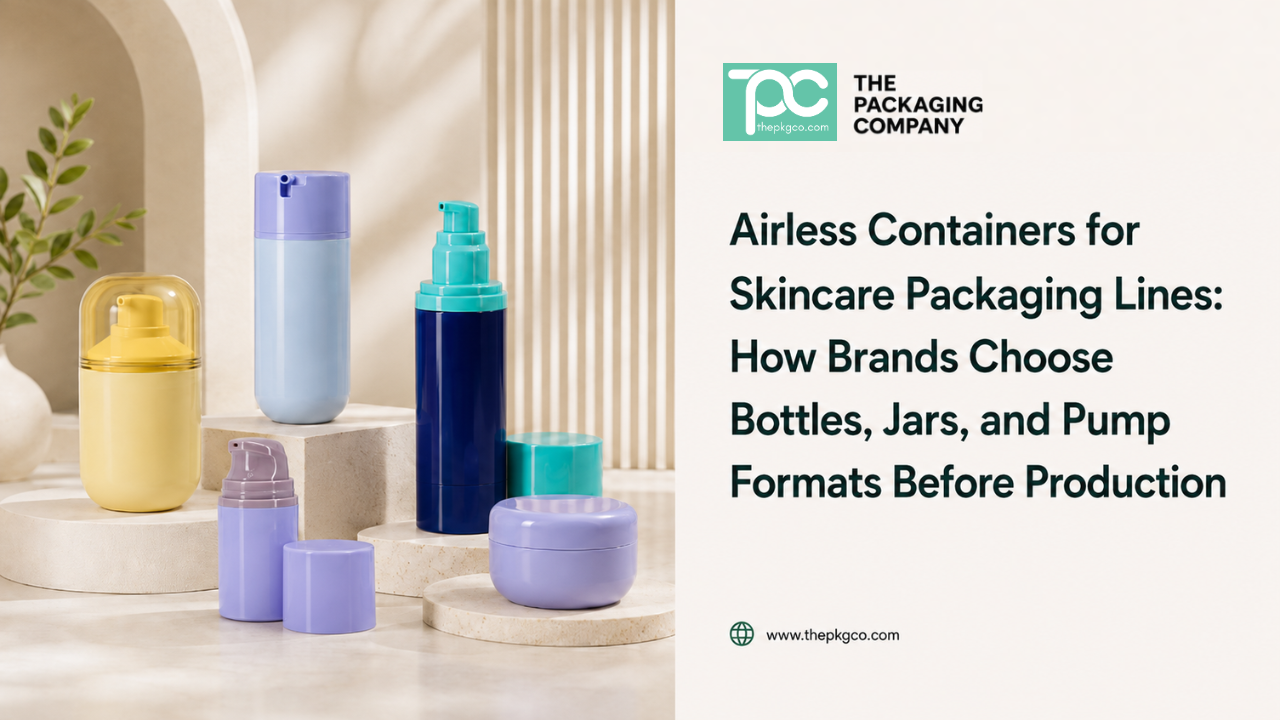
Skincare brands rarely build product lines around one package forever. A brand may start with one serum, then add a moisturizer, eye cream, treatment lotion, mask, or body care product. As the line grows, the packaging needs to feel connected across different formulas, sizes, and product formats.
This is where airless containers become important. Airless packaging is not only one bottle style. It can include airless pump bottles, airless jars, refillable airless formats, dual-chamber bottles, mono-material options, and other packaging structures designed for cosmetic and skincare products.
For brands preparing a skincare packaging line, the goal is not only to choose one good-looking container. The goal is to choose a packaging system that supports product positioning, decoration, MOQ, sample review, and future production consistency.
Why Airless Containers Need Line Planning
Choosing one airless cosmetic bottle is different from planning a full skincare line. One package may work well for a serum, but the brand may need a different format for a moisturizer, eye product, or cream-based product.
Brands comparing airless packaging solutions should think about how each container fits into the larger product family.
Line planning helps brands answer questions such as:
- Which products should use airless pump bottles?
- Which products may work better in airless jars?
- Should the full line use matching caps, colors, or finishes?
- Can different containers support a consistent brand look?
- Will the same decoration method work across the line?
- Can the packaging be repeated for future reorders?
When these questions are answered early, the final product line feels more organized and easier to scale.
Start With the Product Format
The first step is matching the package format to the product format. Different skincare products need different dispensing and presentation styles.
Common airless packaging directions include:
- Airless pump bottles for serums, lotions, moisturizers, sunscreens, and treatment formulas
- Airless jars for creams, masks, balms, and thicker skincare textures
- Dual-chamber airless bottles for products that need two formulas stored separately
- Refillable airless bottles for brands building refill systems or repeat-purchase packaging models
- Mono-material airless containers for brands reviewing simplified material structures
- Glass airless pump bottles for premium skincare positioning
Some skincare lines may also use related cosmetic jars for products that do not require an airless system. The important point is to make each format feel intentional, not random.
Choose Airless Pump Bottles for Controlled Dispensing
Airless pump bottles are often used when brands want controlled dispensing, clean product presentation, and a more polished user experience. They can be useful for formulas that customers apply in measured amounts, such as serums, moisturizers, primers, eye creams, and sunscreens.
When reviewing airless pump bottles, brands should consider:
- Bottle size
- Pump style
- Cap shape
- Output expectations
- Decoration method
- Color matching
- MOQ and reorder needs
The package should support both the product experience and the brand’s shelf presentation.
Use Airless Jars for Cream-Based Products
Not every skincare product belongs in a pump bottle. Creams, masks, balms, and thicker products may need a jar-style package. Airless jars can give brands a way to support jar-based product experiences while still keeping the packaging line connected to the broader airless category.
Brands should review whether an airless jar fits:
- Product texture
- Usage amount
- Customer application habits
- Decoration needs
- Line consistency with other airless containers
- Retail or e-commerce presentation
If a brand also uses traditional cosmetic jars elsewhere in the line, the design system should still feel connected through color, cap finish, label hierarchy, or decoration style.
Plan Visual Consistency Across Bottles and Jars
A skincare line may include airless pump bottles, airless jars, and cosmetic jars. These packages do not need to be identical, but they should feel like they belong to the same brand family.
Brands can build consistency through:
- Matching base colors
- Coordinated caps or collars
- Consistent logo placement
- Repeated label hierarchy
- Similar finish direction
- Color coding by product benefit
- Consistent carton or outer packaging style
This matters because customers often judge skincare products as a full line, not only as individual SKUs. Strong packaging consistency can make the product line feel more complete and professional.
Think About Decoration Before Choosing the Final Format
Decoration should be reviewed early because not every airless container supports the same artwork, printing, label, or finish direction.
Before approving a container, brands should ask:
- Can the selected bottle support the desired logo placement?
- Is there enough label space for product information?
- Can the same color be matched across bottles and jars?
- Will the finish look consistent across different materials?
- Can the same decoration method be used across multiple SKUs?
- Will the decoration be repeatable for reorders?
For premium skincare lines, small decoration differences can make the line feel less cohesive. This is why decoration planning should happen before bulk production, not after the bottle is already selected.
Review MOQ by Format
MOQ can vary depending on the airless container type, material, size, cap, pump, color, and decoration method. A pump bottle may have one MOQ, while an airless jar or custom color option may have another.
Brands should confirm:
- MOQ for each selected format
- MOQ for custom color
- MOQ for decoration method
- Whether multiple SKUs can share components
- Whether caps or pumps can be repeated across the line
- Reorder MOQ and lead time
MOQ planning helps brands avoid building a packaging line that looks good on paper but does not fit the launch budget or inventory plan.
Use Samples to Compare the Full Packaging Line
Samples should not be reviewed one by one only. When possible, brands should place samples together and review how the full line looks as a group.
Sample review should include:
- Size relationship between products
- Cap and pump consistency
- Label readability
- Color matching
- Decoration alignment
- How bottles and jars look together
- Whether each package fits the product’s role
This helps the brand catch inconsistencies before bulk orders begin.
Plan for Future SKUs
Skincare lines often grow over time. A brand may launch with three products and later add a night cream, eye product, body product, treatment serum, or sunscreen.
Before choosing final packaging, brands should ask:
- Can this airless container family support future sizes?
- Are matching bottles or jars available?
- Can the same cap or pump direction continue?
- Can the same decoration method be repeated?
- Will the packaging still make sense if the line expands?
Planning for future SKUs helps brands avoid rebuilding the packaging system every time a new product is added.
Work With an Airless Packaging Supplier That Understands Product Lines
When comparing suppliers, brands should look for more than a single available bottle. A strong airless packaging supplier should help the brand think through bottle formats, jar options, decoration, MOQ, sample review, and production planning.
This is especially important for brands building multiple products, because line consistency depends on more than one container.
Brands should confirm whether the supplier can support:
- Airless pump bottles
- Airless jars
- Related cosmetic jars
- Multiple sizes
- Custom colors
- Decoration planning
- Sample review
- Wholesale production support
- Reorder consistency
The more connected the packaging system is, the easier it becomes to support a polished skincare line.
Airless Container Planning Checklist
Before approving airless containers for a skincare packaging line, brands should confirm:
- Product formats in the line
- Which SKUs need airless pump bottles
- Which SKUs may need airless jars
- Whether cosmetic jars are needed for non-airless products
- Size and fill direction for each SKU
- Cap, pump, and jar consistency
- Decoration method
- Color matching
- MOQ by format
- Sample review process
- Future SKU planning
- Reorder requirements
Final Recommendation
Airless containers should be selected as part of a complete skincare packaging line, not as isolated product choices. Brands should compare airless pump bottles, airless jars, related cosmetic jars, decoration methods, MOQ, sample review, and future SKU needs before production.
The Packaging Company works with skincare and cosmetic brands to review airless containers, airless pump bottles, airless jars, cosmetic jars, decoration options, MOQ, sampling, and wholesale production requirements. Brands preparing a skincare packaging line can speak with our packaging team to compare packaging options before production.
FAQ: Airless Containers for Skincare Packaging Lines
What are airless containers used for in skincare packaging?
Airless containers are commonly used for serums, moisturizers, eye creams, sunscreens, treatment lotions, creams, masks, and other skincare products that need controlled dispensing or a premium package format.
Are airless pump bottles different from airless jars?
Yes. Airless pump bottles are often used for serums, lotions, and moisturizers, while airless jars may be used for creams, masks, balms, and thicker skincare products.
Can airless containers and cosmetic jars be used in the same skincare line?
Yes. A skincare line may use airless pump bottles, airless jars, and cosmetic jars together as long as the colors, caps, labels, and decoration are planned consistently.
What should brands review before choosing airless containers?
Brands should review product format, container size, pump or jar style, decoration method, color matching, MOQ, samples, and future reorder needs.
Why should brands work with an airless packaging supplier?
An airless packaging supplier can help compare bottle and jar formats, decoration options, MOQ, samples, and production requirements before a brand places a bulk order.