



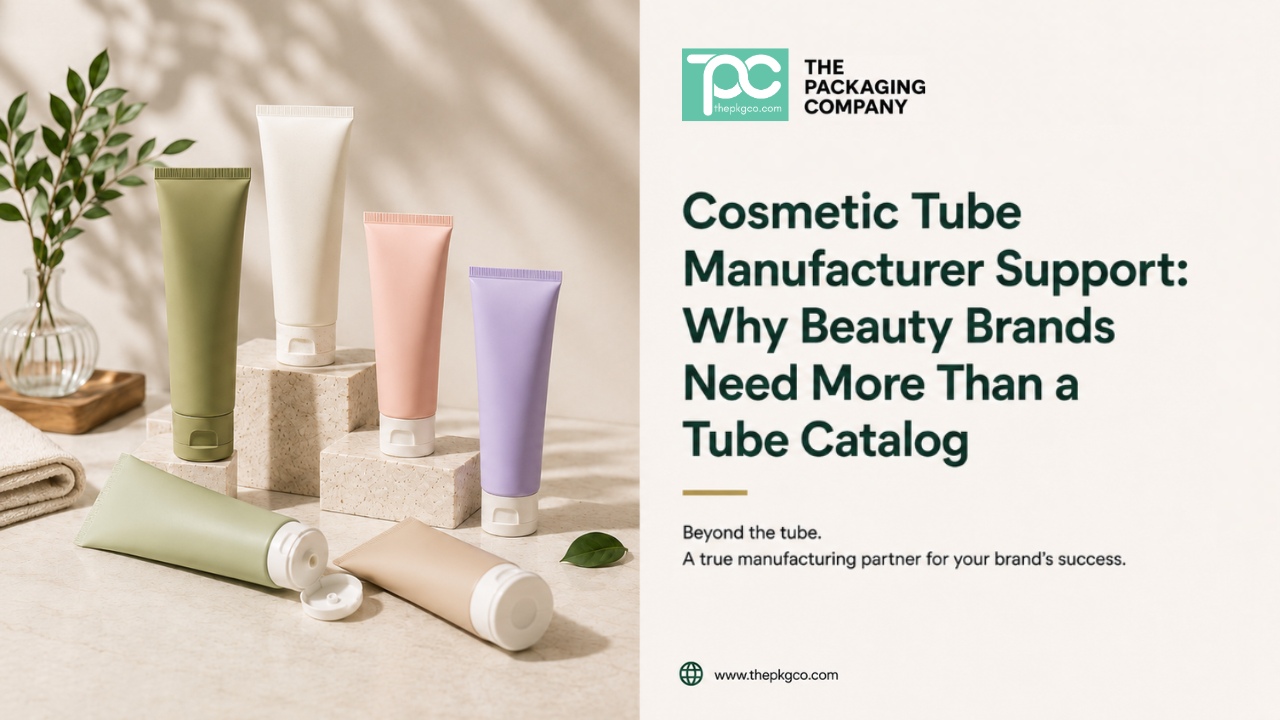
Many beauty brands start sourcing cosmetic tubes by looking through a catalog. A catalog can be helpful for comparing shapes, sizes, caps, and basic material options. But for brands preparing a real skincare, cosmetic, or personal care launch, choosing from a tube catalog is only the beginning.
A squeeze tube still needs to match the product format, brand positioning, decoration method, MOQ, sample expectations, and future production needs. For this reason, working with a cosmetic tube manufacturer should mean more than selecting a product code from a list.
This article explains why beauty brands need more than a tube catalog when sourcing cosmetic squeeze tubes, custom cosmetic tubes, and wholesale tube packaging for product launches.
Why a Cosmetic Tube Catalog Is Only the Starting Point
A tube catalog can show available sizes, shapes, cap styles, and general packaging options. It may help a brand narrow down whether it wants a slim tube, wide tube, flip-top cap, screw cap, glossy finish, matte finish, or specialty applicator.
However, a catalog usually does not answer the deeper production questions that matter before a brand places a bulk order.
Beauty brands still need to confirm:
- Whether the squeeze tube size fits the product fill volume
- Whether the cap style supports the product use case
- Whether the material works for the brand’s positioning
- Whether the decoration method can match the design
- Whether the MOQ fits the launch plan
- Whether the squeeze tube family can support future SKUs
- Whether the supplier can support samples and production communication
Brands reviewing squeeze tube packaging should look beyond the catalog image and review how the tube will work as part of the full packaging project.
What Brands Should Consider When Sourcing Cosmetic Tubes
When sourcing cosmetic tubes, the first quote or product photo should not be the only deciding factor. Tube packaging includes the body, shoulder, cap, applicator, decoration, surface finish, packing method, and production requirements. These details all affect the final customer experience.
Before moving forward with a supplier, brands should confirm how the packaging partner supports tube selection, component matching, decoration planning, MOQ, sampling, and reorder needs.
Important points to confirm include:
- Whether the tube size and shape fit the product line
- Whether cap options are available for the intended use case
- Whether the tube material supports the brand’s price point and positioning
- Whether decoration colors and finishes can match the approved design
- Whether packing standards protect empty tubes, caps, and decorated surfaces
- Whether communication is clear when production questions appear
- Whether the same tube components can be repeated for future reorders
For beauty brands, these details can affect launch timing, packaging consistency, and how professional the final product feels in the customer’s hand.
Cosmetic Tube Material Choices Need More Context Than a Catalog Can Provide
Cosmetic tubes can be produced in different material directions depending on the product category and brand goals. A catalog may list plastic cosmetic tubes, aluminum cosmetic tubes, or other tube structures, but the right choice depends on the product strategy.
Brands should consider:
- Whether the product needs a soft, flexible tube feel
- Whether the brand wants a lightweight packaging option
- Whether the product needs a more premium or clinical presentation
- Whether the tube should support matte, glossy, metallic, or natural-looking decoration
- Whether the material direction fits the product price point
This is where manufacturer support matters. The goal is not simply to pick a tube material. The goal is to choose a packaging direction that supports the product, customer experience, and brand story.
Cap and Applicator Options Should Match the Product Use Case
The cap is one of the most important parts of the tube experience. A product can look good on the outside but feel inconvenient if the cap is hard to open, does not match the product format, or feels inconsistent with the brand position.
Common cap and applicator considerations include:
- Flip-top caps for daily-use creams, lotions, and cleansers
- Screw caps for a cleaner or more traditional presentation
- Nozzle tips for targeted dispensing
- Slant tips or rounded applicators for lip, eye, or specialty products
- Cap color and finish matching across a product line
For brands building custom cosmetic tubes, cap decisions should be made early because cap style affects the look, usability, packing, MOQ, and customer experience.
Decoration Support Matters Before Artwork Is Finalized
Tube decoration is not only a design decision. Printing method, tube material, finish, color, artwork size, and curved surface area all affect the final result.
Before finalizing artwork, brands should review whether the selected tube can support:
- Direct printing
- Labels
- Hot stamping
- Matte or glossy finishes
- Metallic accents
- Custom color matching
- Readable ingredient and direction text
- Barcode or QR code placement
A strong cosmetic tube manufacturer should help brands understand decoration limits before the design is locked. This can reduce the chance of artwork revisions, poor print readability, or design changes after sampling.
MOQ and Production Planning Should Be Discussed Early
MOQ is one of the biggest practical questions in cosmetic tube sourcing. The required order quantity can depend on tube size, material, cap style, decoration method, color, and production setup.
Before choosing a tube direction, brands should ask:
- What is the MOQ for this tube size?
- Does custom color affect MOQ?
- Does the cap choice affect MOQ?
- Does the decoration method affect MOQ?
- Can multiple SKUs share the same tube family?
- What is the expected production timeline?
- What should be planned for future reorders?
MOQ planning helps brands avoid choosing a tube format that looks good but does not fit the launch budget or inventory plan.
Why Made-to-Order Squeeze Tube Support Can Help Beauty Brands
For many beauty brands, the best packaging is not a generic tube pulled from a shelf. It is a tube format selected, decorated, and produced around the brand’s actual product line.
Made-to-order support can help brands review:
- Tube size and fill direction
- Material options
- Cap and applicator selection
- Decoration method
- Custom color direction
- MOQ and timeline
- Sample expectations
- Reorder planning
This is different from simply selecting a catalog SKU. It gives the brand more control over how the final packaging supports the product launch.
How TPC Supports Cosmetic Tube Projects
The Packaging Company works with beauty, skincare, and personal care brands to review tube packaging as a complete project, not only as a product listing. This includes helping brands compare available tube options, cap styles, decoration directions, MOQ, and production needs.
TPC supports brands with:
- Cosmetic tube format review
- Material and cap option guidance
- Custom decoration planning
- Sample coordination
- MOQ discussion
- Production communication
- Wholesale order support
- Reorder planning
This type of support is useful for brands preparing new product launches, line extensions, skincare sets, personal care products, and custom tube packaging projects.
Why Production Communication Matters
Tube packaging involves many details that can affect the final result. A brand may need to confirm artwork placement, cap color, tube finish, carton packing, or sample changes before production begins.
Clear production communication helps reduce confusion around:
- Approved sample details
- Final artwork files
- Cap and tube matching
- Decoration expectations
- Production timeline
- Carton packing requirements
- Reorder consistency
For brands comparing cosmetic tubes suppliers, the level of communication and production support can be just as important as the tube itself.
When Brands Need More Than a Squeeze Tube Catalog
A cosmetic squeeze tube catalog may be enough if a brand only needs a very basic tube with limited customization. But many beauty brands need more support when the packaging affects product positioning, retail presentation, or future product line growth.
Brands may need more than a catalog when they are:
- Launching a new skincare or cosmetic product
- Creating custom cosmetic tubes
- Building a product line across multiple SKUs
- Matching caps and colors across products
- Reviewing decoration options
- Planning wholesale orders
- Preparing for future reorders
In these cases, working with a packaging partner can help connect the design, sourcing, sampling, and production planning process.
Cosmetic Tube Sourcing Checklist
Before choosing a cosmetic tube manufacturer, beauty brands should confirm:
- Tube size and shape options
- Material options
- Cap and applicator choices
- Decoration methods
- Custom color possibilities
- MOQ requirements
- Sample process
- Production timeline
- Packing expectations for empty components
- Reorder support
Final Recommendation
Beauty brands need more than a tube catalog when sourcing cosmetic tubes for a serious product launch. The right packaging partner should help review tube size, material, cap style, decoration, MOQ, sampling, production planning, and reorder needs.
The Packaging Company supports beauty and skincare brands with cosmetic squeeze tubes, custom cosmetic tubes, plastic cosmetic tubes, decoration options, cap styles, MOQ, sampling, and wholesale tube packaging. Brands preparing a tube packaging project can speak with our packaging team before choosing a final direction.
FAQ: Cosmetic Tube Manufacturer Support
Why do beauty brands need more than a cosmetic tube catalog?
A catalog can show tube options, but brands still need support with material choice, cap fit, decoration, MOQ, sampling, production planning, and reorder consistency.
What should brands ask a cosmetic tube manufacturer?
Brands should ask about tube sizes, material options, cap styles, decoration methods, custom color, MOQ, sample process, production timeline, packing, and reorder support.
Can TPC help with custom cosmetic tubes?
Yes. TPC helps beauty and skincare brands review custom cosmetic tube options, including tube styles, materials, cap choices, decoration, MOQ, sampling, and wholesale production needs.
What tube options are common for cosmetic products?
Common cosmetic tube options include plastic cosmetic tubes, aluminum cosmetic tubes, squeeze tubes, tubes with flip-top caps, screw caps, nozzle tips, and specialty applicators.
What products commonly use cosmetic squeeze tubes?
Cosmetic squeeze tubes are commonly used for cleansers, lotions, creams, sunscreens, masks, hand creams, body care products, lip treatments, gels, and personal care formulas.