



The cannabis vape category is one of the most competitive shelves in any dispensary. Cartridges and disposables from dozens of brands sit behind the same glass, at similar price points, with similar THC percentages. The consumer standing at the display case has maybe 30 seconds to make a decision.
In that moment, the packaging is doing the selling.
Vape brands that have figured this out are investing in packaging that makes the product impossible to ignore. Brands that haven’t are competing on price and hoping the budtender says the right thing. Those are two very different businesses.
The Brands Setting the Standard
A handful of cannabis vape brands have built outsized retail presence not just through product quality but through packaging that communicates something before the consumer reads a word.
STIIIZY built a category. The sleek, minimal black aesthetic across their pod system created a visual language that is instantly recognizable on any shelf. The consistency across the product line, the hardware, and the retail packaging created a brand impression that functions like a luxury goods brand. Consumers who own a STIIIZY battery come back for pods partly because the pods look like they belong together with the rest of the ecosystem. That is packaging doing brand architecture work.
Jeeter went the other direction and won too. Loud, expressive, pop-culture-referencing visuals that feel more like streetwear than cannabis. The packaging communicates energy, fun, and cultural relevance. At the shelf, a Jeeter display looks like nothing else next to it. For the audience they are talking to, that differentiation is exactly the point.
Friendly Farms and Raw Garden represent the premium craft end. Clean, considered design systems that communicate precision and quality without shouting. The kind of packaging that signals the brand takes the product seriously, which makes the consumer take the product seriously.
What these brands share is the understanding that vape packaging is not a compliance exercise. It is a brand moment. The hardware is often similar across the category. The oil quality varies but the consumer cannot verify it on the spot. The packaging is the one thing they can actually evaluate in the store, and they do.
Why Vape Packaging Has to Work Harder Than Pre-Roll Packaging
Pre-roll packaging benefits from a product that is visible, familiar, and sensory before the sale. Flower or a well-rolled pre-roll tells its own story through smell and appearance. Vape hardware in a sealed package tells none of that story. Everything the consumer knows about what they are buying comes from the packaging and the label.
That puts more pressure on vape packaging design than almost any other cannabis format. The package has to communicate:
What the product is (cart, disposable, pod system)
What the experience will be like (strain profile, effect, flavor direction)
What the brand stands for (premium, craft, accessible, culturally specific)
Why this product rather than the one next to it
Most vape packaging tries to do all four things with a small box and a label. The brands that do it well understand that small does not mean limited. Compact formats reward thoughtful design more than large ones, because every element has to earn its place. <cite index=”16-1″>Limited design space is where brands get bold. Strong typography, sleek color schemes, and modern layouts help convey a high-tech, contemporary feel — and every small detail counts when the space is tight.</cite>
What Premium Vape Packaging Looks Like in 2026
<cite index=”15-1″>In 2026, cannabis packaging design is about fitting seamlessly into consumers’ lives. The loudest pack does not win anymore. The clearest, cleanest, and most considered does. Brands are rejecting outdated tropes in favor of wellness-inspired aesthetics, sustainable materials, and storytelling that positions cannabis as part of a modern lifestyle.</cite>
For vape specifically, the design trends worth paying attention to are:
The pharma-cosmetic aesthetic. Clean white or neutral base, precise typography, minimal graphic noise. This look communicates quality through restraint and has taken significant market share from the loud, weed-leaf-heavy graphics that dominated earlier in legalization. Consumers who would not have bought cannabis five years ago are buying it now, and they want packaging that does not announce itself as cannabis packaging.
Tactile premium finishes. <cite index=”16-1″>Matte vs. glossy lamination used strategically, spot UV and embossing to highlight logos, and soft-touch coatings that give packaging a velvet-like texture. These are the finishes that make consumers pick up the product and not put it back down.</cite>
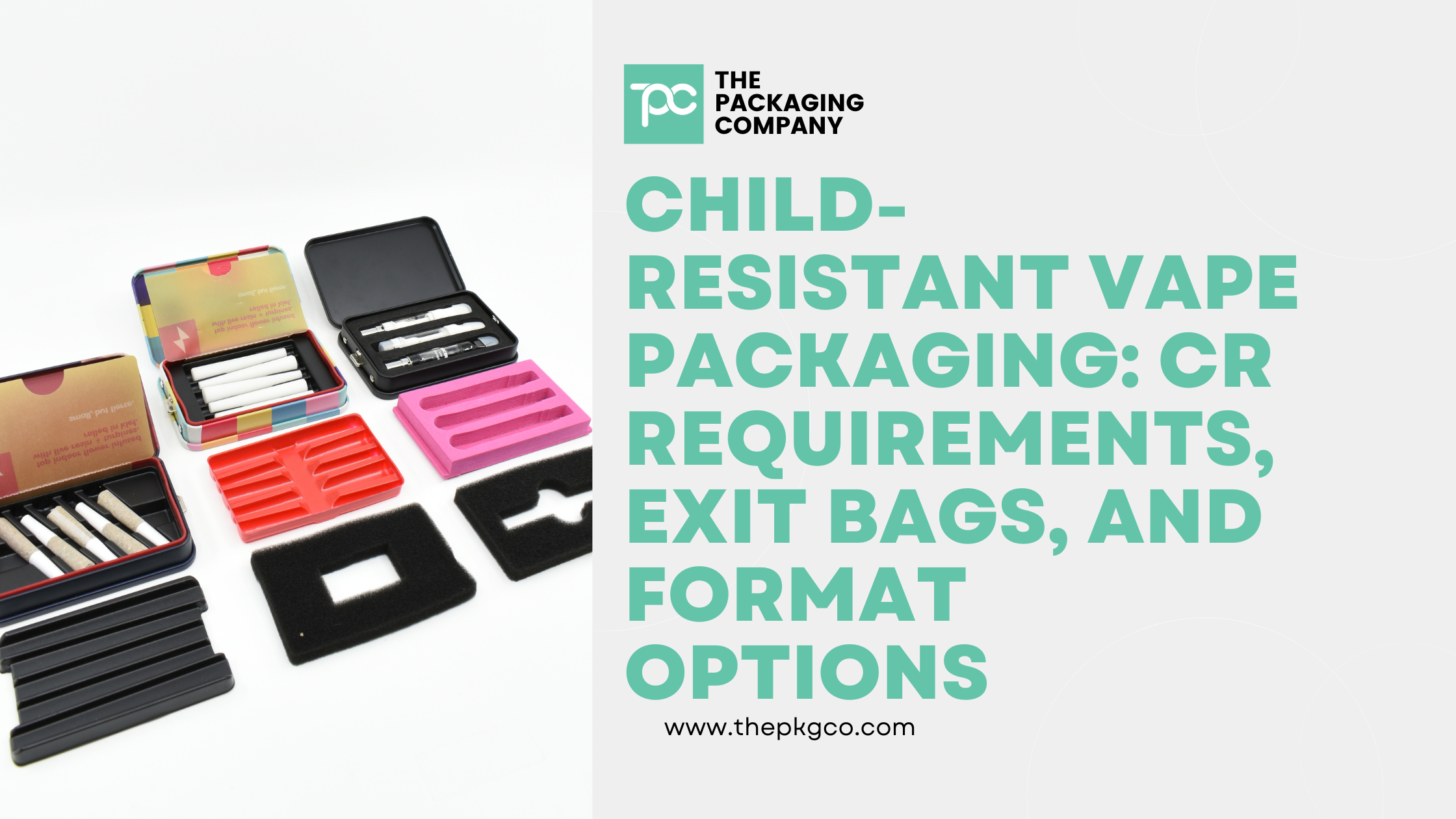
Structural differentiation. The box that everyone else uses is the box that disappears on the shelf. Vape brands building real retail presence are thinking about structure: how the package opens, how the product is revealed, what the unboxing moment feels like. A tin that opens to a foam-seated cartridge in a custom compartment is a different retail experience than a cartridge rattling around in a cardboard box.
Consistent system design across SKUs. The brands with the strongest shelf presence are not designing SKU by SKU. They are building a visual system: consistent brand architecture, variant differentiation through color or typography, immediate recognizability across the product line. The consumer who buys one SKU should be able to identify the brand’s other products at a glance.
The Case for Tins in Premium Vape Packaging
Most cannabis vape packaging is cardboard. That is not a criticism. It works. But it means that a vape brand choosing a different format has an immediate visual differentiator on the shelf.
CR tins for vape packaging are underused relative to how much brand work they can do. A custom-decorated tin with a foam insert holding a cartridge or disposable in a precisely cut compartment is a retail object that the consumer does not throw away. It becomes a storage piece, a desk object, a brand impression that extends beyond the transaction.
The mechanics of a tin vape package work well. The cartridge or disposable is protected from impact during shipping and retail handling. The tin can accommodate the device, a battery if it is a pod system, a charging cable if applicable, and any inserts the brand wants to include. The insert is custom-cut foam engineered to the exact dimensions of the hardware, which means the product arrives seated and presented rather than loose.
Lithographic printing on the tin exterior allows full custom decoration at a quality level that cardboard boxes and printed bags cannot match. The finish, the color, the detail level are all higher. And the physical weight of the tin in the consumer’s hand signals premium before they have opened it.
For brands selling cartridges at $50 or above, or for limited-edition or collaboration drops where the packaging is part of the product, a tin is not an expensive option. It is the format the price point requires.
TPC’s CR tin line covers the formats that work for vape applications:
The Child-Resistant Snap Tin (V5) at 74×58×20mm accommodates most single cartridge or slim disposable formats with a custom foam insert.
The Child-Resistant Snap Tin, Extended (V5E) at 95×57×20mm works for larger disposables, battery-and-pod kits, or multi-piece configurations.
The Dual-Button Pre-Roll Tin Box (V4A) at 101×63×15mm is a slim-profile option that works well for cartridge singles where a lower-profile format suits the product.
The Pre-Roll and Edible Tin Case (V7) at 102×97×27mm accommodates multi-piece kits, larger disposables, or variety packs where interior volume matters.
All formats are CR certified to 16 CFR §1700.20 and are made to order with full custom lithographic decoration. Insert trays are engineered per project in foam or other materials to the specific hardware dimensions being packaged.
When Bags Make Sense for Vape
Not every vape SKU needs a tin. For high-volume value-tier cartridges, accessible price points, or brands where the economics require the lowest possible packaging cost, CR mylar bags are a viable and cost-efficient format.
A well-designed vape bag with premium print quality, soft-touch lamination, and a clear window panel that shows the cartridge hardware can hold its own at mid-tier price points. The key is treating the bag as a design object rather than as a compliance container with a label stuck on.
Where bags fall short is at premium price points. A $60 limited-edition live rosin cartridge in a mylar bag is a brand signal mismatch that the consumer registers even if they cannot articulate why. The packaging tells them one thing. The price tag tells them another. The format that resolves that contradiction is not a better-designed bag.
TPC’s CR Mylar Bags are available in multiple sizes with full custom printing in matte, gloss, metallic, and specialty finishes. MOQ 5,000 units.
Building a Vape Packaging Program That Scales
The brands that maintain strong packaging programs across their vape lines plan the format decisions before they plan the design. Format first, design second. Because the format determines the design constraints, the production timeline, the MOQ economics, and the retail impression the brand makes.
For a vape brand building or expanding a packaging program, the questions to answer before commissioning design are:
What price point is the product being sold at, and what does the packaging need to communicate about that price point?
Is this a flagship SKU, a volume driver, or a limited-edition drop? The format and investment level should reflect the strategic role of the product in the line.
What hardware format is being packaged? The dimensions of the cartridge, disposable, or pod system determine which tin formats are viable and what the foam insert configuration needs to be.
Is this a single SKU or part of a product line? If it is part of a line, the packaging system architecture matters as much as the individual SKU design.
TPC works with brands from this question stage through production, with physical samples standard before any bulk commitment. Custom foam inserts are engineered to the specific hardware dimensions being packaged.
For the full CR packaging overview, see our child-resistant packaging solutions guide. To discuss your specific vape hardware and packaging program, contact our team.
Frequently Asked Questions
Why do some vape brands use tins instead of boxes or bags? Tins provide a retail and unboxing experience that cardboard and bags cannot. The weight communicates premium before the consumer reads anything. A custom foam insert presents the hardware as a precision object rather than a product in a package. And tins do not get thrown away. Consumers keep them, which extends brand presence beyond the transaction. For premium-priced vape products, the tin is often the format that justifies the price point.
What hardware dimensions work with TPC’s tin formats for vape? TPC custom-engineers foam inserts to the specific hardware being packaged, so the tin format is selected based on the overall device dimensions and any accompanying components (battery, cable, accessories). Share your hardware dimensions with TPC and the team can confirm which tin configuration fits and engineer the insert accordingly.
Can I use tins for a vape line with multiple SKUs? Yes. A single tin format with custom foam inserts per hardware configuration, and lithographic decoration on the tin exterior, can serve multiple SKUs with SKU-specific content applied by label. This approach consolidates the MOQ at the format level rather than requiring a separate production run for each SKU.
What print and finish options are available on TPC vape tins? Full lithographic printing on the tin exterior in custom colorways, plus embossing, debossing, matte and gloss finishes, spot UV, and specialty surface treatments. Interior foam inserts are available in custom colors and can be branded with a logo if desired. These are the finish options that differentiate a premium vape tin from standard packaging.
What MOQ applies to TPC’s CR tin formats? MOQ for snap tins (V5 and V5E) and the V4A and V7 hinge-lid formats starts at 5,000 units. All formats are made to order. Pre-production samples with custom foam inserts are standard before any production commitment.
Are CR mylar bags a good option for vape packaging? For value-tier and volume-driver SKUs where per-unit packaging cost is the primary constraint, yes. A well-designed bag with premium print quality can be a strong mid-tier vape packaging option. For premium-priced products, a tin is typically the format that better supports the price point and the brand positioning the product needs.