


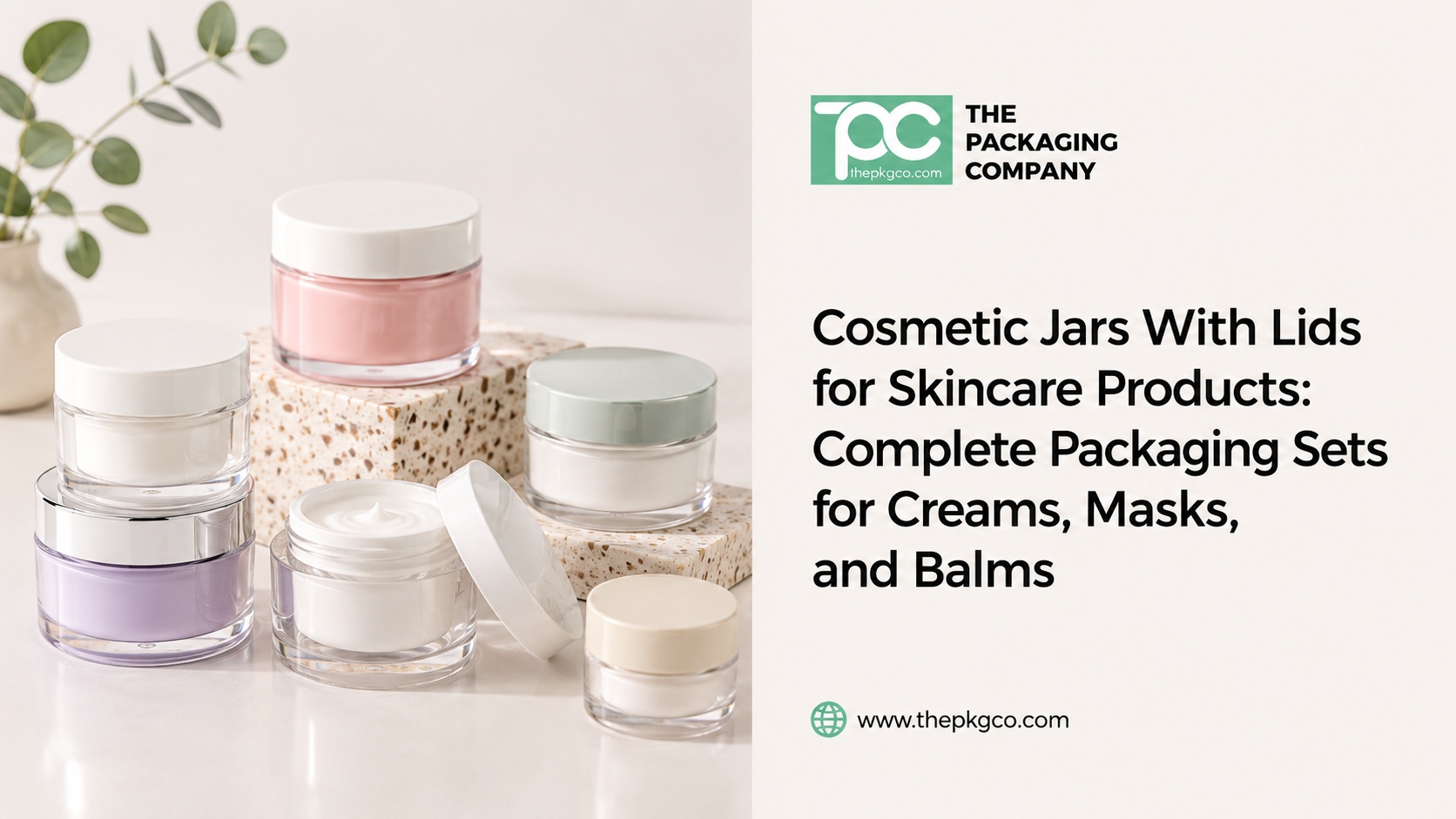
Cosmetic jars with lids are commonly used by skincare brands that need complete packaging sets for creams, masks, balms, moisturizers, body care products, treatment creams, and specialty formulas. The jar body is important, but the lid also plays a major role in how the finished packaging looks, feels, and presents the product.
For skincare brands, choosing cosmetic jars should not only mean selecting a jar size or material. Brands also need to review how the jar and lid work together as an empty packaging component set, how the closure affects shelf presentation, how the packaging fits the product category, and how samples should be reviewed before bulk production.
This guide explains how brands can compare cosmetic jars with lids as a complete packaging direction for skincare and cosmetic product lines.
Why the Lid Matters in Cosmetic Jar Packaging
The lid is one of the first details customers notice when they pick up a cosmetic jar. Even when the jar body looks clean and premium, the wrong lid can make the packaging feel unfinished or inconsistent.
A lid affects the overall shape, height, shelf presence, color direction, and customer experience of the jar. A matte lid may create a clean skincare look. A glossy lid may feel more classic. A metallic lid may support a more premium presentation. A clear or double-wall style may create a more elevated cosmetic appearance.
Because the lid is so visible, brands should review the jar and lid together instead of treating the lid as a small secondary detail.
Common Products That Use Cosmetic Jars With Lids
Cosmetic jars with lids are used across many skincare and beauty categories. Common applications include face creams, night creams, moisturizers, facial masks, body butter, balms, scrubs, eye creams, treatment creams, and specialty skincare products.
Different product types may need different jar presentations. A lightweight moisturizer may work well in a clean plastic or acrylic jar. A premium cream may use a heavier-looking jar with a more elevated lid. A mask or body care product may need a larger jar format that feels practical for repeated use.
The goal is to choose a jar-and-lid set that matches the product’s position in the skincare line.
Jar and Lid Pairing Should Look Intentional
When brands review cosmetic jar packaging, the jar body and lid should feel like they belong together. The lid should match the jar’s shape, height, material direction, color, and brand style.
A strong jar-and-lid pairing can make the packaging feel more finished. A weak pairing may make the product look less polished, even if the jar body itself is attractive.
Brands should review physical samples from multiple angles. The jar should be checked from the front, top, side, and product photography view. This helps the brand see whether the full component set supports the intended shelf look.
Material Direction Shapes the Brand Impression
Cosmetic jars with lids can be produced in different material directions depending on the product type and brand positioning. Brands may compare plastic jars, acrylic jars, glass jars, aluminum jars, refillable jar formats, or other custom jar packaging options.
Glass cosmetic jars can support a more premium or skincare-focused look. Acrylic jars can create a clean and elevated cosmetic appearance. Plastic jars can be useful for larger-volume products, body care, masks, or daily-use skincare. Aluminum jars may fit certain balm, salve, or specialty product directions.
The right material should be selected based on the product category, desired shelf presentation, brand style, decoration plan, and production requirements.
Closure Style Should Match the Product Presentation
Most cosmetic jars use screw-top lids, but the lid style can still vary by shape, finish, height, edge detail, liner direction, and material. These details affect how the packaging feels in hand and how the product appears on the shelf.
For a minimal skincare brand, a simple flat lid may work well. For a premium cosmetic product, a heavier or more decorative lid may be more appropriate. For a body care product, the lid should feel practical and easy to handle.
Brands should review the closure style with the actual jar sample before approving a final packaging direction.
Label and Print Area Should Be Checked on the Full Set
Cosmetic jars often need enough space for the logo, product name, net weight, usage details, ingredients, barcode, and other product information. The available decoration area can change depending on the jar shape, jar height, lid size, and surface style.
Brands should review the full jar-and-lid set before finalizing artwork. A label may fit well on one jar style but feel crowded on another. Direct printing, hot stamping, color matching, labeling, matte finishes, and metallic details may also require different setup considerations.
For skincare brands with several products, the label system should be flexible enough to work across different jars without making each product look unrelated.
Sample Review Helps Avoid Packaging Mismatch
Samples are important because cosmetic jars with lids can look different in person than they do in a catalog image or product photo. The weight, lid fit, finish, color, and overall feel should be reviewed before confirming production.
Brands should check how the lid sits on the jar, how the finish looks under different lighting, how the label area feels, and whether the packaging fits the product’s price point and brand direction.
TPC supplies empty packaging components. The brand, formulator, or filling partner should confirm product filling, formula behavior, liner needs, and finished-product performance based on the actual product.
MOQ Should Be Reviewed Before Final Approval
MOQ can vary depending on jar style, material, lid direction, color matching, decoration method, and customization level. Before selecting a final jar-and-lid set, brands should confirm whether the packaging direction fits the launch plan.
This is especially important when a brand is launching more than one skincare product. Some projects may use the same jar style across multiple products, while others may require different jars or lids for each SKU.
Reviewing MOQ early helps the brand avoid choosing a packaging direction that looks good during sampling but becomes difficult to manage during production.
How Cosmetic Jars With Lids Fit Into a Skincare Line
Cosmetic jars with lids often work alongside other packaging formats in a skincare line. A brand may use jars for creams and masks, airless bottles for serums or lotions, squeeze tubes for cleansers, and droppers for oils or tincture-style products.
Even when the packaging formats are different, the line can still look connected through color, finish, label style, logo placement, and material direction.
For brands planning a broader packaging system, TPC also offers custom cosmetic packaging options across jars, bottles, tubes, airless packaging, droppers, and other beauty packaging formats.
Related Cosmetic Jar Resources
Brands comparing cosmetic jars with lids can also review TPC’s related guides on cream jars for skincare and cosmetic packaging, acrylic vs glass cosmetic jars, and cosmetic jars wholesale planning.
For brands reviewing specific jar materials, TPC also offers acrylic jars, glass jars, and other cosmetic jar packaging options for skincare and beauty brands.
How TPC Supports Cosmetic Jar Projects
The Packaging Company supports skincare and cosmetic brands with cosmetic jars, jar-and-lid packaging sets, acrylic jars, glass jars, plastic jars, cream jars, custom color direction, decoration review, sample support, MOQ planning, empty component packing, and production support.
Our team helps brands compare jar bodies, lid styles, material direction, finish options, and sample details before moving into bulk production.
If your brand is reviewing cosmetic jars with lids for skincare products, contact TPC to discuss jar options, samples, customization, MOQ, and production support.
Cosmetic Jars With Lids Review Checklist
- Confirm which skincare products will use jar packaging.
- Review the jar body and lid as one complete component set.
- Compare plastic, acrylic, glass, aluminum, or refillable jar directions.
- Check how the lid affects the product’s shelf presentation.
- Review label space, print area, and artwork placement.
- Request samples before confirming the final packaging direction.
- Confirm MOQ, customization details, and production timing.
- Coordinate with the brand’s filler or testing partner before final product launch.
Cosmetic Jars With Lids FAQ
What are cosmetic jars with lids used for?
Cosmetic jars with lids are commonly used for skincare and beauty products such as face creams, moisturizers, masks, balms, body butter, scrubs, eye creams, and treatment products.
Why is the lid important for cosmetic jar packaging?
The lid affects the jar’s appearance, shelf presentation, handling experience, and overall brand impression. Brands should review the jar and lid together before approving final packaging.
What materials are available for cosmetic jars?
Common cosmetic jar material options include plastic, acrylic, glass, aluminum, refillable formats, and other custom jar packaging options depending on product type, brand direction, and project requirements.
Can cosmetic jars with lids be customized?
Yes. Cosmetic jars with lids can be customized through material selection, lid style, color matching, labeling, screen printing, hot stamping, matte finishes, metallic effects, and other decoration methods depending on the project requirements.
Should brands request samples before ordering cosmetic jars with lids?
Yes. Samples help brands review the jar body, lid fit, finish, color, label space, and overall packaging presentation before confirming bulk production.
Can TPC help with cosmetic jar packaging projects?
Yes. TPC can help skincare and cosmetic brands compare cosmetic jars with lids, material options, lid styles, customization direction, samples, MOQ, empty component packing, and production support.