

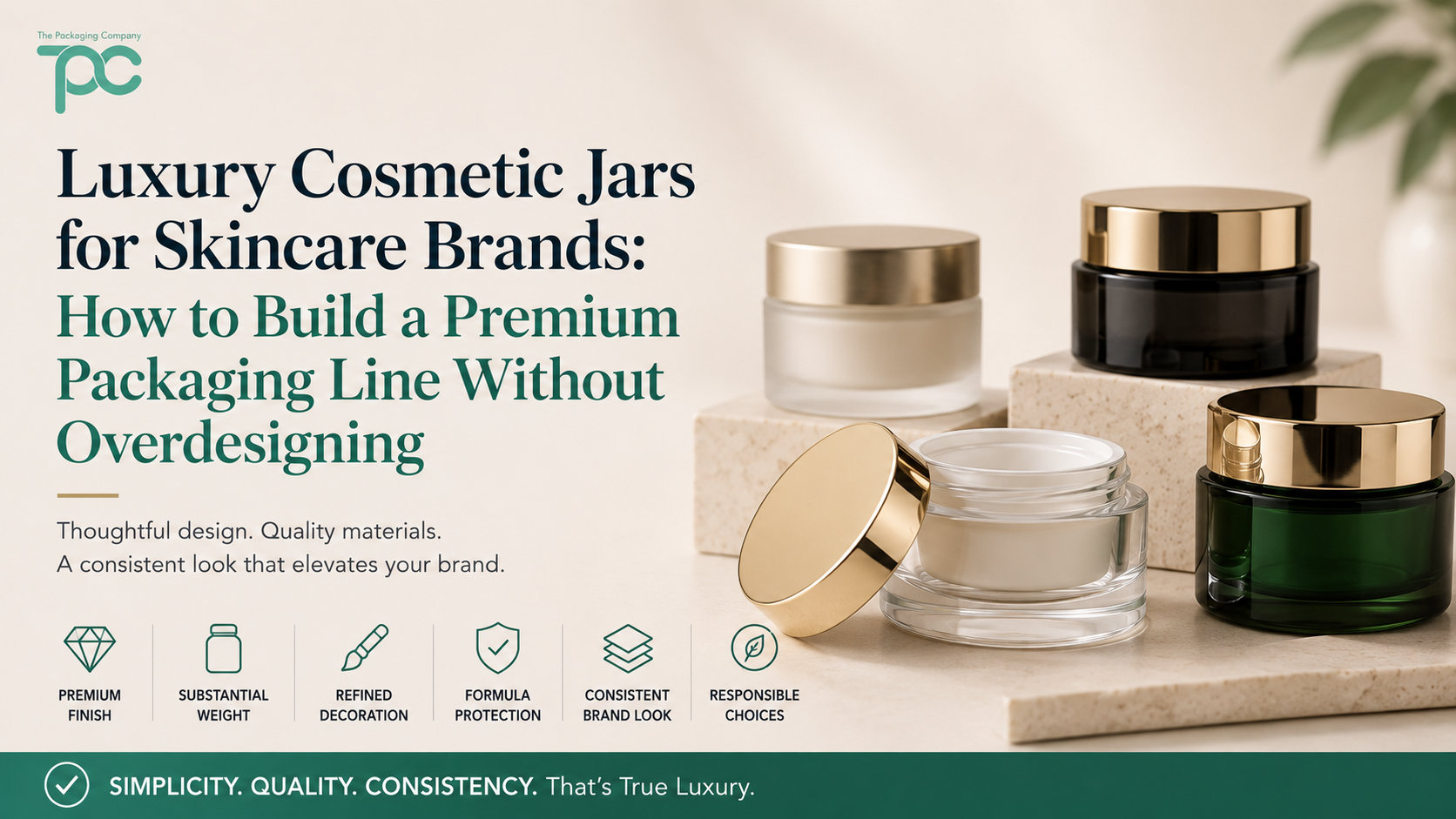
A skincare brand may start with one hero cream, but if the product sells well, the packaging decision quickly becomes bigger than one jar. The brand may add a night cream, eye balm, mask, body butter, refill product, or travel size. Suddenly, the question is no longer “Which jar looks premium?” The better question is: “Can this jar system support a full product line?”
This is where many beauty brands struggle. They choose a jar that looks impressive for one product, but the same design does not work across multiple SKUs. The material is too expensive for larger sizes. The decoration is difficult to repeat. The cap does not match future products. The MOQ does not fit reorder planning. Or the full line starts to look inconsistent once new items are added.
For skincare brands comparing luxury cosmetic jars, premium packaging should be planned as a system. This guide explains how to build a premium cosmetic jar packaging line without overdesigning, overspending, or creating production problems later.
Why Luxury Cosmetic Jars Should Be Planned as a Product Line
Luxury packaging is not only about one beautiful jar. For growing skincare brands, the better goal is consistency across the product line.
A moisturizer, mask, balm, eye cream, and body cream may each need a different size or jar structure, but they should still feel like they belong to the same brand. If every product uses a completely different material, cap style, finish, and decoration method, the line can feel disconnected.
That is why cosmetic jar packaging should be reviewed with future SKUs in mind. A strong jar system should support the current launch and still leave room for product expansion.
Start with the Product Line Map
Before choosing a jar, brands should map out the products they plan to sell now and in the next stage of growth.
For example, a skincare brand may start with:
- 50ml face cream
- 30ml eye balm
- 100ml mask
- 150ml body cream
- Travel-size moisturizer
Each product may require a different jar size, but the packaging should still feel connected. The brand may use the same cap color, same finish, same label style, or same jar shape family across the line.
This planning step helps avoid choosing a beautiful jar that only works for one product and creates problems when the brand expands.
Choose a Material Strategy Before Choosing a Jar Shape
Material choice affects cost, shelf appeal, shipping, compatibility, and future line consistency. For luxury cosmetic jars, common options include glass, acrylic, PP, PET, and double-wall plastic structures.
Instead of choosing material product by product, brands should decide how the full line should feel.
Glass-focused luxury line
A glass jar line can feel premium, clean, and substantial. This may work well for high-end creams, balms, and masks. However, glass can increase shipping weight and breakage risk, especially for larger sizes.
Acrylic-focused prestige line
Acrylic cosmetic jars can create a polished luxury appearance with thick walls and strong visual depth. They may work well for prestige skincare lines that want a high-end look with more design flexibility than glass.
Plastic jar line with premium finishing
PP or PET jars may be more practical for larger product sizes, body care, or brands balancing premium design with cost control. With the right finish, cap, and decoration, plastic jars can still look professional and elevated.
The best material strategy depends on the product category, price point, shipping method, sustainability goals, and production budget.
Do Not Use the Most Expensive Jar for Every SKU
One common mistake is assuming every product in a premium skincare line needs the heaviest or most expensive jar.
That can make the line look luxurious, but it may also create unnecessary cost. A 50ml hero cream may justify a heavier glass or acrylic jar. A 200ml body cream may need a lighter but still well-finished option. A travel size may need a more practical jar that matches the line visually without using the same expensive structure.
Premium packaging does not mean every component needs to be the most expensive option. It means each product should feel intentional and aligned with the brand.
Create Consistency with Color, Cap, and Finish
A skincare line can look premium even when different products use different jar sizes or materials. The key is consistency.
Brands can create a unified look through:
- Consistent cap color
- Matching label design
- Similar typography
- Shared matte or glossy finish
- Consistent logo placement
- Coordinated jar shapes
- Color-coded product families
For example, a brand may use frosted glass for the hero cream, acrylic for the mask, and PP for the body cream, but keep the same matte white cap, minimal label style, and logo placement. This creates line consistency without forcing every SKU into the same structure.
Avoid Overdesigning the Jar
Luxury cosmetic jars do not need too many decorative elements. Overdesign can make packaging look busy, expensive to produce, and harder to scale across SKUs.
Some brands add metallic caps, gradient color, heavy coating, hot stamping, special labels, custom molds, and multiple finishes all on one jar. The result may look interesting in a render, but it can become difficult to manufacture consistently.
A cleaner approach is often stronger:
- One strong material choice
- One controlled finish
- Clear logo placement
- Readable product information
- A cap that matches the brand
- Decoration that can repeat across the line
Premium packaging should look deliberate, not overloaded.
Think About Decoration Before Finalizing the Jar
Decoration should be planned before the final jar is selected. Not every decoration method works equally well on every material or shape.
Common decoration options include silk screen printing, hot stamping, pressure-sensitive labels, matte coating, glossy coating, frosted finishes, and custom color.
Before choosing the final jar, brands should ask:
- Can this jar support the desired logo size?
- Is there enough flat or printable area?
- Will the label fit cleanly?
- Can the decoration repeat across multiple sizes?
- Will the finish hold up during handling and shipping?
- Does the decoration method fit the MOQ and budget?
A jar may look perfect on its own, but if the decoration area is too limited, the final product may not look as polished.
Match Jar Size to Product Texture and Usage
Luxury packaging should still be practical. A jar should fit how the customer actually uses the product.
Thicker creams, balms, masks, and body butters often need wide-mouth jars for easy access. Smaller treatment products may need smaller jars that feel controlled and premium. Larger products may need packaging that is easier to handle and more efficient to ship.
For products such as cosmetic cream jars, the opening size, cap fit, liner, and jar depth all affect the customer experience.
A jar should not only look good in a product photo. It should feel right during daily use.
Plan MOQ and Reorder Strategy Early
Luxury cosmetic jars often involve custom colors, special finishes, custom caps, or decorated components. These options can affect minimum order quantity, sample timeline, production lead time, and reorder planning.
Before choosing a jar system, brands should confirm:
- MOQ for stock jars
- MOQ for custom color
- MOQ for custom decoration
- MOQ for multiple sizes
- Sampling timeline
- Production timeline
- Reorder availability
- Component consistency between production runs
This is especially important when building a full line. If one jar size has a much higher MOQ or longer lead time than the rest, it may create launch or inventory issues.
Use Sampling to Test the Full Packaging System
Sampling should not only confirm whether the jar looks good. It should confirm whether the full packaging system works.
Brands should review:
- Jar weight and feel
- Cap fit
- Opening size
- Label placement
- Decoration quality
- Color matching
- Formula compatibility
- Shipping durability
- Line consistency across multiple sizes
For luxury packaging, brands should look at samples together as a product family. A single jar may look strong alone, but the line may feel inconsistent when all SKUs are placed side by side.
Product Line Example: Building a Premium Jar System
A skincare brand launching a premium hydration line may need three jar formats:
- 50ml face cream
- 100ml overnight mask
- 15ml eye balm
Instead of using three unrelated jars, the brand can build a connected system. The face cream may use a heavier acrylic jar. The mask may use a larger PP jar with the same cap color and matte finish. The eye balm may use a smaller jar with matching decoration.
This approach keeps the product line visually connected while allowing each SKU to use packaging that fits its size, cost, and function.
When to Consider Custom Tooling
Custom tooling may be useful for established brands that need a unique jar shape or long-term packaging system. However, it may not be necessary for every launch.
For many brands, stock or semi-custom jars with strong decoration can create a premium look without the cost and timeline of custom molds.
Custom tooling may make sense when:
- The brand has strong projected volume
- The packaging shape is central to the brand identity
- Multiple SKUs will share the same custom design system
- The brand needs a unique structure not available in stock options
- The company has time for development, sampling, and testing
For smaller or faster launches, semi-custom packaging is usually more practical.
Final Recommendation
Luxury cosmetic jars should not be chosen only by how premium one jar looks. Skincare brands should think about the full packaging line, including future SKUs, material strategy, decoration consistency, MOQ, sampling, and reorder planning.
The strongest premium jar systems are not always the most complicated. They are the ones that feel consistent, intentional, practical, and scalable.
For brands comparing luxury cosmetic jars, cosmetic jar packaging, acrylic jars, cream jars, and wholesale packaging options, The Packaging Company can help review materials, decoration methods, sampling needs, and production requirements for skincare product launches and line expansions.
FAQ: Luxury Cosmetic Jars for Skincare Product Lines
How should skincare brands choose luxury cosmetic jars?
Brands should choose luxury cosmetic jars based on formula type, product size, material, decoration, cap design, MOQ, sampling, and whether the jar can support future product line expansion.
Should every product in a skincare line use the same jar?
Not always. Different products may need different jar sizes or materials, but the line should feel consistent through cap color, finish, label style, logo placement, or overall design direction.
Are acrylic cosmetic jars good for luxury skincare?
Yes. Acrylic cosmetic jars can support a premium appearance with thick walls, clarity, and a polished look. They are often used for prestige skincare products and premium jar lines.
How can brands avoid overdesigning cosmetic jar packaging?
Brands can avoid overdesigning by focusing on one strong material direction, clean decoration, consistent cap design, readable information, and packaging choices that can scale across multiple SKUs.
Why is MOQ important for luxury cosmetic jars?
MOQ affects budget, inventory planning, and launch timing. Custom colors, special finishes, custom caps, and decorated components may require higher order quantities, so brands should confirm MOQ early.