



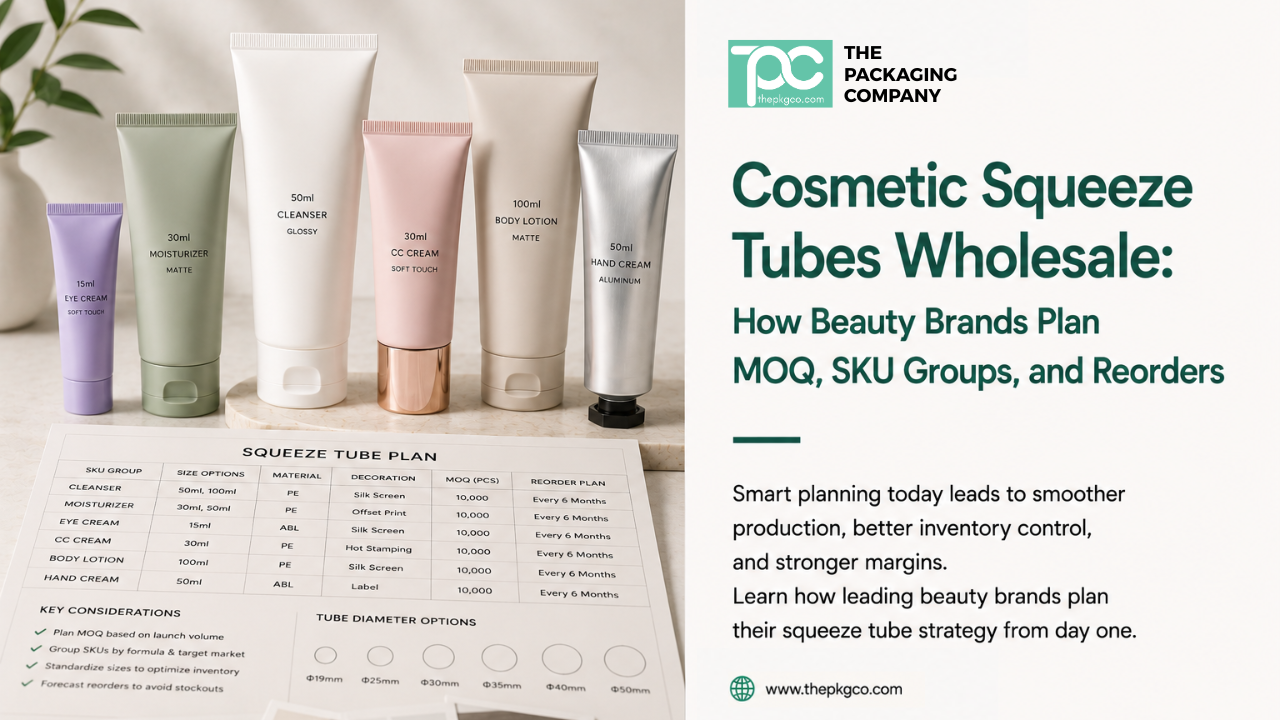
Cosmetic squeeze tubes wholesale planning is not only about choosing a tube size and placing a bulk order. For beauty, skincare, and personal care brands, tube packaging needs to support product format, decoration, MOQ, production timing, and future reorder consistency.
Many brands use squeeze tubes for cleansers, lotions, masks, creams, gels, balms, and treatment products. When a brand has multiple products in the same line, tube planning becomes more important. The tubes should look consistent, the caps should match, the decoration should be repeatable, and the approved specifications should be easy to reorder later.
That is why beauty brands should plan squeeze tube packaging as a product-line system, not only as a single packaging item.
Why Wholesale Tube Planning Matters Before Production
Wholesale tube orders often involve multiple decisions at the same time. A brand may need to confirm tube size, tube diameter, cap style, material direction, decoration method, finish, artwork placement, carton packing, and production quantity.
If these details are not organized early, the project can become difficult to manage. Common issues include mismatched caps, inconsistent decoration, unclear MOQ planning, too many tube variations, or reorder confusion after the first production run.
For brands sourcing cosmetic squeeze tubes wholesale, the goal is to create a tube plan that works for the first order and future reorders.
Start by Grouping Products by Tube Use
Before choosing custom cosmetic tubes, brands should organize products by how the tube will be used. Different products may need different tube sizes, cap styles, or decoration layouts.
For example:
- Cleansers may need larger squeeze tubes
- Eye creams or treatment products may need smaller tubes
- Masks and scrubs may need tubes with stronger shelf presence
- Lotions or creams may need a softer, easy-to-use tube format
- Travel-size products may need smaller matching packaging
Grouping products this way helps brands understand which SKUs can share the same tube family and which products may need a different size or structure.
Plan MOQ Around SKU Groups
MOQ is one of the most important parts of cosmetic squeeze tubes wholesale planning. When a brand has several SKUs, each unique tube size, color, cap, finish, or decoration version may affect the production plan.
Instead of treating each SKU separately, brands should look for opportunities to group products together. This can make the packaging line easier to manage and may reduce unnecessary complexity.
Brands should ask:
- Can multiple products use the same tube size?
- Can several SKUs share the same cap style?
- Can the same decoration method work across the full line?
- Can color differences be limited to labels or artwork?
- Which products need unique packaging, and which can share a tube family?
This type of planning helps brands build a more organized wholesale tube order instead of creating too many individual packaging variations.
Use Shared Tube Families When Possible
A shared tube family can help beauty brands keep packaging consistent across several products. This means the tubes may use the same general shape, cap direction, finish, or decoration style, even if the fill size changes.
For example, a skincare brand may use one tube family for a cleanser, exfoliating scrub, and mask. The sizes may be different, but the overall packaging still looks connected.
Shared tube families can support:
- Cleaner product-line presentation
- More consistent brand photography
- Easier carton and component planning
- More repeatable decoration standards
- Clearer reorder records for future production
This is especially useful for brands selling multiple cosmetic squeeze tubes within the same product collection.
Keep Cap Style Consistent Across the Line
Cap style has a major impact on how plastic cosmetic tubes look and function. Even when the tube body is simple, the cap can affect the customer experience and the overall product presentation.
Common cap considerations include:
- Flip-top cap or screw cap direction
- Cap color
- Cap finish
- Cap size and proportion
- How the cap matches across different tube sizes
When brands choose caps one product at a time, the final packaging line may look inconsistent. Planning the cap direction across the full line can make the product family look more professional and easier to reorder.
Plan Decoration for Repeatability
Decoration repeatability is another key part of wholesale tube planning. A tube design should not only look good on the first sample. It should also be practical to repeat across bulk production and future reorders.
Brands should review:
- Logo size and placement
- Front and back artwork layout
- Color matching
- Label or direct printing direction
- Matte, glossy, metallic, or soft-touch finish
- How artwork changes across different SKUs
If the same decoration system can work across multiple custom cosmetic tubes, the brand can keep a more consistent look while making future reorder management easier.
Avoid Creating Too Many Tube Variations
Many beauty brands want every product to have a different color, finish, cap, and decoration style. This can work for some launches, but it can also create more complexity than needed.
Too many tube variations may affect:
- MOQ planning
- Sample review time
- Artwork management
- Color approval
- Production timing
- Future reorder consistency
A more organized approach is to decide which elements should stay consistent and which elements can change by SKU. For example, the tube structure and cap may stay the same, while the label color or product name changes across the line.
Confirm Production Timing Early
Wholesale cosmetic tube projects should also be planned around production timing. Brands may need time for sample review, artwork confirmation, decoration approval, production scheduling, and shipping preparation.
Before finalizing a tube order, brands should understand which products are needed first and which products can be added later. This helps the supplier prioritize samples and production details based on the brand’s launch schedule.
For brands preparing a multi-SKU launch, it is helpful to separate:
- First-launch tube products
- Future product extensions
- Travel-size or promotional tubes
- Products that may need a different tube family
This keeps the project more organized and helps avoid last-minute changes during the production process.
Create a Reorder File From the First Order
Reorder planning should begin with the first wholesale order. Once the tube structure, cap, color, artwork, decoration, and packing details are approved, those details should be recorded clearly for future use.
A good reorder file may include:
- Approved tube size and material
- Tube diameter and capacity
- Cap style and cap color
- Decoration method
- Artwork version
- Color standard
- Carton packing details for empty components
- Production notes for future reorders
This helps brands keep cosmetic squeeze tubes consistent from one order to the next.
Related Cosmetic Tube Guides
Brands comparing tube packaging options can also review TPC’s related guides on aluminum cosmetic tubes, lip balm squeeze tubes, and sugarcane squeeze tubes for sustainable beauty packaging.
How The Packaging Company Supports Cosmetic Squeeze Tube Projects
The Packaging Company works with beauty, skincare, and personal care brands that need cosmetic squeeze tubes, custom cosmetic tubes, and wholesale tube packaging support. TPC can help brands review tube size, cap direction, decoration method, MOQ planning, production timing, empty component packing, and reorder consistency.
For brands building a multi-SKU product line, TPC can help organize tube packaging so the collection looks consistent and remains easier to manage across future orders.
Brands can explore cosmetic squeeze tubes or contact The Packaging Company to discuss a wholesale tube packaging project.
Cosmetic Squeeze Tubes Wholesale Planning Checklist
- List all tube-based products in the line
- Group products by tube use and size needs
- Review MOQ before creating too many variations
- Use shared tube families when possible
- Keep cap style consistent across the line
- Plan decoration for repeatability
- Separate first-launch products from future products
- Confirm production timing early
- Create a reorder file from the first order
FAQ
What are cosmetic squeeze tubes used for?
Cosmetic squeeze tubes are commonly used for cleansers, creams, lotions, masks, scrubs, gels, balms, and treatment products. They are often chosen for beauty and skincare products that need flexible, easy-to-use packaging.
Why does MOQ matter for cosmetic squeeze tubes wholesale?
MOQ matters because each unique tube size, cap style, color, finish, or decoration version may affect production planning. Brands can often manage MOQ more efficiently by grouping SKUs and using shared tube families.
How can beauty brands keep squeeze tube packaging consistent across SKUs?
Brands can keep squeeze tube packaging consistent by using the same tube family, cap direction, decoration method, color standard, and artwork system across multiple products. This helps the product line look more unified and makes future reorders easier to manage.
What should brands prepare before ordering custom cosmetic tubes?
Brands should prepare product type, tube size, estimated order quantity, cap preference, material direction, decoration needs, artwork files, launch timeline, and any requirements for matching packaging across multiple SKUs.