


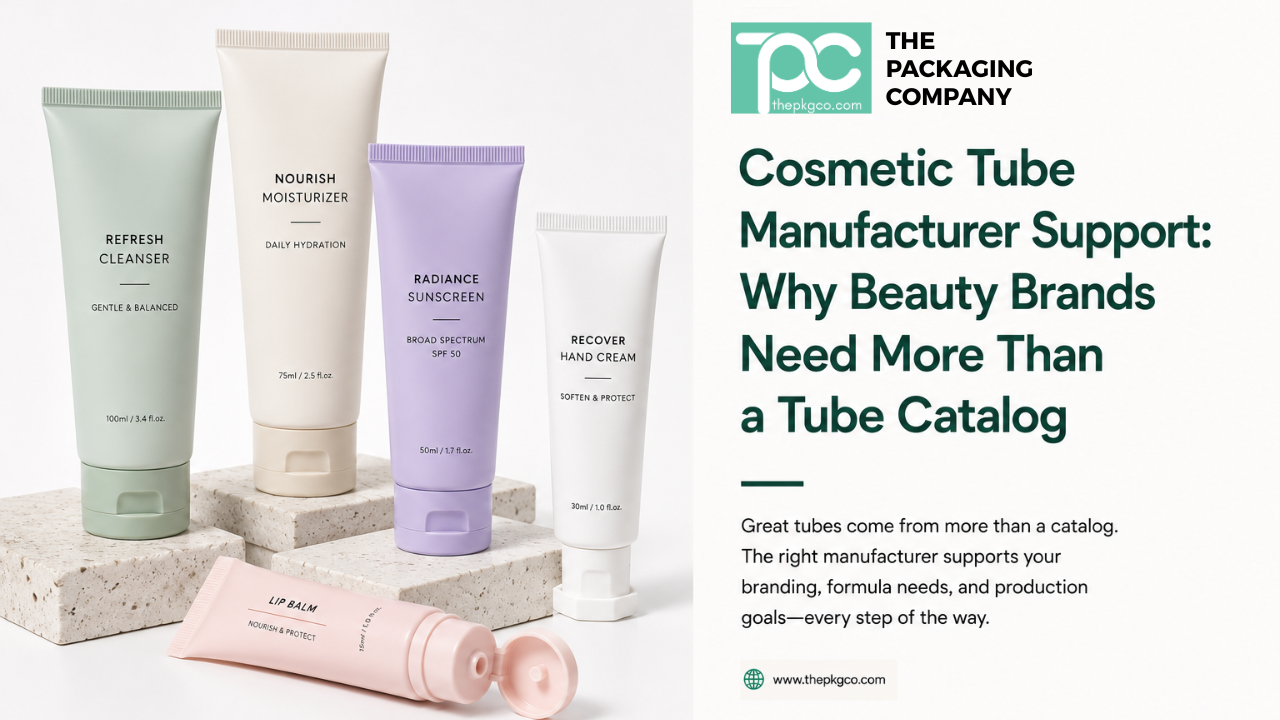
Many beauty brands begin sourcing cosmetic tubes by reviewing a product catalog. A catalog can help compare basic tube shapes, sizes, caps, materials, and decoration possibilities. But for a real skincare, cosmetic, or personal care launch, a catalog is only the starting point.
A tube still needs to match the product line, brand positioning, cap style, decoration direction, MOQ, sample expectations, and wholesale production plan. This is why working with a cosmetic tube manufacturer should mean more than selecting a product code from a list.
This article explains why beauty brands need manufacturer support when sourcing cosmetic squeeze tubes, plastic cosmetic tubes, and custom cosmetic tubes for packaging projects.
Why a Tube Catalog Is Only the Starting Point
A tube catalog can show available packaging options, but it usually does not answer the deeper production questions that affect the final package. A brand may like the shape of a tube, but still need to confirm whether the size, cap, material, finish, decoration method, MOQ, and sample process fit the launch plan.
Brands reviewing squeeze tube packaging should look beyond catalog images and think about how the tube will work as part of the full packaging project.
Important questions include:
- Which tube size fits the product line?
- Which cap style supports the intended customer experience?
- Does the material direction fit the brand position?
- Can the decoration method match the design?
- Does the MOQ fit the launch plan?
- Can the tube family support future SKUs?
- Can the supplier support sampling and production communication?
Tube Format Should Match the Product Line
Cosmetic tubes are used across many beauty and personal care categories, including cleansers, creams, lotions, sunscreens, hand creams, body care products, lip products, gels, masks, and other cosmetic formulas.
Different products may need different tube shapes, sizes, shoulders, caps, or applicators. A slim tube may work well for a targeted product, while a wider tube may feel more appropriate for body care or higher-volume products.
Brands should ask:
- What size does the product need?
- Should the tube stand upright?
- Should the tube feel soft, flexible, premium, clinical, or colorful?
- Will multiple SKUs share the same tube family?
- Does the tube shape support the brand’s shelf presentation?
- Will the tube direction still make sense for future line extensions?
These decisions are easier when the manufacturer helps review the full product line instead of only sending catalog options.
Cap and Applicator Choices Affect the User Experience
The cap is one of the most visible and functional parts of a cosmetic tube. It affects how the product opens, closes, stands, and feels during use.
Common cap and applicator directions include:
- Flip-top caps for daily-use creams, lotions, cleansers, and body care products
- Screw caps for a clean, classic, or premium presentation
- Nozzle tips for more controlled dispensing
- Slant tips for lip, eye, or specialty cosmetic products
- Rounded applicators for targeted application
- Custom cap colors to match the brand’s product line
For custom cosmetic tubes, cap decisions should be discussed early because they can affect appearance, MOQ, sampling, decoration, and production planning.
Material Direction Should Support Brand Positioning
Different cosmetic tube materials can support different brand messages. Some brands may want lightweight plastic cosmetic tubes. Others may review aluminum tubes, sugarcane-based tube options, or specialty finishes depending on the product category and brand story.
Brands should review whether the material direction supports:
- Product category
- Price point
- Brand story
- Decoration style
- Retail presentation
- Line consistency
- Wholesale production needs
The right tube is not always the one that looks best in a catalog. It is the one that supports the product, brand position, and production requirements. For brands comparing metal tube options, TPC’s guide to aluminum cosmetic tubes explains how barrier protection, finish, and formula type can affect packaging direction.
Decoration Support Matters Before Artwork Is Final
Tube decoration is not only a design decision. Printing method, label size, color, tube finish, cap color, and curved surface area can all affect the final result.
Before finalizing artwork, brands should confirm whether the selected tube can support:
- Direct printing
- Labels
- Hot stamping
- Matte or glossy finishes
- Metallic accents
- Custom color matching
- Readable ingredient and direction text
- Barcode or QR code placement
A strong cosmetic tube manufacturer can help brands understand decoration limits before artwork is locked. This can reduce the risk of design revisions, poor print readability, or decoration changes after sampling.
MOQ and Production Planning Should Be Discussed Early
MOQ is one of the most important practical questions in tube sourcing. The required order quantity can depend on tube size, material, cap style, color, decoration method, and production setup.
Before choosing a tube direction, brands should ask:
- What is the MOQ for this tube size?
- Does custom color affect MOQ?
- Does the cap choice affect MOQ?
- Does the decoration method affect MOQ?
- Can multiple SKUs share the same tube family?
- What is the expected sample timeline?
- What should be planned for future reorders?
MOQ planning helps brands avoid choosing a tube format that looks good but does not fit the launch budget, production timeline, or inventory plan.
Sampling Helps Brands Review the Full Packaging Direction
Samples help brands review the tube beyond the catalog image. A physical sample can show how the tube feels in hand, how the cap fits visually, how the finish appears, and whether the format supports the brand’s product line.
Depending on the project, brands may need:
- Blank tube samples
- Cap and applicator samples
- Color samples
- Decorated samples
- Samples for internal approval
- Samples for retail presentation or product line review
Sample expectations should be discussed early because blank samples, decorated samples, and custom color samples may have different preparation timelines.
Production Communication Keeps Details Aligned
Tube packaging projects include many details that need to stay aligned before production begins. A brand may need to confirm artwork placement, cap color, tube finish, carton packing, or sample revisions before moving forward.
Clear production communication helps reduce confusion around:
- Approved sample details
- Final artwork files
- Tube and cap matching
- Decoration expectations
- MOQ and order quantity
- Production timeline
- Packing requirements for empty components
- Reorder consistency
For brands comparing cosmetic tubes suppliers, the level of communication and production support can be just as important as the tube itself.
Why Manufacturer Support Is Different From Catalog Buying
A catalog supplier may provide available tube options. A production-focused packaging partner helps brands connect the packaging choice to the actual launch plan.
Manufacturer support can help with:
- Tube format review
- Material direction
- Cap and applicator selection
- Decoration planning
- Custom color discussion
- MOQ review
- Sample coordination
- Wholesale order support
- Reorder planning
This support helps brands make packaging decisions with production, brand consistency, and future growth in mind.
How TPC Supports Cosmetic Tube Projects
The Packaging Company works with beauty, skincare, and personal care brands to review tube packaging as a complete project. This includes helping brands compare tube formats, cap options, decoration directions, MOQ, sampling, and production needs.
TPC supports brands with:
- Cosmetic squeeze tube options
- Plastic cosmetic tube direction
- Custom cosmetic tube planning
- Cap and applicator review
- Decoration options
- MOQ discussion
- Sample coordination
- Wholesale production support
- Reorder planning
This type of support is useful for brands preparing new product launches, line extensions, personal care products, skincare sets, and custom tube packaging projects.
What Brands Should Avoid When Choosing Cosmetic Tubes
Before selecting a tube format, brands should avoid making decisions based only on appearance or unit price. A low-cost tube may not support the brand’s decoration needs, MOQ plan, cap preference, or future product line.
Common mistakes include:
- Choosing a tube before confirming cap style
- Finalizing artwork before checking decoration limits
- Ignoring MOQ until after sample approval
- Choosing different tube families for related SKUs without checking line consistency
- Not confirming custom color requirements early
- Assuming catalog photos represent the final production result
These issues can slow down the project or create packaging that does not fully support the brand’s launch.
Cosmetic Tube Sourcing Checklist
Before choosing a cosmetic tube manufacturer, brands should confirm:
- Tube size and shape options
- Material direction
- Cap and applicator choices
- Decoration method
- Custom color possibilities
- MOQ requirements
- Sample process
- Production timeline
- Packing expectations for empty components
- Reorder support
Final Recommendation
Beauty brands need more than a tube catalog when sourcing cosmetic tubes for a serious product launch. The right packaging partner should help review tube size, material direction, cap style, decoration, MOQ, sampling, production planning, and reorder needs.
The Packaging Company supports beauty and skincare brands with cosmetic squeeze tubes, custom cosmetic tubes, plastic cosmetic tubes, decoration options, cap styles, MOQ, sampling, and wholesale tube packaging. Brands preparing a tube packaging project can speak with our packaging team before choosing a final direction.
FAQ: Cosmetic Tube Manufacturer Support
Why do beauty brands need more than a cosmetic tube catalog?
A catalog can show tube options, but brands still need support with material choice, cap style, decoration, MOQ, sampling, production planning, and reorder needs.
What should brands ask a cosmetic tube manufacturer?
Brands should ask about tube sizes, material options, cap styles, decoration methods, custom color, MOQ, sample process, production timeline, packing, and reorder support.
Can TPC help with custom cosmetic tubes?
Yes. TPC helps beauty and skincare brands review custom cosmetic tube options, including tube styles, materials, cap choices, decoration, MOQ, sampling, and wholesale production needs.
What products commonly use cosmetic squeeze tubes?
Cosmetic squeeze tubes are commonly used for cleansers, lotions, creams, sunscreens, masks, hand creams, body care products, lip treatments, gels, and personal care products.
Does decoration affect cosmetic tube production?
Yes. Decoration method, color matching, artwork placement, finish, and label requirements can affect sample review, MOQ, cost, and production timeline.