



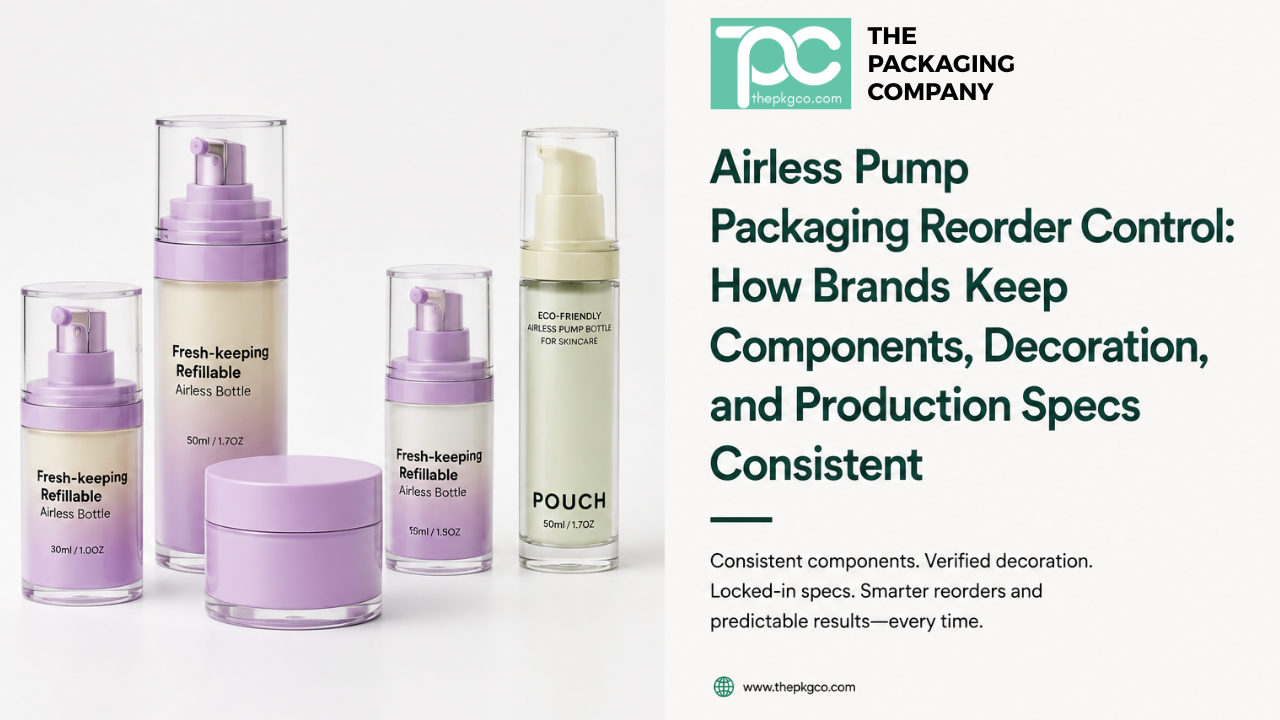
A successful first airless pump packaging order is only the beginning. For cosmetic and skincare brands, the real test often comes during the second, third, or fourth reorder. Customers expect the bottle, pump, cap, color, finish, and decoration to look consistent every time they purchase the product.
This is especially important for airless pump packaging, where multiple components need to work together. The bottle body, pump, actuator, cap, collar, decoration, color, finish, and packing method all affect the final packaging experience.
If reorder details are not controlled carefully, small differences can appear between production runs. A cap may look slightly different. A custom color may shift. A logo may move. A finish may not match the approved sample. These differences can make the product line feel less consistent, even when the packaging is still functional.
This guide explains how cosmetic brands can manage reorder control for airless pump packaging and keep approved components, decoration, and production specs consistent over time.
Why Reorder Control Matters for Airless Pump Packaging
Reorder control helps brands repeat an approved packaging direction instead of starting from scratch every time. Once the first order is approved, the goal is to preserve the production details that made the original packaging acceptable.
Brands sourcing airless pump bottles should think beyond the first order. If the product sells well, the same packaging may need to be repeated for future runs, line extensions, seasonal launches, or wholesale orders.
Without clear reorder control, brands may run into issues such as:
- Color differences between production runs
- Cap or actuator changes
- Decoration placement differences
- Finish inconsistencies
- Artwork version mistakes
- Packaging that does not match existing inventory
- Confusion when adding new SKUs to the same line
For skincare brands, these details matter because packaging consistency affects how professional and reliable the product line feels.
Keep the Approved Sample as the Main Reference
The approved sample is one of the most important references for future reorders. It gives both the brand and supplier a physical standard for what the packaging should look and feel like.
Brands should keep at least one approved sample from the first production approval. This sample should be stored carefully and used as a reference for future orders.
The approved sample should represent:
- Final bottle size
- Final bottle shape
- Pump and actuator style
- Cap or overcap style
- Color and finish direction
- Decoration method
- Logo placement
- Overall packaging appearance
When reordering, the approved sample helps reduce confusion and gives the production team a clear reference point.
Organize the Final Packaging Specifications
A physical sample is important, but brands should also keep written production specifications. These records help confirm that every component is repeated correctly.
Important reorder records include:
- Bottle size and capacity
- Bottle material direction
- Pump type
- Actuator style
- Cap or overcap style
- Color reference
- Finish direction
- Decoration method
- Artwork version
- Carton packing method for empty components
For brands working with an airless pump bottle manufacturer, these records help keep the reorder connected to the approved production standard.
Confirm Pump, Cap, and Component Matching
Airless pump packaging depends on component matching. The pump, actuator, cap, collar, and bottle body should match the approved configuration.
During a reorder, brands should confirm:
- Whether the same pump component is being used
- Whether the actuator shape and color match the approved sample
- Whether the cap style remains the same
- Whether the bottle body has the same shape and finish
- Whether any component has changed due to availability
- Whether the same component family can support future SKUs
Even small component changes can affect how the product looks on shelf, in product photography, and across a skincare line.
Control Decoration Details Across Reorders
Decoration consistency is one of the most visible parts of reorder control. If the logo placement, print color, label size, or finish changes between runs, customers may notice.
Brands should keep clear records of:
- Final artwork files
- Artwork file name and version date
- Print placement
- Label size if labels are used
- Hot stamping position
- Color references
- Finish direction
- Approved decorated sample or proof
This is especially important for brands using multiple airless pump bottles for cosmetics across the same product family. Consistent decoration helps the full line feel organized and intentional.
Review Color Standards Before Every Reorder
Color can shift between production runs if standards are not clearly controlled. A white bottle, beige cap, metallic collar, soft pink finish, or custom brand color may look slightly different depending on material, production method, and finish.
Before placing a reorder, brands should confirm:
- The approved color standard
- Whether color applies to the bottle, cap, pump, or decoration
- Whether the color needs to match existing inventory
- Whether multiple SKUs need the same color family
- Whether the same finish direction is being repeated
For skincare brands selling a product line, color consistency is not a small detail. It helps the brand look more polished and reliable across multiple orders.
Keep Artwork Version Control Clear
Artwork files can change over time. A brand may update the product name, ingredient list, claims, barcode, QR code, company information, or regulatory text. If the wrong artwork file is used during a reorder, the issue may not be caught until production is already in progress.
Before reordering, brands should confirm:
- Final artwork version
- Correct SKU name
- Correct product size
- Updated barcode or QR code
- Current brand logo
- Approved dieline or print area
- Any label text changes
Clear artwork control helps reduce avoidable production errors and keeps each reorder aligned with the current brand presentation.
Plan Reorders Before Inventory Runs Too Low
Reorder control is not only about packaging specs. Timing matters too. If a brand waits until packaging inventory is almost gone, there may not be enough time to confirm components, review artwork, approve decoration, produce the order, and ship the empty packaging.
Brands should plan reorders around:
- Current packaging inventory
- Monthly sales volume
- Expected wholesale orders
- Production lead time
- Decoration timeline
- Shipping timeline
- Seasonal demand
- New product launches
When reviewing airless packaging solutions, brands should consider both the first order and future reorder needs. Planning ahead gives the packaging supplier more time to repeat approved details accurately.
Use a Consistent Packaging Family When Possible
Brands that use a consistent packaging family across multiple SKUs often have an easier time managing reorders. Shared pumps, caps, bottle shapes, colors, and decoration systems can make production planning more organized.
This can help brands:
- Maintain a consistent shelf appearance
- Simplify component matching
- Reduce SKU confusion
- Plan reorder quantities more clearly
- Support future product extensions
- Keep the line easier to manage over time
For brands planning multiple airless cosmetic bottle formats, it may also help to review line consistency early. The related guide on airless containers for skincare packaging lines explains how brands can compare bottles, jars, and pump formats before production.
Review Packing Standards for Empty Components
TPC supplies and coordinates empty packaging components, so reorder planning should include how bottles, pumps, caps, decorated surfaces, and cartons are packed before shipment.
Brands should confirm:
- How empty bottles are packed
- How pumps and caps are protected
- Whether decorated surfaces need extra protection
- How many units are packed per carton
- Whether carton labels need SKU or project information
- Whether packing needs to support warehouse receiving or later filling operations
Good packing records help future reorders follow the same handling expectations and reduce confusion when packaging arrives.
Use Troubleshooting History to Improve Future Orders
If a brand has had past packaging questions, those notes should be kept for future reorders. For example, a brand may want to confirm pump behavior, cap fit, decoration placement, or component handling before repeating the next production run.
For brands reviewing pump-related concerns, TPC’s guide on troubleshooting airless pump bottles can help explain common packaging questions and what brands should review before assuming the package is defective.
Using past notes and approved production records helps each reorder become more controlled than the last.
How TPC Supports Airless Pump Packaging Reorders
The Packaging Company works with beauty and skincare brands to support airless pump packaging projects from sample approval through reorder planning. This includes helping brands review approved samples, component specs, decoration details, MOQ, production communication, and packing expectations for empty packaging components.
TPC support include:
- Approved sample review
- Bottle, pump, actuator, and cap confirmation
- Decoration record review
- Color and finish reference review
- Artwork version confirmation
- MOQ discussion
- Wholesale reorder planning
- Empty component packing review
- Production communication support
This support helps cosmetic brands repeat approved packaging details more consistently across future orders.
Airless Pump Packaging Reorder Checklist
Before placing a reorder, brands should confirm:
- Approved physical sample
- Final bottle specification
- Pump and actuator specification
- Cap or overcap specification
- Component color standard
- Decoration method
- Final artwork version
- Print or label placement
- Finish direction
- Packing method for empty components
- Reorder quantity
- Production timeline
- Shipping timeline
- Future reorder notes
Final Recommendation
Airless pump packaging reorder control helps cosmetic brands keep packaging consistent across multiple production runs. Brands should organize approved samples, component specs, decoration records, artwork versions, color standards, packing methods, and reorder timelines before placing the next order.
The Packaging Company supports beauty and skincare brands with airless pump packaging, airless cosmetic bottle options, airless pump bottle wholesale needs, MOQ planning, sampling, decoration, production communication, and reorder support. Brands preparing an airless pump packaging reorder can speak with our packaging team to confirm packaging details before production.
FAQ: Airless Pump Packaging Reorder Control
Why is reorder control important for airless pump packaging?
Reorder control helps brands keep bottle shape, pump style, actuator, cap color, decoration, artwork, finish, and packing method consistent across multiple production runs.
What should brands keep from the first airless packaging order?
Brands should keep approved samples, final specs, artwork files, color references, decoration records, packing details, and production notes for future reorders.
Can custom color change between airless packaging reorders?
Small color differences can happen if color standards are not clearly controlled. Brands should use approved references and compare future production against the approved sample.
When should brands start planning airless pump bottle reorders?
Brands should plan reorders before inventory runs too low, allowing enough time for specification confirmation, production, decoration review, quality review, and shipping.
Can TPC support airless pump packaging reorders?
Yes. TPC helps brands review approved specs, components, decoration, MOQ, samples, packing expectations, and reorder planning for airless pump packaging projects.