


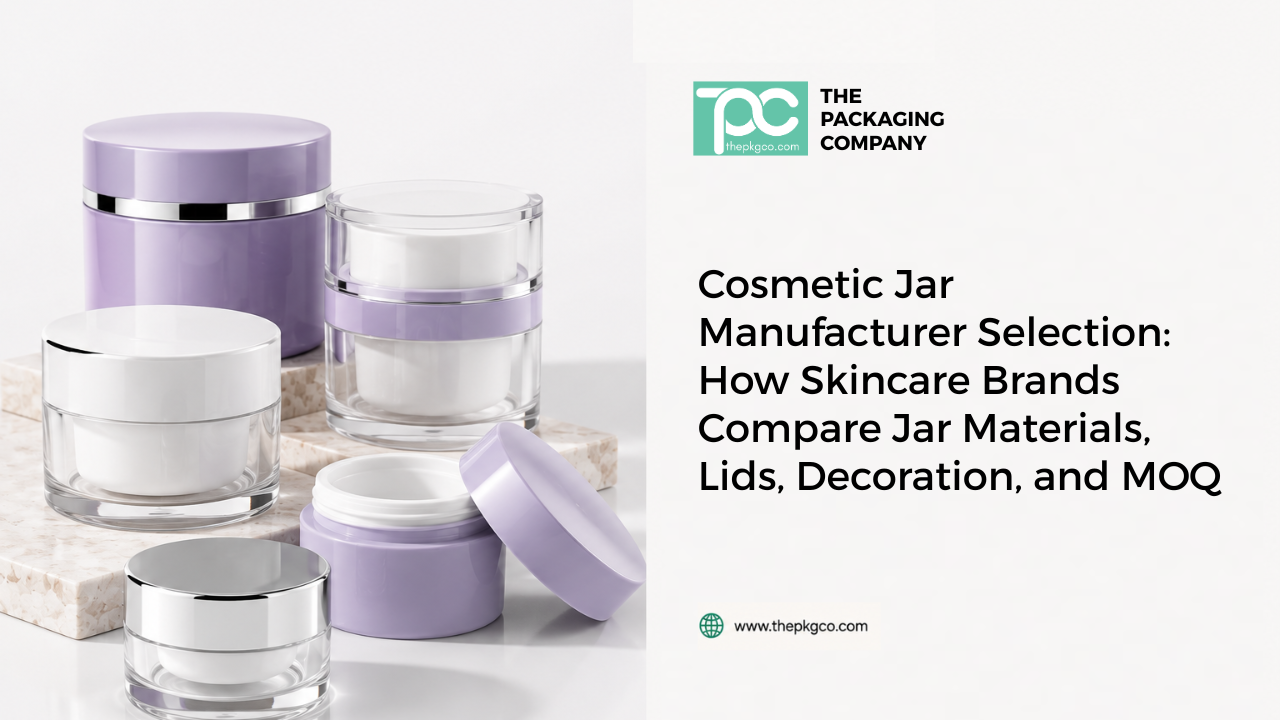
Choosing a cosmetic jar manufacturer is not only about finding a jar that looks good in a catalog. For skincare and beauty brands, the right jar needs to match the product format, brand positioning, decoration direction, MOQ, sample needs, and production plan.
A cream jar, mask jar, balm jar, or luxury skincare jar may look simple from the outside, but the final package includes many decisions: material, wall thickness, cap or lid style, liner, finish, color, decoration, packing method, and reorder expectations.
This guide explains how skincare brands can compare cosmetic jar manufacturer options before choosing a final packaging direction.
Why Cosmetic Jar Manufacturer Selection Matters
Cosmetic jars are often used for creams, masks, balms, moisturizers, scrubs, body care products, and premium skincare formulas. Because jars are highly visible in retail, e-commerce, and product photography, the package can strongly affect how customers judge the brand.
Brands sourcing cosmetic jar packaging should compare more than unit price. A manufacturer’s ability to support material selection, lid matching, decoration, MOQ, samples, and production communication can affect the final result.
Before choosing a jar direction, brands should ask:
- Which jar material fits the product and brand position?
- Which cap, lid, liner, or inner disc is needed?
- Can the jar support the desired decoration?
- Does the MOQ match the launch plan?
- Can the same jar family support future SKUs?
- Can the packaging be repeated for future reorders?
Start With the Product Format
The first step is understanding what type of product the jar needs to support. A lightweight gel cream may need a different jar direction from a thick balm, premium mask, body butter, or high-end moisturizer.
Brands should consider:
- Product category
- Target fill size
- Product texture
- Customer usage habits
- Retail or e-commerce channel
- Brand price point
- Future product line plans
For cream-based products, TPC’s guide to cosmetic cream jars can help brands think through jar format, material direction, and product presentation.
Compare Jar Material Options
Material is one of the most important decisions when selecting cosmetic jars. Different materials can create different customer impressions and production requirements.
Common jar material directions include:
- Glass jars for a heavier, more premium feel
- Acrylic jars for a clear or thick-wall luxury appearance
- Plastic jars for lightweight and practical packaging needs
- Specialty jar structures for custom jar packaging or premium product lines
Brands should compare how each material affects weight, durability, decoration, shipping, MOQ, and perceived value.
For brands still deciding between material directions, TPC’s guide on acrylic vs glass cosmetic jars explains how different jar materials may support different skincare packaging goals.
Review Cap, Lid, Liner, and Inner Disc Options
The jar body is only one part of the package. The lid, cap, liner, and inner disc can affect the final appearance, customer experience, and production cost.
Brands should review:
- Cap or lid material
- Lid shape
- Cap color
- Inner disc requirements
- Liner or seal needs
- Finish matching between jar and lid
- Whether the lid needs printing, color matching, or decoration
For skincare brands building a complete product line, lid consistency is important. A jar line can feel more polished when caps, colors, and finishes are planned together.
Match Jar Style to Brand Positioning
Cosmetic jars should support the way the brand wants to be perceived. A clinical skincare brand may need a clean and minimal jar. A luxury skincare brand may want heavier walls, a refined lid, and premium decoration. A colorful beauty brand may need custom color matching and a more playful finish.
Brands should ask:
- Should the jar feel premium, clinical, natural, modern, or colorful?
- Does the jar match the product price point?
- Will the jar photograph well for e-commerce?
- Will the packaging feel consistent with other products in the line?
- Does the jar style support future product extensions?
For luxury cosmetic jars, small details such as weight, finish, lid design, and decoration can influence how customers judge the product before they even try the formula.
Compare Decoration and Finish Options
Decoration should be discussed before the brand commits to a jar direction. Not every jar material or shape supports the same decoration method.
Common decoration and finish options may include:
- Screen printing
- Labels
- Hot stamping
- Frosted effects
- Spray coating
- Matte or glossy finishes
- Metallic accents
- Custom color matching
Before choosing a final jar, brands should confirm whether the decoration method supports the logo, label information, ingredient text, barcode, QR code, and overall design direction.
Think About MOQ Before Choosing the Final Jar
MOQ can vary based on jar material, size, cap or lid choice, decoration method, custom color, and production setup. A jar that looks attractive may not be the best choice if the MOQ does not match the brand’s launch plan.
Brands should confirm:
- MOQ for the selected jar
- MOQ for custom color
- MOQ for decoration method
- Whether the lid or cap affects MOQ
- Whether multiple SKUs can share the same jar family
- Reorder MOQ and lead time
MOQ planning is especially important for brands launching multiple cosmetic jars in one skincare line.
Use Samples to Compare the Full Packaging Direction
Samples help brands compare jars beyond the catalog image. A physical sample can show weight, wall thickness, lid fit, finish, color, and how the jar feels in hand.
Depending on the project, brands may need:
- Blank jar samples
- Cap and lid samples
- Material comparison samples
- Decorated samples
- Color-matched samples
- Full packaging line samples
Samples are useful because they help brands compare how cosmetic jars look together before moving toward wholesale production.
Review Packing for Empty Jar Components
TPC supplies and coordinates empty packaging components, so packing review should focus on protecting empty jars, lids, caps, decorated surfaces, and cartons before shipment.
Brands should confirm:
- How empty jars will be packed
- How lids and caps will be protected
- Whether decorated surfaces need extra protection
- How many units are packed per carton
- Whether carton labels need SKU or project information
- Whether packing needs to support warehouse receiving or later filling operations
Good packing expectations help brands receive and organize packaging more smoothly before their own filling or production process begins.
Plan for Product Line Consistency
Many skincare brands launch with one jar and later expand into multiple products. A brand may start with a moisturizer and later add a mask, balm, eye cream, or treatment product.
Before choosing a jar manufacturer or final jar direction, brands should ask:
- Can this jar family support future sizes?
- Can the same lid style be repeated?
- Can colors and finishes stay consistent?
- Can the same decoration method work across the line?
- Will the packaging still make sense as the product line grows?
Line planning helps brands avoid a scattered packaging system where each new product looks unrelated to the last.
How TPC Supports Cosmetic Jar Projects
The Packaging Company works with skincare and beauty brands to review cosmetic jar packaging as a complete project, not only as a product listing. This includes helping brands compare jar materials, cap and lid directions, decoration methods, MOQ, sample needs, and wholesale production requirements.
TPC support include:
- Cosmetic jar format review
- Material direction comparison
- Cap and lid option review
- Decoration planning
- Custom color discussion
- MOQ review
- Sample coordination
- Production communication
- Packing expectations for empty components
- Wholesale order support
This helps brands compare manufacturer capabilities before choosing a final jar packaging direction.
Cosmetic Jar Manufacturer Comparison Checklist
Before selecting a cosmetic jar manufacturer or final jar direction, brands should compare:
- Jar material options
- Jar size and capacity options
- Jar weight and wall thickness
- Cap, lid, liner, and inner disc options
- Decoration methods
- Finish direction
- Custom color options
- MOQ requirements
- Sample process
- Production timeline
- Packing method for empty components
- Future reorder support
Final Recommendation
Choosing a cosmetic jar manufacturer should involve more than comparing catalog photos or unit pricing. Skincare brands should review jar material, lid style, decoration, finish, MOQ, sample needs, packing expectations, and future product line plans before choosing a final packaging direction.
The Packaging Company supports skincare and beauty brands with cosmetic jars, luxury cosmetic jars, custom jar packaging, decoration options, MOQ, sampling, and wholesale production needs. Brands preparing a jar packaging project can speak with our packaging team to compare options before production.
FAQ: Cosmetic Jar Manufacturer Selection
What should skincare brands compare when choosing a cosmetic jar manufacturer?
Brands should compare jar material options, cap and lid choices, decoration methods, finishes, MOQ, sample process, production timeline, packing expectations, and reorder support.
What materials are commonly used for cosmetic jars?
Common cosmetic jar materials include glass, acrylic, plastic, and specialty structures depending on the brand’s product category, price point, and packaging goals.
Why do lid and liner options matter for cosmetic jars?
Lid, cap, liner, and inner disc choices affect the final package appearance, customer experience, decoration direction, MOQ, and production planning.
Can decoration affect cosmetic jar selection?
Yes. Printing, labels, hot stamping, frosted effects, spray coating, metallic finishes, and custom colors can all affect which jar direction works best for the brand.
Can TPC help compare cosmetic jar options?
Yes. TPC helps skincare and beauty brands compare cosmetic jar materials, lid options, decoration, MOQ, samples, packing expectations, and wholesale production needs.