



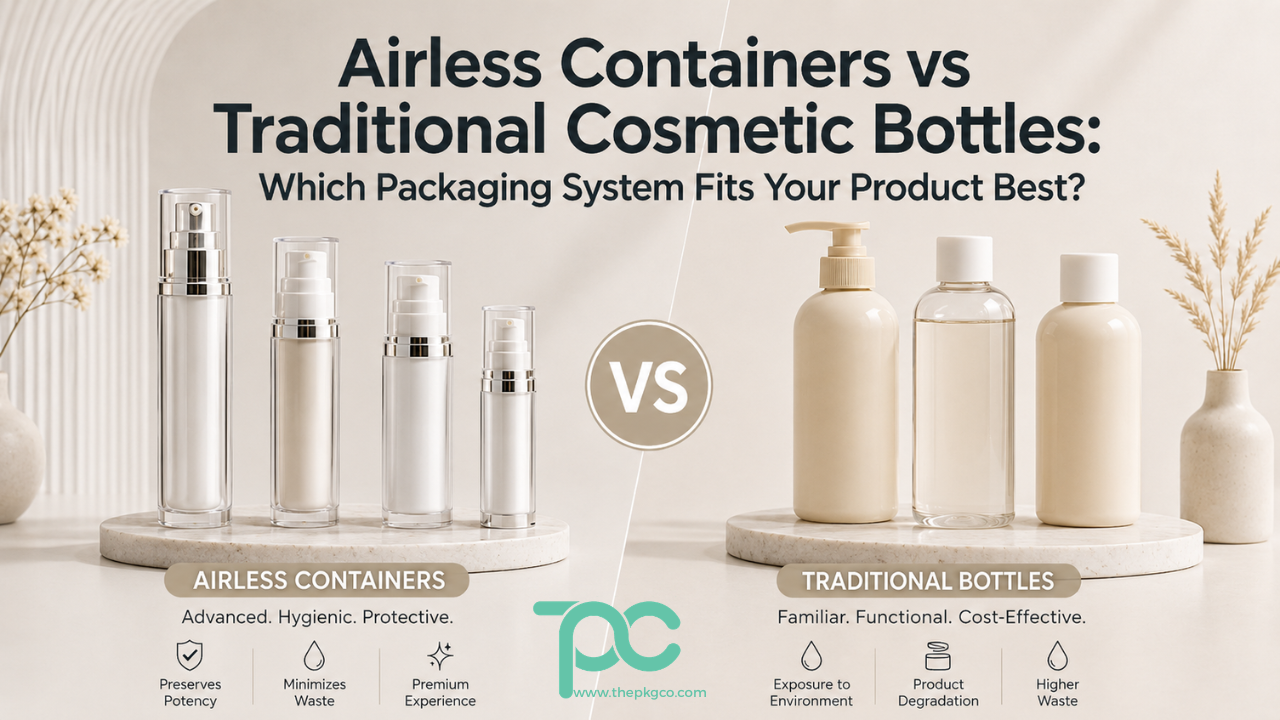
A skincare brand developing a serum, lotion, or treatment cream often reaches the same packaging question early in the launch process: should the product use an airless container or a traditional cosmetic bottle?
The answer depends on more than appearance. Formula texture, ingredient sensitivity, refill expectations, user experience, decoration options, and production goals all influence which system makes the most sense. A lightweight lotion may work well in a standard pump bottle, while an oxygen-sensitive serum may need a more protective dispensing system. A premium treatment product may benefit from airless packaging, while a simple daily-use product may not require that level of protection.
This comparison explains how airless containers differ from traditional cosmetic bottles, when each option works best, and how cosmetic brands can choose the right packaging system for their product line.
What Are Airless Containers?
Airless containers are packaging systems designed to dispense product without relying on a traditional dip tube. Instead, most airless systems use a piston, pouch, or vacuum-style mechanism that pushes the formula upward as the pump is pressed. This helps reduce the amount of air entering the container during use.
For skincare and cosmetic brands, this makes airless packaging useful for formulas that need better protection from oxidation, repeated air exposure, or inconsistent dispensing. Many airless pump bottles for cosmetics are used for serums, lotions, eye creams, facial treatments, sunscreens, and other products where controlled dispensing and formula protection matter.
Airless containers are especially common in products that use active ingredients, premium positioning, or formulas that customers expect to use cleanly and consistently until the bottle is nearly empty.
What Are Traditional Cosmetic Bottles?
Traditional cosmetic bottles include standard pump bottles, lotion bottles, squeeze bottles, dropper bottles, and other containers that use conventional dispensing methods. These formats may rely on dip tubes, caps, droppers, sprayers, or squeeze mechanisms.
Traditional bottles remain widely used because they are familiar, cost-effective, flexible, and suitable for many personal care and cosmetic products. They can work well for shampoos, body lotions, cleansers, toners, lightweight oils, body care, and other formulas that do not require advanced airless protection.
For brands with simple formulas or high-volume products, traditional cosmetic bottles may offer a practical balance of cost, decoration, and production efficiency.
Airless Containers vs Traditional Bottles: The Main Difference
The biggest difference is how the product is dispensed and protected after the customer begins using it.
Traditional bottles often allow more air to enter the container as product is used. This is not always a problem, especially for stable formulas. However, for products sensitive to oxygen, repeated exposure may affect color, texture, scent, or ingredient performance over time.
Airless containers are designed to limit air contact during dispensing. They also help deliver a more controlled dose and reduce product waste because the internal mechanism pushes more formula toward the pump.
For cosmetic brands comparing airless packaging solutions with traditional bottle formats, the decision usually comes down to formula sensitivity, brand positioning, user experience, and budget.
When Airless Containers Are the Better Choice
Airless containers are often the better choice when the formula needs extra protection, cleaner dispensing, or a more premium experience.
1. Products with active or sensitive ingredients
Formulas containing vitamin C, peptides, retinol alternatives, antioxidants, brightening ingredients, or other sensitive actives may benefit from airless packaging. These ingredients can be more vulnerable to repeated air exposure, light exposure, or contamination from repeated opening.
Airless packaging does not replace formula testing or preservative systems, but it can support better protection compared with open jars or standard bottles.
2. Products that need controlled dispensing
Airless containers are useful when a brand wants customers to use a consistent amount of product each time. This is common for facial serums, eye creams, treatment lotions, and premium skincare products.
Controlled dispensing also supports a cleaner user experience. Instead of dipping fingers into a jar or shaking product from a bottle, the customer presses the pump and receives a measured amount.
3. Premium skincare and cosmetic positioning
An airless cosmetic bottle often gives the product a more technical, modern, and premium appearance. For brands selling higher-value skincare, this packaging system can support the product story.
For example, a peptide serum in a clean airless bottle may feel more advanced than the same formula in a basic pump bottle. A moisturizer in an airless jar may feel more hygienic than a traditional open jar.
4. Reducing product waste
Because many airless containers use a piston or vacuum-style system, they can help push more product upward as the bottle is used. This can reduce leftover formula at the bottom of the package compared with certain traditional pump bottles.
When Traditional Cosmetic Bottles May Be the Better Choice
Traditional cosmetic bottles are not automatically lower quality. In many cases, they are the right choice.
1. Simple or stable formulas
If a product formula is stable and does not require extra protection from air exposure, a traditional bottle may be enough. Cleansers, body lotions, toners, hair care products, and basic moisturizers often perform well in standard packaging.
2. Cost-sensitive product lines
Traditional bottles are often more cost-effective than airless containers. For brands launching a high-volume product or an entry-level line, this cost difference can matter.
If the packaging system does not need airless performance, using a traditional bottle may help keep the total product cost under control.
3. Larger fill sizes
Traditional bottles are often used for larger personal care formats such as body lotion, hand wash, cleanser, shampoo, conditioner, and body care. Airless systems are common in smaller skincare sizes, but traditional bottles may offer more flexibility for large-volume products.
4. Simple refill or cap systems
Some brands prefer packaging systems that are easy to refill, open, clean, or pair with multiple closures. Depending on the structure, traditional bottles may provide more flexibility for refill programs or multiple closure options.
Material and Decoration Considerations
Both airless containers and traditional cosmetic bottles can support custom decoration, but the available options depend on the material, shape, and production process.
Common decoration options may include silk screen printing, hot stamping, labeling, color matching, matte finishes, glossy finishes, metallized components, and custom caps or collars. Airless containers may also include premium outer shells, double-wall construction, or specialty pump finishes.
Brands looking for a more premium appearance may consider glass airless pump bottles, especially for skincare products that need a heavier, high-end feel. Glass can support premium positioning, while the airless dispensing system can provide a more controlled user experience.
Sustainability and Refill Considerations
Sustainability is becoming a larger part of the packaging decision, but the best option depends on the material structure and how the package is used.
Traditional bottles may be easier to understand from a recycling standpoint when they use common materials such as PET, PP, or HDPE. However, multi-component pumps and mixed materials can still create recycling challenges.
Airless containers can also vary widely. Some airless systems use mixed materials, while others are designed with more recyclable or refillable structures. Brands building a sustainability-focused product line may want to compare mono-material options, PCR content, and refillable airless bottles before choosing a final packaging system.
For refillable skincare, the packaging decision should consider not only the first purchase but also how customers will replace, refill, or reuse the packaging after the original product is finished.
Product Examples: Which System Fits Best?
Vitamin C serum
An airless cosmetic bottle is usually the stronger option because the formula may be more sensitive to air and light exposure. A controlled pump also supports precise application.
Daily facial cleanser
A traditional pump bottle or squeeze tube may be enough. Cleansers are typically used in larger amounts and may not require airless dispensing.
Luxury eye cream
An airless jar or small airless bottle can support hygiene, controlled dosing, and premium positioning.
Body lotion
A traditional lotion bottle may be more practical for larger fill sizes. If the formula is premium or active-focused, an airless option may still be worth reviewing.
Refillable moisturizer
Refillable airless packaging may be a strong fit if the brand wants to combine formula protection with a longer-term sustainability story.
How to Choose Between Airless Containers and Traditional Bottles
Before choosing a packaging system, cosmetic brands should review the product from both a formula and buyer experience perspective.
Airless containers are usually a better fit when the product needs stronger protection, precise dispensing, a cleaner application experience, or premium positioning. Traditional bottles are usually a better fit when the formula is stable, the budget is tighter, the fill size is larger, or the product does not need advanced dispensing performance.
The right decision should also include compatibility testing, decoration review, MOQ planning, production timeline, and shipping considerations. A package may look strong in a catalog, but the final choice should support the formula, the brand position, and the customer experience.
Final Recommendation
For skincare and cosmetic brands, airless containers and traditional cosmetic bottles both have a place. The better choice depends on the product’s formula, price point, usage habits, sustainability goals, and launch strategy.
If the formula is sensitive, premium, or needs controlled dispensing, airless containers are usually worth considering. If the formula is simple, stable, or cost-sensitive, a traditional cosmetic bottle may be the more practical solution.
For brands comparing airless containers, traditional bottles, and wholesale packaging options for an upcoming product launch, The Packaging Company can help review materials, decoration options, production requirements, and airless packaging systems for your product line. Contact us to discuss your needs and discover how we can help you achieve your goals with tailored solutions, expert guidance, and reliable support.
FAQ: Airless Containers vs Traditional Cosmetic Bottles
What are airless containers used for?
Airless containers are commonly used for skincare, cosmetic, and personal care formulas that need controlled dispensing or reduced exposure to air. They are often used for serums, lotions, eye creams, moisturizers, sunscreens, and treatment products.
Are airless containers better than traditional cosmetic bottles?
Airless containers are better for formulas that need added protection, cleaner dispensing, or a premium user experience. Traditional cosmetic bottles may be better for stable formulas, larger fill sizes, or cost-sensitive product lines.
What is an airless cosmetic bottle?
An airless cosmetic bottle is a packaging system that dispenses product through a pump mechanism without using a traditional dip tube. Many designs use a piston or vacuum-style system to push the product upward as it is used.
Can airless containers be refillable?
Some airless containers are designed as refillable systems, while others are single-use. Refillable airless bottles can be useful for brands building sustainability-focused skincare or cosmetic product lines.
How do I choose between airless packaging and traditional bottles?
Start with the formula. If the product is sensitive, active-based, premium, or needs controlled dispensing, airless packaging may be the better choice. If the product is stable, simple, or high-volume, a traditional bottle may be more practical.