



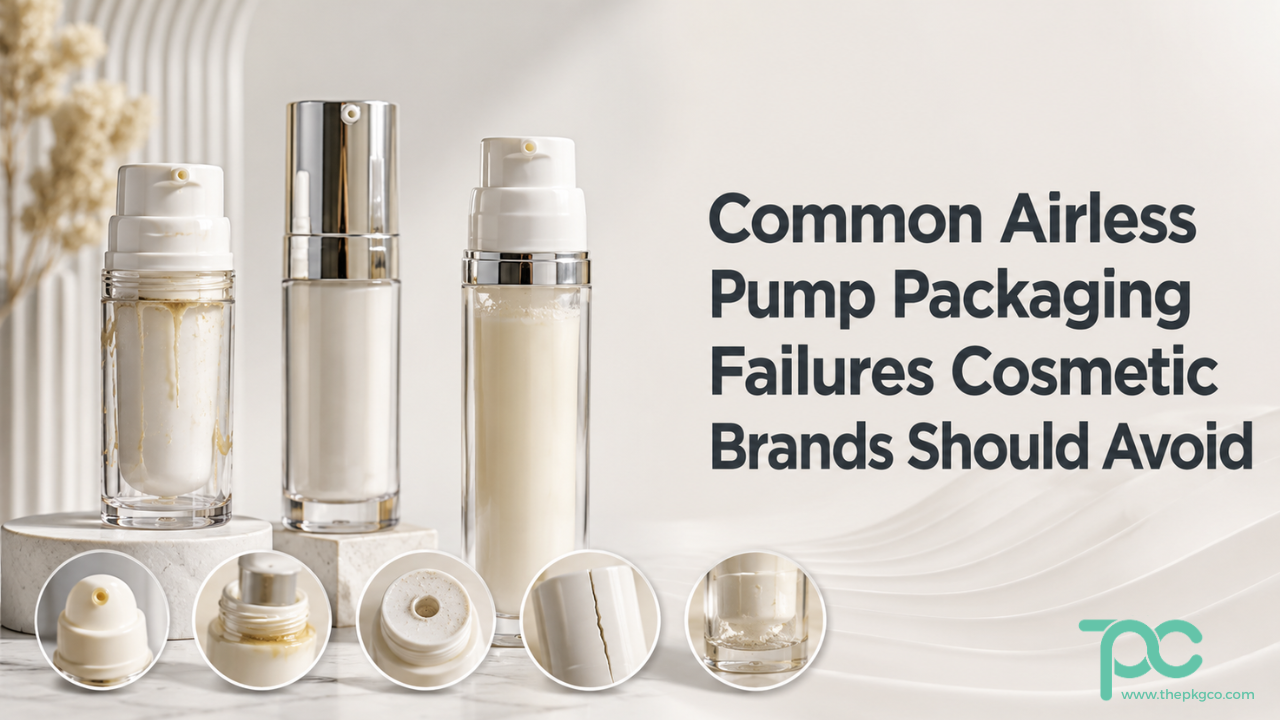
A cosmetic brand can have a strong formula, beautiful branding, and a clear launch plan, but one packaging failure can create customer complaints before the product has a chance to succeed. With airless pump packaging, the most common problems usually do not happen because the format is wrong. They happen because the packaging system, formula, supplier, and production process were not reviewed together early enough.
Airless pump packaging is widely used for skincare, cosmetic, and personal care products because it supports controlled dispensing, cleaner application, and better protection for many formulas. However, brands still need to understand where problems can occur.
This guide explains the most common airless pump packaging failures cosmetic brands should avoid, why they happen, and how to reduce risk before full production.
Why Airless Pump Packaging Fails
Airless packaging is a system, not just a bottle. The pump, actuator, piston, container body, gasket, cap, and formula all need to work together. If one part is not compatible with the product, the customer may experience dispensing issues, leakage, clogging, or inconsistent output.
For brands new to airless packaging, it is helpful to understand how airless pumps work before choosing a final bottle. Unlike traditional pumps, many airless systems do not use a dip tube. Instead, they rely on pressure and internal movement to push the product upward. That structure can be highly effective, but it also means formula compatibility and pump testing are important.
Failure 1: Choosing the Wrong Pump Output
One of the most common mistakes is choosing a pump output that does not match how the customer should use the product.
If the pump dispenses too much product, customers may feel the formula is wasteful or messy. If it dispenses too little, they may need multiple pumps, which can make the product feel inconvenient or poorly designed.
This matters most for products such as eye creams, serums, moisturizers, sunscreen, and treatment lotions. A concentrated eye product may need a smaller output, while a body lotion may require a larger dose.
Before production, brands should confirm the desired dosage per pump and test it with the actual formula, not just water or a sample liquid. Viscosity can change the way the pump performs.
Failure 2: Formula Viscosity Does Not Match the Airless System
Not every airless pump packaging system works with every formula. A lightweight serum, thick cream, gel lotion, sunscreen, or high-viscosity treatment may behave differently inside the same bottle.
If the formula is too thick for the pump, the product may dispense slowly, clog, or fail to prime correctly. If the formula is too thin, the pump may dispense too quickly, leak, or create a messy user experience.
This is why compatibility testing matters. Cosmetic brands should test the actual formula in the selected packaging before confirming full production. Testing should include dispensing, priming, storage position, temperature exposure, and repeated use.
Failure 3: Poor Priming Experience
Priming is the process of getting the pump started before product begins dispensing. Some airless pumps require several presses before the formula appears. This can be normal, but if the customer has to press too many times, they may think the product is defective.
A poor priming experience can lead to returns, negative reviews, or customer service questions. This is especially risky for online brands because the customer may not understand how airless packaging works.
Brands can reduce this issue by testing priming performance, choosing the right pump system, and including short usage instructions when needed. For example, a package insert or product page note can explain that the customer should press the pump several times during first use.
Failure 4: Leakage During Shipping
Leakage is one of the most damaging packaging failures because it affects the customer’s first impression. It can also damage cartons, labels, product inserts, and nearby items in the same shipment.
Leakage may happen because of poor sealing, incorrect component fit, formula incompatibility, pressure changes, cap problems, or rough handling during transportation.
Brands should review sealing performance before launch, especially if the product will be shipped through e-commerce channels. Testing should include drop tests, upside-down storage, temperature changes, and transit simulation when possible.
Failure 5: Using Airless Packaging Without Formula Compatibility Testing
Some brands select packaging based mainly on appearance. The bottle looks premium, the color matches the brand, and the pump feels good in the hand. But visual approval is not the same as formula approval.
Formula compatibility testing helps confirm that the product does not react negatively with the packaging material, pump components, gasket, piston, or coating. Without testing, brands may discover problems after production, such as discoloration, swelling, pump blockage, leakage, or changes in formula texture.
This step is especially important for products with oils, acids, solvents, sunscreen actives, fragrance, or high levels of certain botanical ingredients.
Failure 6: Ignoring Material Selection
Airless pump packaging can be made from different materials, including PP, PET, acrylic, glass, aluminum components, PCR materials, or mixed-material systems. Each material affects cost, decoration, compatibility, recyclability, and brand positioning.
Brands focused on sustainability may want to review mono-material options or PCR airless bottles. PCR materials can help support recycled-content goals, but brands should still review color consistency, decoration compatibility, and product requirements before choosing the final structure.
Material decisions should not be made only for marketing claims. The selected material must still support the formula, production needs, decoration method, and customer experience.
Failure 7: Decoration Problems After Production
Decoration can fail when the bottle surface, coating, ink, label, or finish is not properly matched to the material and product use case. Common problems include scratching, ink rubbing off, label lifting, hot stamp inconsistency, or color mismatch between components.
This can be especially noticeable on premium skincare packaging, where customers expect the bottle to look clean and high quality throughout use.
Before full production, brands should review decoration samples under realistic handling conditions. This includes testing how the bottle looks after repeated use, exposure to oils or creams, shipping friction, and storage.
Failure 8: Overlooking Fill and Assembly Requirements
Airless packaging may require specific filling and assembly steps. If the filling process does not match the packaging structure, brands may experience trapped air, incorrect fill levels, pump issues, or inconsistent dispensing.
This is why the packaging supplier, filling partner, and brand team should align before production. The supplier should provide specifications, filling guidance, and samples for review.
If the product is filled by a third-party contract manufacturer, they should test the selected airless package before the full production run.
Failure 9: Choosing a Supplier Based Only on Price
Price matters, but airless packaging should not be selected only by the lowest unit cost. A low-cost package that causes leakage, pump failure, decoration issues, or delays can become more expensive than a better-reviewed option.
Brands should compare suppliers based on technical support, sampling process, material options, decoration capability, production communication, MOQ, timeline, and documentation. For brands reviewing suppliers, this guide on choosing an airless packaging supplier can support the decision process.
A strong supplier should help the brand identify risks before production, not after the product is already filled and shipped.
Failure 10: Not Preparing Customer Instructions
Even when the packaging works properly, some customers may not understand airless pump behavior. For example, first-use priming may require multiple presses. A customer may also think the bottle is empty because they cannot see a dip tube inside.
Short instructions can reduce confusion. A product page, carton, insert, or FAQ can explain how to activate the pump, store the product, and avoid opening the bottle unnecessarily.
This is especially useful for direct-to-consumer skincare brands where customers may not have used airless packaging before.
How Cosmetic Brands Can Reduce Airless Pump Packaging Risk
Most airless packaging failures can be reduced through early testing and better supplier communication.
Before approving production, brands should confirm formula compatibility, pump output, priming performance, leakage resistance, decoration durability, fill process, and packaging specifications. They should also request production-ready samples whenever possible.
If an issue appears after launch, brands can also review this guide to troubleshooting airless pump bottles to understand whether the problem is related to priming, clogging, filling, pump structure, or formula compatibility.
Final Recommendation
Airless pump packaging can be an excellent choice for skincare and cosmetic brands, but it needs to be treated as a technical packaging system. The best results come from matching the formula, pump, material, decoration, and production process before the product reaches customers.
For brands preparing a new skincare launch, product expansion, or packaging update, The Packaging Company can help review airless pump packaging options, material choices, decoration methods, sampling needs, and wholesale production requirements. Contact us to discuss your needs and discover how we can help you achieve your goals with tailored solutions, expert guidance, and reliable support.
FAQ: Airless Pump Packaging Failures
Why does airless pump packaging stop dispensing?
Airless pump packaging may stop dispensing because of poor priming, formula clogging, trapped air, incorrect filling, pump damage, or formula viscosity that does not match the selected pump system.
How can cosmetic brands prevent airless pump failure?
Brands can reduce airless pump failure by testing the actual formula with the selected packaging, reviewing pump output, checking priming performance, confirming leakage resistance, and working with a supplier that provides technical packaging support.
Can thick creams work in airless pump packaging?
Some thick creams can work in airless pump packaging, but the pump system must be selected for the formula’s viscosity. Testing is important because a formula that is too thick may clog or dispense inconsistently.
Why does an airless pump need multiple presses before product comes out?
Some airless pumps need several presses during first use to activate the dispensing system. This is called priming. If the pump requires too many presses or never dispenses, the issue may be related to filling, trapped air, formula viscosity, or pump compatibility.
Is PCR airless packaging more difficult to use?
PCR airless packaging is not automatically more difficult to use, but brands should review material consistency, decoration compatibility, formula requirements, and production specifications before selecting a PCR airless bottle.