


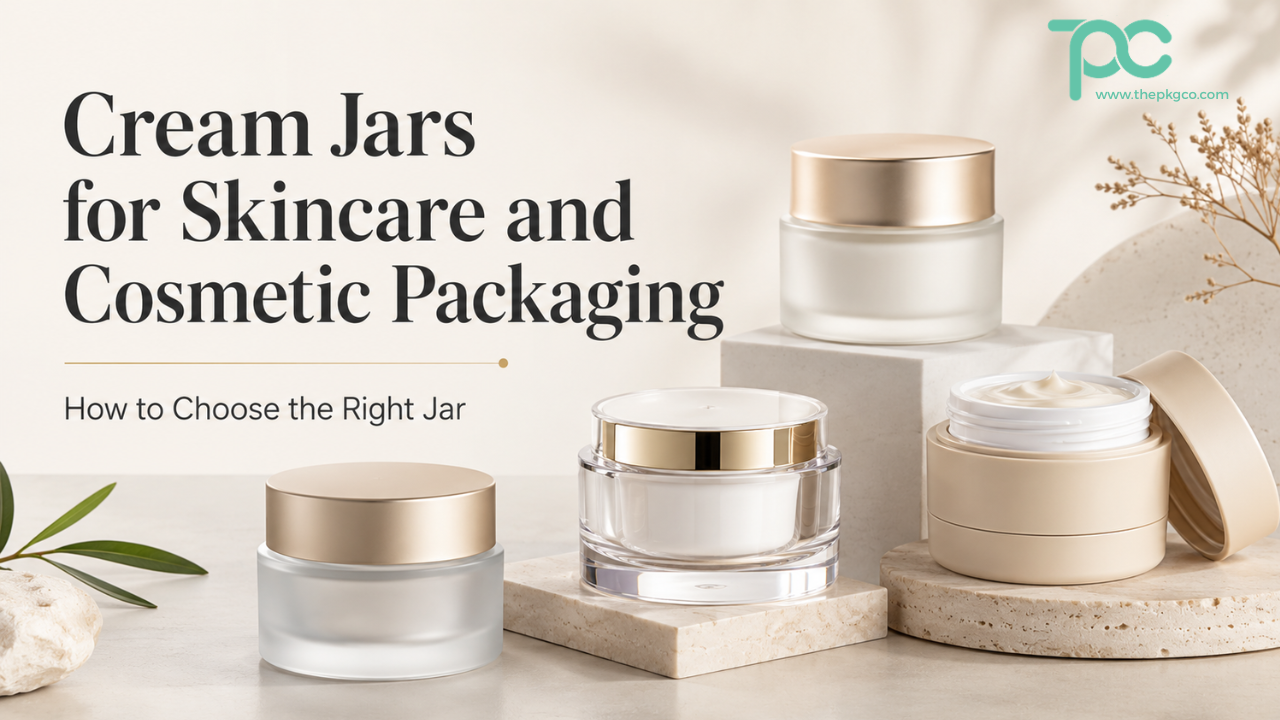
Cream jars are one of the most widely used packaging formats in skincare, cosmetics, and beauty products. From moisturizers and face creams to masks, balms, and body care formulas, cream jars provide a practical and premium packaging solution for products with thicker textures.
For skincare brands, choosing the right cream jar is not only about appearance. The jar must protect the formula, support the brand’s positioning, match the product texture, and create a positive user experience.
This guide explains how cream jars are used in skincare and cosmetic packaging, what materials are available, and how beauty brands can choose the right jar design for their product line. Brands comparing different cream jars should consider material, formula compatibility, decoration options, and long-term production needs before choosing a final packaging system.
What Are Cream Jars?
Cream jars are containers designed for skincare and cosmetic formulations with cream, balm, gel, or paste-like textures.
They are commonly used for:
- Face creams
- Moisturizers
- Eye creams
- Body butter
- Face masks
- Cleansing balms
- Hair masks
- Treatment creams
Unlike bottles or tubes, jars provide a wide opening that makes it easier for consumers to access thicker formulations. This makes them especially suitable for products that are not easily dispensed through pumps, droppers, or squeeze tubes.
Cream jars are available in many materials, including glass, acrylic, PET, PP, and refillable packaging systems.
Why Cream Jars Are Popular in Skincare Packaging
Cream jars remain popular because they offer a strong balance of functionality, presentation, and flexibility.
For beauty brands, cream jars provide several advantages:
- Easy access to thick formulations
- Strong shelf presence
- Flexible decoration options
- Premium packaging appearance
- Compatibility with multiple skincare categories
A well-designed cream jar can make a skincare product feel more luxurious and more substantial. This is especially important for moisturizers, night creams, anti-aging creams, and premium treatment products.
Packaging also influences how consumers perceive the formula. A high-quality jar can make a cream feel more valuable before the customer even applies the product.
Common Materials Used for Cream Jars
The material of a cream jar affects cost, durability, sustainability, and brand positioning.
Glass Cream Jars
Glass cream jars are commonly used for premium skincare products. They offer a heavier feel, strong product compatibility, and a luxury appearance.
Glass is often preferred for:
- Premium moisturizers
- Luxury face creams
- Natural skincare products
- High-end treatment products
Glass cosmetic jars can also support sustainability messaging because glass is recyclable, reusable, and strongly associated with premium beauty packaging.
For brands focused on premium skincare positioning, glass cosmetic jars are often one of the strongest packaging choices.
Acrylic Cream Jars
Acrylic cream jars are popular because they can create a glass-like appearance while remaining lighter and more impact-resistant.
Acrylic is often used for:
- Mid-range skincare brands
- Luxury-style packaging with lower weight
- Products sold online
- Travel-friendly beauty products
Acrylic jars can look premium while reducing breakage risks during shipping.
For brands comparing material options, our guide to acrylic vs glass cosmetic jars can help clarify which material fits the product best.
PET and PP Cream Jars
PET and PP jars are lightweight, cost-effective, and widely used for mass-market cosmetic packaging.
They are suitable for:
- Body creams
- Hair masks
- Entry-level skincare
- High-volume production
These materials are often selected when brands need lightweight packaging, lower costs, or larger production quantities.
Refillable Cream Jars
Refillable cream jars are increasingly popular among sustainable beauty brands.
These systems usually include:
- A reusable outer jar
- A replaceable inner refill cup
Refillable designs help reduce single-use packaging waste while supporting customer retention through refill purchases.
Brands focused on sustainability can explore refillable glass cosmetic jars as a premium packaging solution.
Glass vs Acrylic vs Plastic Cream Jars
Each material has a different role in cosmetic cream packaging.
| Material | Best For | Main Advantage |
|---|---|---|
| Glass | Premium skincare | Luxury feel and product compatibility |
| Acrylic | Premium-look packaging | Lightweight and durable |
| PET / PP | Mass production | Cost-effective and lightweight |
| Refillable systems | Sustainable brands | Reduced packaging waste |
There is no single best material for every product. The right choice depends on the brand’s price point, formulation, distribution model, and sustainability goals.
For example, a luxury anti-aging cream may benefit from a heavy glass jar, while a body cream for e-commerce may perform better in a lightweight plastic jar.
How to Choose the Right Cream Jar
When choosing cream jars, brands should consider both product performance and customer perception.
1. Product Texture
Thicker products usually work well in jars because consumers can easily scoop or apply the formula.
Cream jars are ideal for:
- Rich creams
- Dense balms
- Clay masks
- Thick moisturizers
Lighter fluids or serums may be better suited for bottles, pumps, droppers, or tubes.
2. Formula Compatibility
The jar material must be compatible with the formula.
Brands should consider whether the formula contains:
- Essential oils
- Active ingredients
- Natural extracts
- Retinol
- Vitamin C
- Fragrance components
Glass offers strong compatibility for many sensitive formulations, while plastic materials should be carefully tested before mass production.
3. Brand Positioning
Packaging should match the brand’s market position.
For luxury skincare, glass or acrylic jars can help create a more premium impression.
For affordable skincare, PET or PP jars may offer better cost efficiency.
For eco-conscious beauty brands, refillable jars may support sustainability messaging.
4. Decoration Options
Cream jars can be customized using:
- Frosted finishes
- Color coating
- Metallized caps
- Silk-screen printing
- Hot stamping
- Labels
- Custom caps
Decoration plays a major role in how the final product appears on the shelf or online.
5. Sustainability Goals
Sustainability is now a major factor in beauty packaging decisions.
Brands may consider:
- Refillable cream jars
- Recyclable materials
- PCR plastic options
- Glass packaging
- Reduced secondary packaging
Choosing sustainable cosmetic jar packaging can help brands appeal to environmentally conscious consumers.
Cream Jar Packaging for Different Skincare Products
Different skincare categories require different jar structures and materials.
Face Cream Jars
Face creams often use glass, acrylic, or double-wall jars to create a premium appearance.
Eye Cream Jars
Eye cream jars are usually smaller and require precise decoration to communicate luxury and care.
Body Cream Jars
Body creams often use larger PET or PP jars because they require higher capacity and cost efficiency.
Mask Jars
Face masks often use wide-mouth jars for easy product access, especially for clay, gel, or cream textures.
Balm Jars
Balms require strong material compatibility and secure closure to prevent leakage or contamination.
Why Cream Jar Design Matters for Beauty Brands
Cream jar design directly affects the customer experience.
A good jar should be:
- Easy to open
- Comfortable to use
- Stable on shelves
- Compatible with the formula
- Visually aligned with the brand
Packaging design also influences repeat purchases. When consumers enjoy the packaging experience, they are more likely to associate the product with quality.
For premium skincare brands, the jar becomes part of the product story. The weight, finish, cap design, and decoration all communicate value.
How to Work With a Cosmetic Jar Manufacturer
Choosing the right manufacturer is important for packaging quality and production consistency.
A reliable cosmetic jar manufacturer should support:
- Material selection
- Custom decoration
- Product compatibility testing
- Different jar capacities
- Sustainable packaging options
- Stable mass production
Brands should ask about:
- MOQ
- Lead time
- Sample availability
- Decoration methods
- Closure options
- Formula compatibility
Working with an experienced supplier helps reduce packaging risks and ensures the final jar matches the product’s performance and branding needs.
Conclusion
Cream jars are an essential packaging format for skincare and cosmetic products. They are especially suitable for moisturizers, face creams, masks, balms, and other thick formulations that require easy access and strong shelf presentation.
The right cream jar depends on the product formula, brand positioning, sustainability goals, and target market. Glass jars offer premium appeal, acrylic jars provide lightweight durability, plastic jars support cost efficiency, and refillable jars help brands build more sustainable packaging systems.
For skincare brands developing cream products, choosing the right cream jar can improve product protection, customer experience, and long-term brand value.
Frequently Asked Questions About Cream Jars
What are cream jars used for?
Cream jars are used for skincare and cosmetic products such as face creams, moisturizers, masks, balms, body butter, and treatment creams.
Are glass cream jars better than plastic cream jars?
Glass cream jars are often preferred for premium skincare because they offer a luxury feel and strong product compatibility. Plastic jars are lighter and more cost-effective for mass production.
What material is best for cream jars?
The best material depends on the formula and brand positioning. Glass is suitable for premium products, acrylic offers a luxury look with lighter weight, and PET or PP is useful for cost-effective packaging.
Can cream jars be refillable?
Yes. Refillable cream jars use a reusable outer container and replaceable inner refill cup to reduce packaging waste.
How do I choose a cosmetic jar manufacturer?
Choose a manufacturer that offers material options, customization, formula compatibility support, stable production quality, and sustainable packaging solutions.