



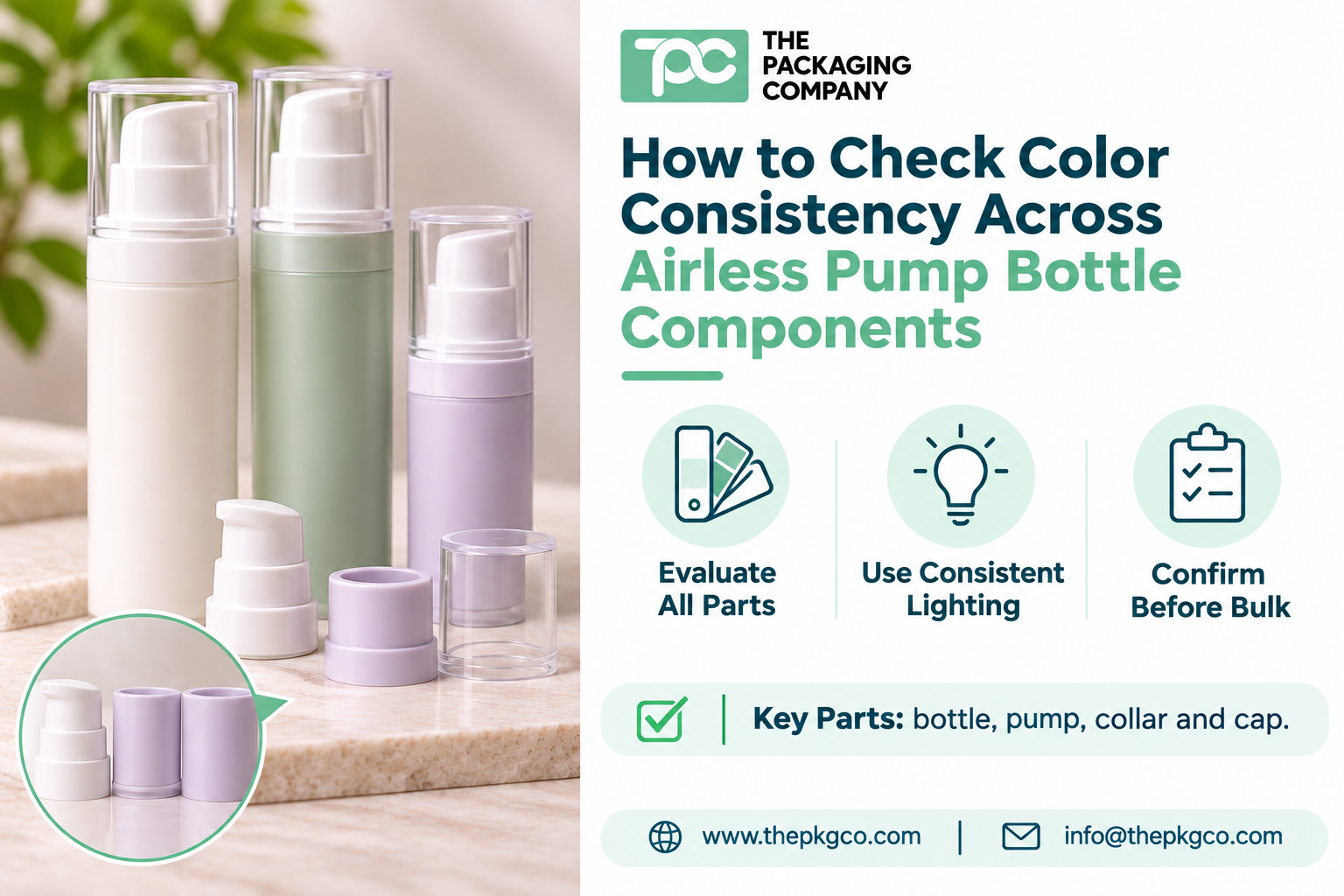
This is a common challenge with multi-component cosmetic packaging. An airless pump bottle can contain several visible parts manufactured from different materials, using different production processes or surface finishes.
For purchasing and product development teams, color approval should go beyond checking one bottle against a brand color reference. The goal is to understand which differences are acceptable, which require correction, and how to document the final standard before bulk production.
Why Airless Pump Bottle Components Can Look Different
Custom color matching is more complicated when a packaging design includes several visible components.
For example, a skincare brand may request a consistent ivory color across the bottle body, overcap, actuator, and collar. Although all four components use the same color reference, they may not look identical after manufacturing.
Several factors can contribute to the difference:
- Different materials: PP, AS, ABS, and other polymers may have different natural colors, transparency, and surface characteristics.
- Surface finish: A matte component reflects light differently from a glossy component.
- Color application: Molded-in color, exterior coating, and printed decoration can create different visual results.
- Component geometry: Curved and flat surfaces reflect light at different angles.
- Production variation: Material batches and manufacturing conditions can influence the final appearance.
The challenge is not necessarily that the supplier used the wrong color. The same color specification can appear different across materials and finishes.
Check the Complete Airless Bottle Assembly
One of the most useful steps in airless pump bottle color matching is reviewing the fully assembled packaging rather than approving individual components separately.
Place the bottle body, actuator, collar, and cap together exactly as they will appear in the finished product.
Compare the Bottle Body and Overcap
These are often the largest visible surfaces. A mismatch between them may be noticeable in product photography, retail displays, or direct-to-consumer packaging.
Check whether both components have consistent color depth and whether differences become more visible under angled lighting.
Inspect the Pump Actuator and Collar
Smaller components can still create a noticeable difference, particularly with white, beige, pastel, or neutral-colored packaging.
An actuator may appear warmer or cooler than the bottle even when both were produced to the same nominal color reference.
The collar can make these differences more apparent because it sits directly between the pump and the main bottle body.
Review Metallic and Decorated Components Separately
Metallic collars, coated caps, and hot-stamped elements should not be judged in exactly the same way as molded plastic.
Metallic reflection and surface texture can change the perceived color considerably.
If the brand intentionally combines different finishes, the goal may be visual coordination rather than an identical appearance.
Brands evaluating different configurations can explore TPC’s custom airless pump bottles for skincare packaging, including options for customized colors and decoration.
How to Evaluate Color Under Different Lighting Conditions
A packaging component may look consistent in one environment but noticeably different in another.
This occurs because light sources have different spectral characteristics, which can change the apparent relationship between colors. The effect is particularly important when matching components made from different materials.
For a controlled cosmetic packaging color approval process, brands should establish consistent viewing conditions.
- Use a standardized lighting environment or suitable color-viewing booth.
- Compare components against the same approved physical color reference.
- Check the assembled bottle from several viewing angles.
- Evaluate the finish and color together rather than independently.
- Record any differences that appear under additional lighting conditions relevant to the product’s selling environment.
Natural daylight can provide useful context, but changing outdoor conditions should not replace a controlled reference-lighting procedure.
If the appearance changes significantly between light sources, the supplier and brand should investigate whether the materials or colorants create a metameric mismatch.
When Should Brands Use Instrumental Color Measurement?
Visual review is important, but color measurement may help when small differences could affect a premium skincare product’s presentation.
A spectrophotometer can measure color characteristics under defined conditions. Results may be compared using a color-difference metric such as Delta E (ΔE).
However, a single Delta E value should not automatically determine whether a cosmetic packaging component passes inspection.
Measurement conditions, surface texture, gloss, transparency, and the selected color-difference formula all influence how results should be interpreted.
For reliable comparisons, purchasing teams should establish:
- The approved physical master sample.
- The instrument and measurement procedure.
- The lighting and observer conditions used for evaluation.
- Whether measurement is appropriate for the selected finish.
- The acceptance tolerance agreed upon with the manufacturer.
There is no universal Delta E threshold suitable for every airless bottle material or decorative finish. Acceptance criteria should be agreed upon for the particular packaging project.
How to Establish a Color Approval Standard Before Production
Instead of relying only on a Pantone reference or digital artwork, brands should build a documented approval standard using physical components.
Step 1: Identify Every Visible Component
List the bottle body, overcap, collar, actuator, and any additional decorated surfaces.
Record the intended material, finish, and color treatment for each component.
Step 2: Request Physical Color Samples
Ask the supplier for representative samples of the proposed colors and finishes.
When possible, review samples made with production-representative materials and manufacturing processes.
Step 3: Approve the Assembled Appearance
Check the components together under controlled lighting. Note whether minor material-related differences are acceptable within the final design.
This is especially useful for custom skincare packaging with multiple color-matched components.
Step 4: Document the Accepted Standard
Keep an approved physical sample and a written record of the color, finish, measurement criteria where applicable, and any accepted variations.
The written specification should also identify the relevant component and artwork versions.
Step 5: Review Production Samples Against the Standard
Compare production-representative samples against the approved master before authorizing bulk production.
If the actual production method differs from the initial sample process, reassess the color and finish rather than assuming the original approval remains representative.
What Should Buyers Do If the Cap and Bottle Do Not Match?
A visible mismatch does not always mean the entire packaging project must be redesigned.
The next step is to identify where the difference originates.
If the cap uses a different material from the bottle, the supplier may need to review its color formulation or the intended surface finish.
If the mismatch involves a coated component, the coating process or finish may require adjustment.
In some designs, a deliberately contrasting collar or cap may provide a more reliable visual direction than trying to match incompatible finishes perfectly.
Any adjustment should be reviewed using an assembled sample so the brand can evaluate the final appearance rather than individual pieces.
Make Color Approval Part of Packaging Quality Control
Color consistency across an airless pump bottle is not simply a question of selecting the correct color code. The final result depends on how materials, component geometry, and surface finishes work together.
For skincare brands developing premium or coordinated product lines, reviewing assembled samples and documenting approved color standards can reduce uncertainty before bulk production.
The Packaging Company supplies custom airless pump bottles for skincare and cosmetic brands, with a variety of material, color, and decoration options available depending on the selected design.
Explore our wholesale airless pump bottle collection or contact The Packaging Company to discuss component color matching, customization, and packaging samples for your next product line.
Frequently Asked Questions About Airless Pump Bottle Color Matching
Why does an airless pump bottle cap look different from the bottle body?
The cap and bottle may use different materials, finishes, manufacturing processes, or color treatments. These differences can change how each surface reflects light, even when the same nominal color reference is used.
Can all components of a custom airless pump bottle match exactly?
Close visual matching may be achievable, but exact appearance across different materials and finishes cannot be assumed. Brands should review assembled physical samples and agree on realistic acceptance criteria before production.
Is a Pantone color reference enough for cosmetic packaging production?
A Pantone reference is a useful starting point, but it may not fully define how a color appears on molded plastic, coated surfaces, or metallic components. A physical approved sample and documented production specifications provide a stronger reference.
How should brands inspect airless pump bottle color consistency?
Compare the fully assembled bottle against an approved master sample under standardized lighting. Review each visible component, record material and finish differences, and use instrumental color measurements when appropriate.
Should brands approve color-matched airless bottles before bulk production?
Yes. Production-representative samples help brands evaluate the finished appearance and identify discrepancies before a larger manufacturing commitment. Approval should include the component colors, finishes, and assembled packaging configuration.