



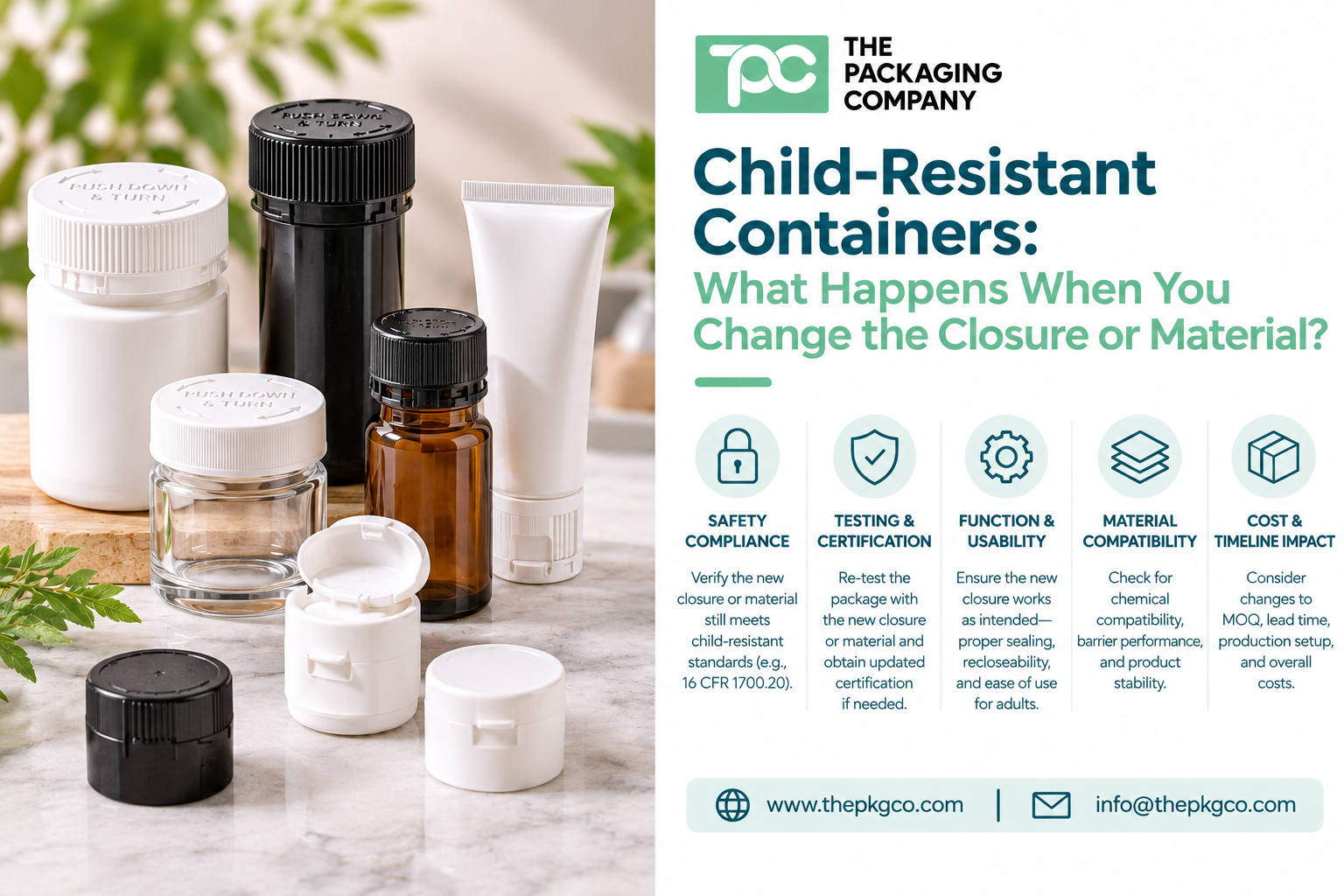
A packaging change that appears minor during product development can create significant questions about child-resistant performance. Switching to a different cap, changing the container material, or adjusting a closure component may affect whether the finished package is still supported by its original testing documentation.
For brands purchasing child resistant containers, these decisions should be evaluated before bulk production rather than treated as routine substitutions.
The key consideration is not simply whether a replacement component looks similar. It is whether the revised container-and-closure combination remains suitable for the intended application and is supported by the necessary compliance evidence.
Why a Small Component Change Matters
Child-resistant performance depends on how the complete packaging system functions.
Thread geometry, closure engagement, material flexibility, and the opening mechanism can all influence how a package operates. Even a small change to one component may affect the interaction between the container and its closure.
When sourcing certified child resistant containers, buyers should confirm that the supporting test documentation covers the exact container-and-closure combination being purchased.
For example, a brand may decide to replace an existing closure with a visually similar option from another supplier. Although both caps may have the same nominal dimensions, differences in thread design or locking features could affect the package’s performance.
This is why component substitutions should be reviewed against the originally approved configuration.
1. Changing the Child-Resistant Closure
A closure change may involve a different cap supplier, an updated locking mechanism, a revised liner, or a change in material.
Each modification can influence how the closure engages with the container.
When evaluating a new child resistant closure, buyers should review:
- The original and proposed closure specifications.
- Thread dimensions and engagement features.
- Locking or opening mechanisms.
- Material and manufacturing tolerances.
- Compatibility with the existing container.
- Available test documentation for the revised combination.
A replacement closure should not be assumed to provide equivalent child-resistant performance simply because it fits the container.
Before approving the change, ask the packaging supplier whether existing testing covers the new configuration or whether further evaluation is necessary.
2. Changing the Container Material
Material changes can also influence child-resistant performance.
For example, switching between plastic grades, introducing recycled content, or changing from plastic to glass may affect the container’s stiffness, dimensions, or interaction with the closure.
Even when the overall container size remains unchanged, differences in material properties can influence how the package opens and closes.
For custom child resistant packaging, buyers should review the proposed material specifications alongside the existing closure design.
Changes to materials or closure specifications should also trigger a review of the existing child resistant packaging certification documentation to determine whether the revised configuration remains covered.
The need for additional testing depends on the nature of the change, the applicable requirements, and the scope of existing evidence.
3. Review Testing Documentation Before Approval
A child-resistant packaging test report is not necessarily a blanket approval for every possible variation of a container.
The documentation should identify the configuration evaluated, including relevant components and specifications.
Before approving a modified package, request:
- The original child-resistant test report.
- Identification of the tested container and closure.
- Component drawings and revision numbers.
- Material specifications.
- A description of the proposed changes.
- Any additional test results or technical assessments.
- Written clarification of whether the revised configuration is covered.
Child resistant packaging testing may involve requirements such as 16 CFR §1700.20 or other standards applicable to the product and market.
However, testing requirements vary by product category and jurisdiction. Brands should confirm the relevant requirements with their compliance team or a qualified testing laboratory.
4. Compare New Samples Against the Approved Configuration
Documentation is important, but buyers should also evaluate physical samples.
Request samples of the original approved package and the proposed replacement configuration whenever practical.
Compare how the closures engage, whether the components fit consistently, and whether any visible differences appear during repeated opening and closing.
For example, if a new closure requires noticeably less force to operate, the difference should be investigated rather than automatically accepted as an improvement.
Similarly, a revised container material may change how securely the closure engages.
These observations do not replace formal child-resistant testing, but they can help identify potential issues that require further investigation.
5. Maintain Component Traceability for Future Orders
Once a packaging configuration has been approved, brands should document the exact components used in production.
This is especially important when packaging programs involve multiple SKUs, suppliers, or manufacturing locations.
The approved specification should identify the container, closure, material, relevant dimensions, and revision numbers.
If a supplier later proposes a substitution, the purchasing team can compare it with the approved configuration before authorizing production.
Maintaining this information helps reduce the risk of unintended changes between the initial order and future reorders.
6. Establish a Clear Change-Approval Process
Before placing a wholesale order, brands should determine how packaging modifications will be reviewed.
A practical process includes identifying the proposed change, comparing it against the approved specification, reviewing available compliance evidence, evaluating updated samples, and documenting the final decision.
When the modification may affect child-resistant performance, the appropriate compliance specialist or testing laboratory should determine whether additional testing is necessary.
This process is particularly valuable for brands developing customized packaging that may undergo design revisions before production.
Choosing Child-Resistant Packaging With Confidence
Selecting child-resistant packaging involves more than finding a container that meets the desired size and appearance.
The complete container-and-closure system must remain consistent with the approved specifications and applicable compliance requirements.
For brands planning packaging modifications, reviewing the supporting documentation early can help prevent unnecessary delays and reduce uncertainty before production.
The Packaging Company offers a range of wholesale child-resistant packaging formats for brands evaluating different container and closure options.
Explore our child-resistant containers and packaging options or review our child-resistant packaging solutions guide for additional information about available formats and purchasing considerations.
Planning a child-resistant packaging project? Contact The Packaging Company to discuss available configurations, request samples, and review the specifications needed for your application.
Frequently Asked Questions
Does changing a cap always require a new child-resistant test?
Not necessarily. The answer depends on the change and whether valid testing or other acceptable evidence covers the revised configuration. Confirm the requirements with the responsible compliance specialist or testing laboratory before approving production.
Can a certificate for one child-resistant container size cover another?
Not automatically. Check the exact container sizes, closure specifications, and configurations identified in the supporting test report. A different size may require additional evaluation.
Does changing the packaging material affect child-resistant certification?
It can. Material changes may affect flexibility, dimensional tolerances, and closure engagement. The manufacturer should confirm whether the revised material is covered by existing documentation or requires further evaluation.
What documents should buyers request before approving a modified container?
Request the original test report, component specifications, material details, revision history, updated samples, and written confirmation of whether the revised configuration is supported by applicable compliance evidence.
When should buyers request new samples?
Request new samples whenever a proposed change could affect closure engagement, fit, opening operation, or other performance characteristics. Review the samples before authorizing bulk production.