



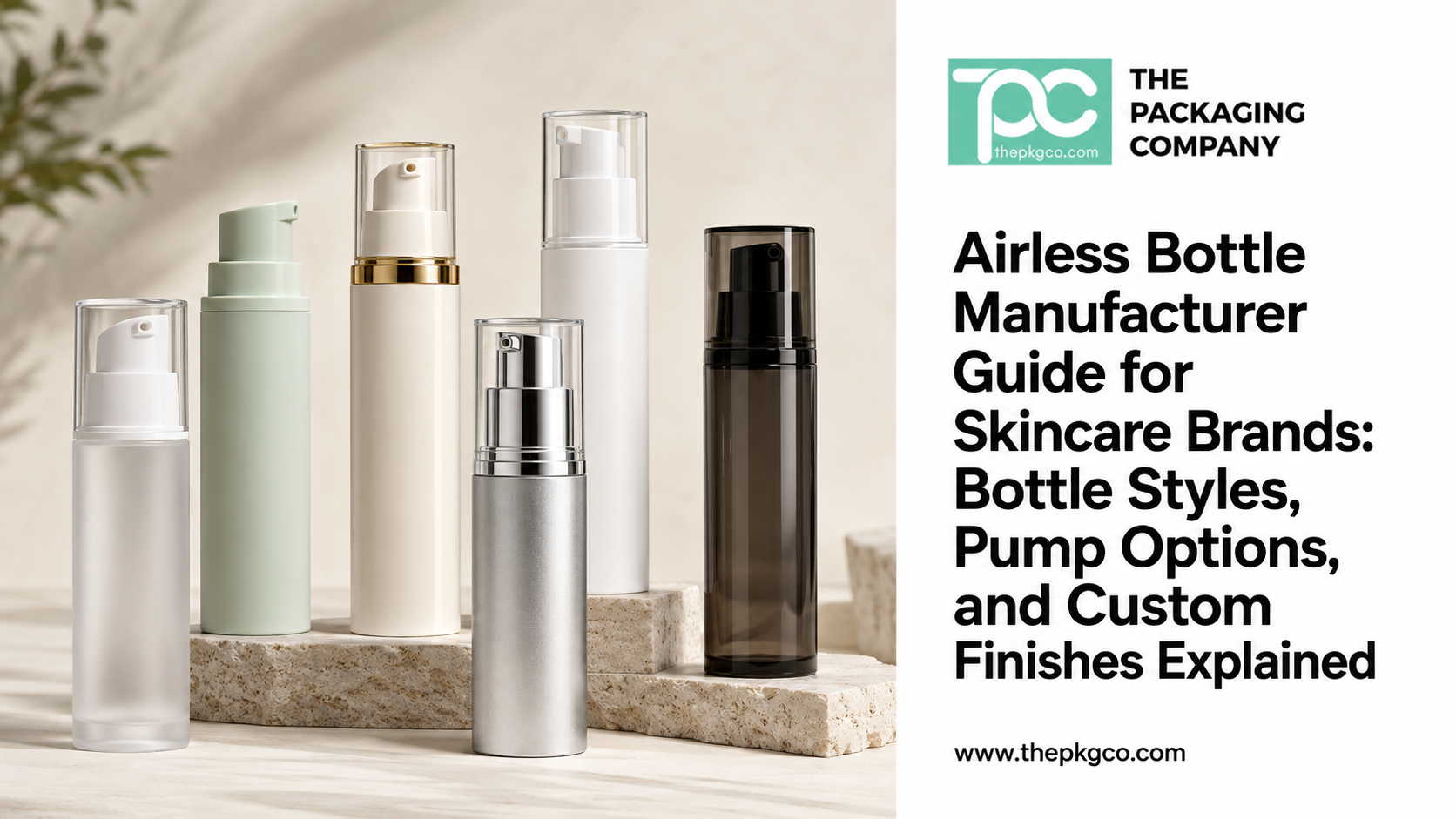
Choosing an airless bottle manufacturer is not only about finding a supplier with available bottles. For skincare brands, the right packaging decision depends on bottle style, pump system, cap direction, decoration options, custom finishes, MOQ, and future reorder consistency.
Airless packaging is commonly used for serums, lotions, moisturizers, treatments, primers, sunscreens, and other skincare products that need a controlled dispensing experience. Because airless bottles include multiple components, brands should review the full packaging system before choosing a final direction.
This guide explains what skincare brands should understand when comparing airless packaging options and working with an airless bottle manufacturer.
Why Airless Bottle Manufacturer Selection Matters
Airless cosmetic bottles may look simple from the outside, but they are built as a packaging system. The bottle body, pump, actuator, cap, internal structure, decoration surface, and finish all work together to create the final packaging experience.
For skincare brands, this means the manufacturer should be able to support more than one basic bottle option. Brands often need help reviewing:
- Airless bottle styles and sizes
- Pump and actuator options
- Cap or capless packaging direction
- Decoration and label space
- Custom color and finish options
- MOQ and SKU planning
- Empty component packing
- Future reorder consistency
When these details are reviewed together, skincare brands can make better packaging decisions and avoid choosing bottles that look good individually but do not support the full product line.
Start With the Product Type and Packaging Goal
Before choosing an airless bottle style, brands should first define the product type and the packaging goal. A facial serum, moisturizer, sunscreen, eye treatment, and primer may all use airless packaging, but they may not need the same bottle structure or presentation.
Brands should ask:
- What type of skincare product will use the bottle?
- Is the product part of a single launch or a full product line?
- Does the packaging need a clinical, premium, clean, or minimal look?
- Will multiple products use the same bottle family?
- Does the brand need matching packaging across different SKUs?
This helps the airless bottle manufacturer recommend options that fit the product line instead of only showing general bottle samples.
Review Airless Bottle Styles
Airless bottle styles can vary by shape, size, material direction, cap style, and overall presentation. Some brands prefer a clean cylindrical airless pump bottle, while others may want a more premium shape, refillable structure, or specialty dispensing format.
Common airless packaging styles include:
- Standard airless pump bottles
- Travel-size airless bottles
- Airless bottles with applicator-style tips
- Capless airless dispensers
- Refillable airless bottles
- Mono-material airless bottles
- Glass airless pump bottles
Brands can explore airless pump bottles to compare bottle styles, sizes, and general packaging directions.
Understand Pump Options and User Experience
The pump system is one of the most important parts of airless pump packaging. It affects how the product is dispensed, how the customer interacts with the bottle, and how the packaging feels during daily use.
When reviewing pump options, brands should consider:
- Pump shape and actuator style
- Output direction
- Cap or capless design
- How the pump looks with the bottle body
- Whether the pump style fits the product’s positioning
- Whether the same pump style can be used across multiple SKUs
For skincare lines, pump consistency can help create a cleaner product family. If several products use airless packaging, using a related pump style across the line can make the packaging look more organized.
Match Bottle Style With Brand Positioning
Airless cosmetic bottles can create different brand impressions depending on shape, finish, color, and decoration. A clinical skincare line may choose simple white packaging. A premium skincare line may prefer frosted finishes, metallic details, or heavier-looking components. A clean beauty brand may choose minimal decoration and neutral tones.
Brands should review how the selected airless bottle will appear:
- On the product page
- In product photography
- In retail or display settings
- Inside skincare bundles or sets
- Next to jars, tubes, or dropper bottles in the same line
The goal is not only to choose an attractive bottle. The goal is to choose a bottle style that supports the product, the customer experience, and the broader packaging system.
Review Decoration and Label Space Early
Decoration should be reviewed before the final airless bottle direction is confirmed. A bottle may look good as a blank sample, but the final packaging depends on how the logo, product name, ingredient information, usage directions, and brand design fit on the available surface.
Brands should review:
- Logo placement
- Front panel layout
- Back label or ingredient space
- Direct printing or label direction
- Color matching
- Hot stamping or metallic details
- Matte, glossy, frosted, or soft-touch finishes
For smaller airless bottles, label space can be limited. An experienced airless packaging supplier can help brands review whether the selected bottle style has enough room for both branding and product information.
Compare Custom Finish Options
Custom finishes can make airless packaging feel more aligned with the brand. A finish can change how the bottle looks, how it feels in the hand, and how it appears in product photography.
Common custom finish directions include:
- Matte finish
- Glossy finish
- Frosted effect
- Soft-touch coating
- Metallic accents
- Custom color coating
- Minimal clear or neutral packaging
Brands should think about whether the finish can be repeated across future products. A finish that works well on one airless bottle should also fit the brand’s future packaging direction if the product line expands.
Plan MOQ and SKU Groups
MOQ planning is important when working with airless bottle manufacturers. Each unique bottle size, pump style, cap color, finish, decoration method, or color version may affect production planning.
For brands with multiple products, it may be helpful to group SKUs by shared packaging components. For example, several products may use the same airless bottle family with different labels or color accents.
Brands should ask:
- Can multiple products use the same bottle family?
- Can the same pump style work across multiple SKUs?
- Can decoration stay consistent while product names change?
- Which products need unique packaging?
- Which products can share components to simplify reorders?
This can help skincare brands reduce unnecessary complexity and create a packaging system that is easier to manage.
Think About Reorder Consistency From the Beginning
Airless bottle planning should include future reorders from the beginning. Once a brand approves a bottle style, pump system, decoration method, color, and packing details, those specifications should be recorded clearly.
A useful reorder file may include:
- Approved bottle size and style
- Pump and actuator details
- Cap or closure information
- Material or finish direction
- Decoration method
- Artwork version
- Color standard
- Carton packing details for empty components
- Production notes for future reorders
This helps brands keep airless cosmetic bottles consistent from one order to the next.
Related Airless Packaging Guides
Brands comparing airless bottle options can also review TPC’s related guides on airless containers for skincare packaging lines, troubleshooting airless pump bottles, glass airless pump bottles, and refillable airless bottles.
How The Packaging Company Supports Airless Bottle Projects
The Packaging Company works with skincare, beauty, and cosmetic brands that need airless bottle packaging support across product lines. TPC can help brands compare bottle styles, pump options, decoration directions, custom finishes, MOQ, empty component packing, and reorder consistency.
For brands reviewing airless bottle manufacturer options, TPC can help organize packaging details so the selected bottle system supports both the product and the brand presentation.
Brands can explore airless packaging options or contact The Packaging Company to discuss an airless bottle project.
Airless Bottle Manufacturer Review Checklist
- Identify the product type and packaging goal
- Compare available airless bottle styles
- Review pump and actuator options
- Check cap or capless packaging direction
- Plan decoration and label space
- Review custom finish options
- Organize MOQ and SKU groups
- Record approved details for future reorders
FAQ
What should skincare brands review when choosing an airless bottle manufacturer?
Skincare brands should review bottle styles, pump options, cap direction, decoration methods, custom finishes, MOQ, empty component packing, and reorder support when choosing an airless bottle manufacturer.
What types of products use airless cosmetic bottles?
Airless cosmetic bottles are commonly used for skincare serums, lotions, moisturizers, treatments, primers, sunscreens, and other products that need controlled dispensing and a clean packaging presentation.
Why do pump options matter for airless packaging?
Pump options matter because the pump affects the dispensing experience, product presentation, and how the bottle works as part of the full packaging system. Brands should review pump style, actuator shape, cap direction, and how the pump matches the bottle body.
Can airless bottle styles be customized?
Many airless bottle styles can be customized through decoration, color, finish, cap direction, pump style, label design, or other packaging details depending on the project requirements and MOQ.