



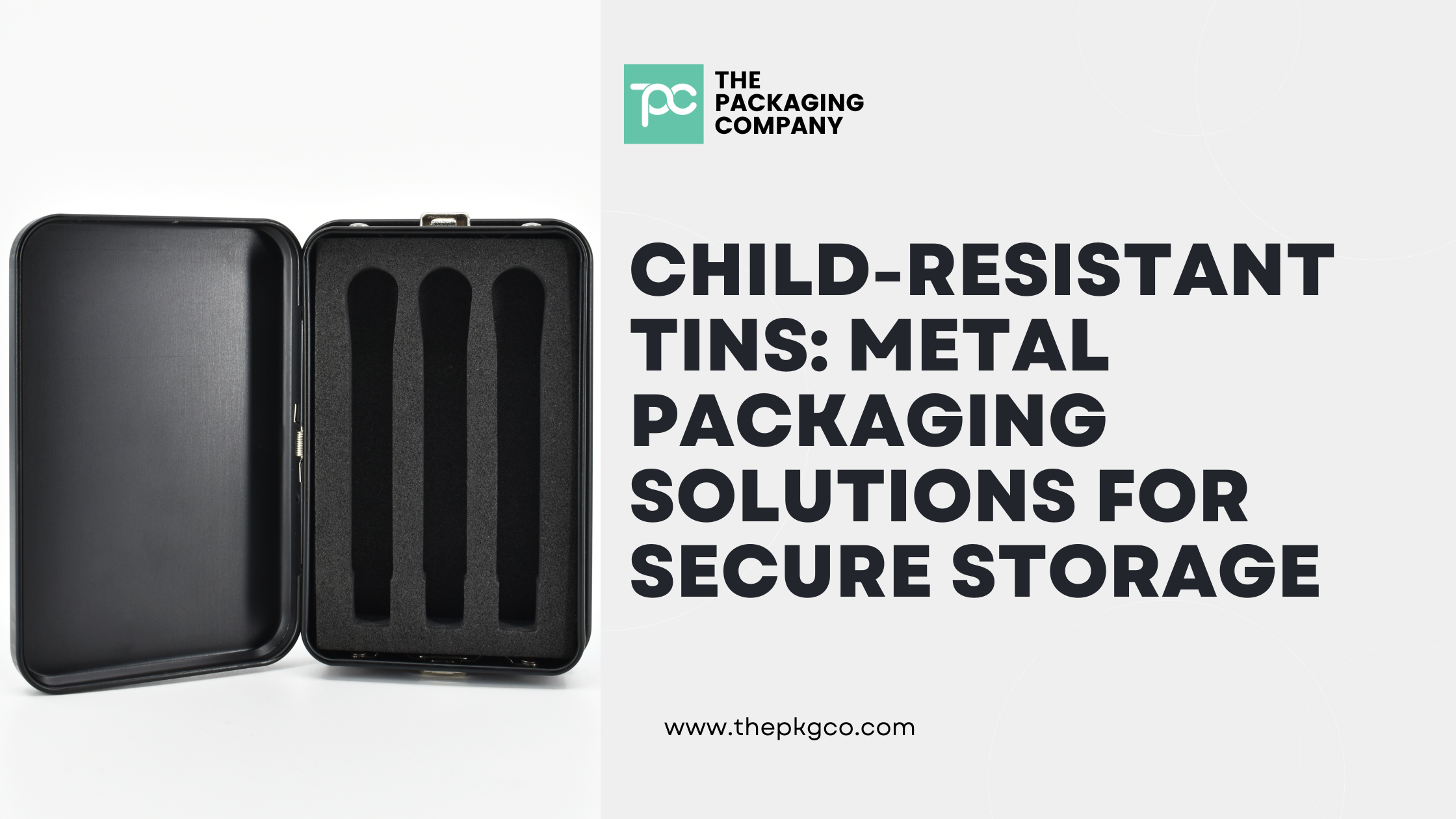
Child-resistant tins have become the benchmark format for cannabis brands that want compliance, product protection, and shelf presence in a single package. Rigid, airtight, fully decoratable, and recyclable — a quality CR tin does everything a cannabis or regulated-product brand needs at retail, without compromising on any front.
This guide covers how child-resistant tins work, the formats available, what to look for when sourcing them, and how TPC’s CR tin lineup is built for brands that take both compliance and brand identity seriously.
What Is a Child-Resistant Tin?
A child-resistant tin is a metal container — typically tinplate steel or aluminum — engineered with a closure mechanism that meets federal CR certification standards. The “child-resistant” designation isn’t a design aesthetic or a marketing claim. It’s a certification status earned by passing specific third-party panel tests under either ASTM F1272 or 16 CFR §1700.20.
What separates a true CR tin from a standard snap tin or slide tin is the closure engineering. A standard decorative tin uses friction or a simple press-fit lid. A CR tin uses a mechanism — a latch, a directional snap, a squeeze-and-lift — that requires either fine motor control or a two-step action that young children haven’t developed the ability to execute reliably.
The metal format adds a layer of protection that plastic and flexible packaging can’t match: rigidity. CR tins protect fragile contents from compression, impact, and stacking pressure throughout the supply chain. For pre-rolls, edibles, and topicals where product integrity directly affects customer experience, that structural protection is part of the value.
CR Certification Standards: ASTM F1272 and 16 CFR §1700.20
Two federal protocols govern CR packaging in the US, and both apply to tins depending on how the package is classified.
ASTM F1272 covers reclosable packaging — containers designed to be opened, used, and resealed multiple times. Most CR tins fall under this standard because they’re reclosable by design. Testing requires that at least 85% of children ages 42–51 months cannot open the package within a 10-minute period, and that at least 90% of adults ages 50–70 can open and close the package within 5 minutes without instruction.
16 CFR §1700.20 is the Consumer Product Safety Commission standard, which applies more broadly and is often required by state cannabis regulations for products sold at retail. It uses similar panel testing methodology but with specific protocol differences. Some CR tins are certified to both standards.
When evaluating CR tins from any supplier, request the test documentation. Certification means passing a third-party panel test, not just meeting a design specification. If documentation isn’t available, the package isn’t certified.
TPC’s Child-Resistant Tin Line
The Packaging Company offers a full range of CR tins built for cannabis, edible, and regulated-product brands. Every format supports custom decoration and is available with insert trays, wax paper lining, and other custom interior configurations.
Child-Resistant Snap Tin
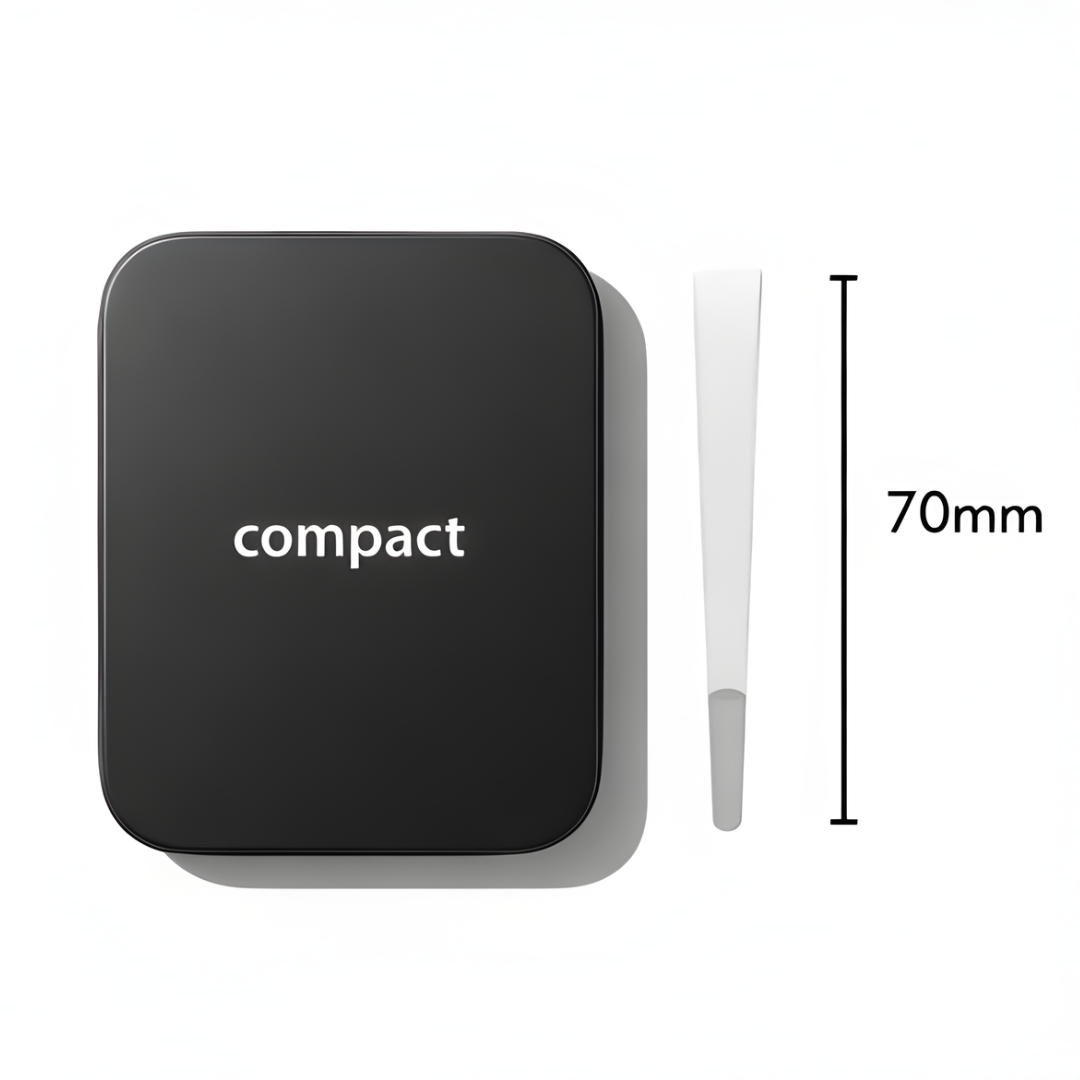
SKU: 760CR-V5 | Dimensions: 74mm × 58mm × 20mm
The standard format in TPC’s CR tin line. The snap closure is engineered to the CR mechanism — not a standard press-fit lid — so the package is compliant, not just decorative. At 74mm × 58mm, it accommodates standard pre-roll sizes and accepts a custom insert tray for single or multi-pack configurations. The low-profile design (20mm height) works well for pocket-friendly retail SKUs.
Ideal for: 1–3 pack pre-roll configurations, single-gram edibles, dogwalker formats.
View the Child-Resistant Snap Tin →
Child-Resistant Snap Tin – Extended
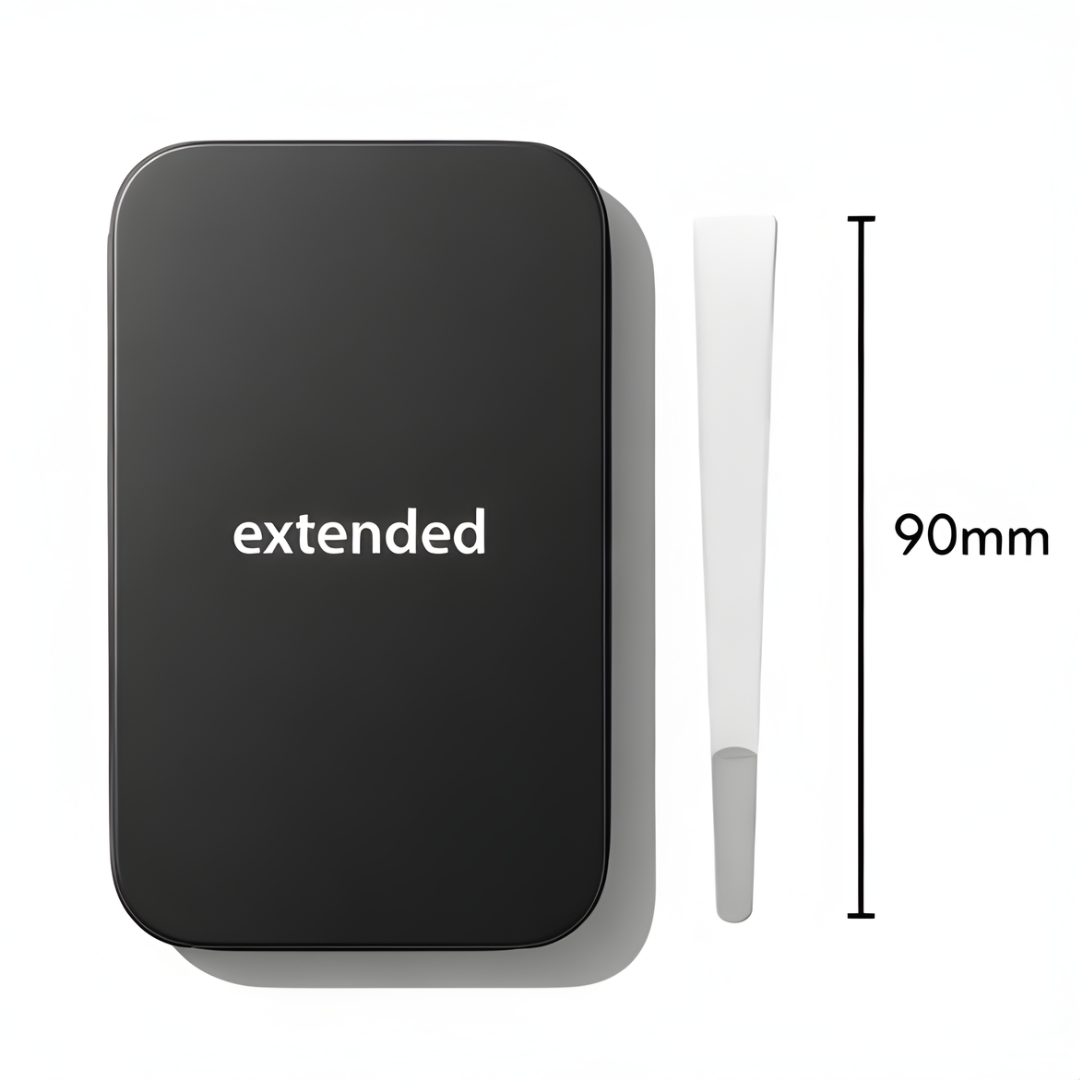
SKU: 760CR-V5E | Dimensions: 95mm × 57mm × 20mm
The same engineered snap closure in an extended footprint. The additional length (95mm vs 74mm) accommodates 100mm king-size pre-rolls, infused format sizes, and larger multi-pack configurations without changing the profile height. If your pre-roll or product runs longer than a standard format allows, this is the right format.
Ideal for: King-size pre-rolls, 4–5 pack configurations, infused formats with larger diameter.
View the Child-Resistant Snap Tin Extended →
Pre-Roll Tin Case (V1A)

The V1A format is built for higher-count configurations — 7-packs, 14-packs, and 28-pack runs where brands are servicing regular buyers or building bundled SKUs. The deeper tin case format maintains CR compliance while providing the interior volume needed for larger quantities. Custom insert trays keep pre-rolls organized and undamaged.
Ideal for: Multi-pack retail SKUs, dispensary house brands, value-tier bundles.
CR Tin Jar


Volume: 90ml
The CR Tin Jar takes the tin format in a different direction — a wide-mouth, jar-style opening that provides easy access to contents and a different visual presentation at retail. The 90ml volume works well for loose flower, edibles, or infused pre-rolls where presentation inside the container is part of the brand experience. The CR closure mechanism is built into the lid design, maintaining compliance in a format that reads as more premium than a snap tin.
Ideal for: Loose flower, edibles, infused pre-rolls, topicals requiring wide-mouth access.
V7 Edible Tin Case
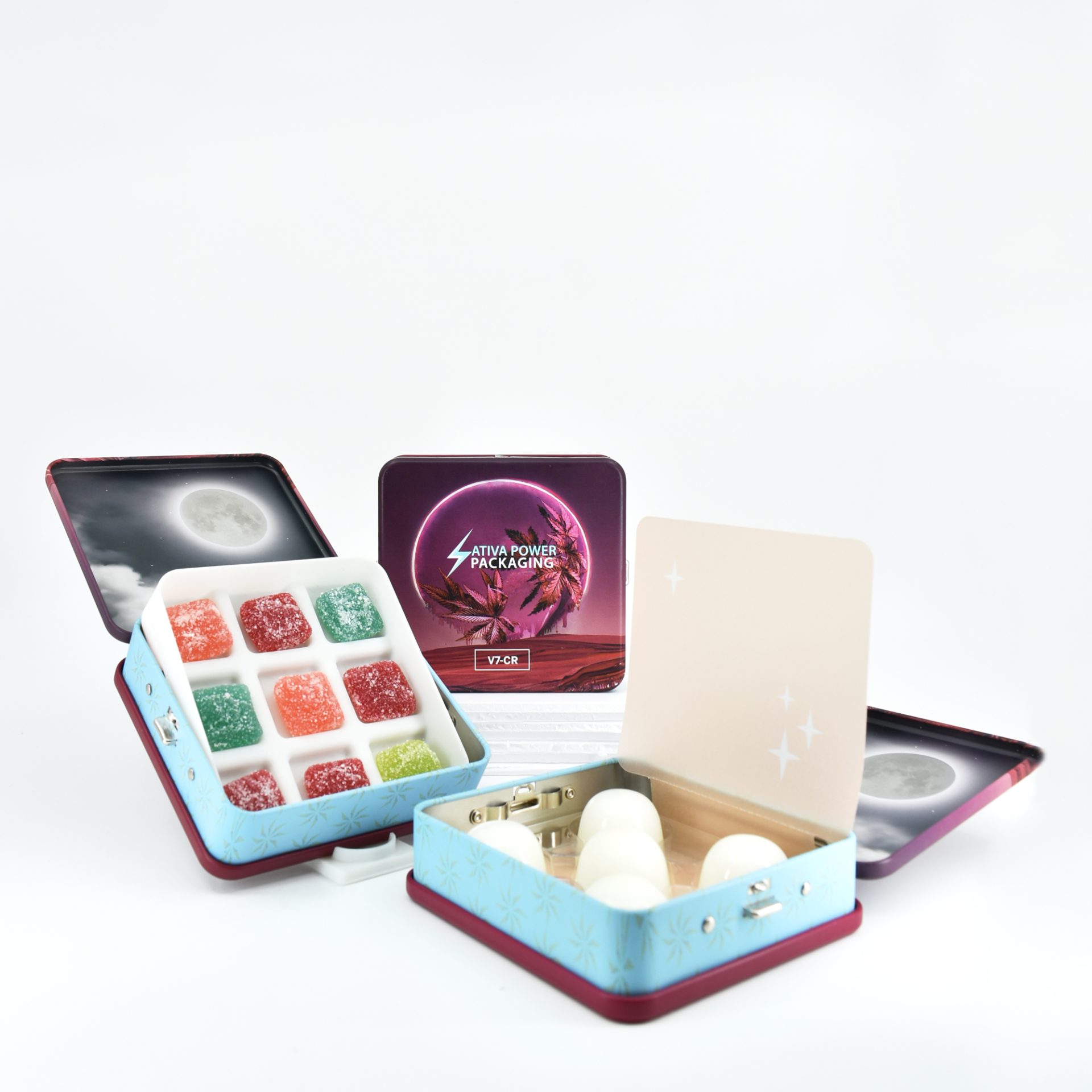
The V7 is purpose-built for edible brands — the interior volume and format dimensions are optimized for packaged chocolates, gummies, and confections rather than pre-rolls. It maintains CR compliance and the same premium tin construction as the rest of the line.
Ideal for: Edibles, confections, non-pre-roll cannabis products.
Why Metal Outperforms Plastic for CR Packaging
The CR tin format isn’t just about aesthetics. Metal offers functional advantages over plastic and flexible packaging that matter for both product quality and brand longevity.
Airtight seal. A quality CR tin lid creates an airtight seal that plastic snap containers rarely match. For cannabis products where terpene preservation determines product quality — and customer reviews — that seal directly affects what a customer experiences when they open the package.
Light blocking. Tinplate and aluminum are completely opaque. UV and visible light can degrade cannabinoids and terpenes over time. A metal tin provides passive protection that clear or translucent plastic doesn’t.
Structural integrity. Rigid metal doesn’t flex, crack, or deform under pressure. Pre-rolls packed in a CR tin arrive at retail in the same condition they left the fill line. Pre-rolls in flexible or semi-rigid plastic often don’t.
Sustainability. Tin is infinitely recyclable and widely accepted in US municipal recycling programs. Brands positioning on sustainability can truthfully describe CR tins as a responsible packaging choice in a way that multi-layer plastic formats can’t support.
Shelf premium. A tin feels heavier, more substantial, and more premium in-hand than any equivalent plastic format at the same price point. In a retail environment where a customer is making a purchase decision in 30 seconds, tactile quality matters.
Custom Decoration Options for CR Tins
All TPC CR tins support full-surface custom decoration. The most common decoration methods for tin packaging are:
Lithographic printing — offset printing applied directly to the metal before forming. This produces vivid, sharp graphics with excellent color fidelity and is the standard for premium tin decoration. Spot colors, gradients, and photography all reproduce well.
Embossing — a three-dimensional surface texture pressed into the tin after forming. Embossed logos, text, or pattern elements add a tactile premium quality that lithography alone can’t achieve.
Custom insert trays — the interior of the tin can be configured with a custom-cut insert tray in EVA foam, pulp, or plastic to hold pre-rolls, edibles, or other products securely in position. Insert trays also serve a brand function — a well-designed tray with brand colors or messaging adds a second touchpoint when the customer opens the package.
Optional wax paper lining — a food-safe wax paper liner adds an additional barrier layer between the product and the metal, and provides another surface for brand messaging or compliance labeling.
Custom decoration is quoted per project based on run quantity, decoration complexity, and format. TPC’s engineering team works with brand design files directly, and can prototype sample units before a full production run.
MOQ, Lead Times, and Sampling
TPC’s CR tin line starts at 5,000 units MOQ for standard formats. This entry point is intentionally accessible — it allows emerging brands to launch a new SKU or test a new format without committing to quantities that exceed early demand.
Higher quantity tiers unlock lower per-unit costs. For established brands running high-volume SKUs, TPC can work with run quantities well above the MOQ floor.
Samples are available prior to full production so you can verify fit, finish, closure function, and decoration quality before committing to a run. For regulated-market brands where a packaging failure at audit is a business risk, the ability to validate a package before production is not optional — it’s part of responsible sourcing.
Lead times vary by format and decoration complexity. Contact TPC directly for current lead time estimates on your specific configuration.
How to Choose the Right CR Tin Format
Start with your product dimensions. A 100mm pre-roll won’t fit in the standard snap tin — you need the extended format. A 5-pack of dogwalkers has different interior volume requirements than a single 1g infused pre-roll. Confirm dimensions before you go further.
Then consider your count configuration. Single-pack SKUs have more format flexibility than multi-packs, which need interior tray designs that keep multiple units separated and undamaged. The V1A case format is built for this application.
Brand positioning determines decoration intensity. If you’re launching a premium or limited-edition SKU, lithography plus embossing plus a custom interior tray communicates that investment to the customer. If you’re building a house-brand value SKU for a dispensary, standard lithography on a snap tin is the right call.
Finally, align format choice with your compliance requirements. If your state specifies 16 CFR §1700.20 certification, confirm that the tin you’re sourcing carries that certification — not just ASTM F1272. TPC can advise on which formats carry which certifications.
Frequently Asked Questions
Are all CR tins certified to the same standard? No. CR tins can be certified to ASTM F1272 (for reclosable packaging), 16 CFR §1700.20 (the CPSC standard), or both. Which standard applies depends on the product, the state, and how the package is classified. Always confirm certification with your supplier before finalizing a format.
What’s the difference between a CR snap tin and a regular decorative tin? The closure mechanism. A decorative tin uses a simple press-fit or friction lid. A CR snap tin has an engineered closure — typically a directional snap or squeeze-and-lift — that requires specific motor actions to open. That mechanism is what earns the CR certification.
Can I use a CR tin for edibles as well as pre-rolls? Yes. TPC’s CR tin line supports both pre-roll and edible applications. The V7 Edible Tin Case is designed specifically for confection-style edibles. The Snap Tin and CR Tin Jar also work for edibles depending on the product dimensions and presentation requirements.
What’s the minimum order quantity for CR tins at TPC? 5,000 units for standard formats. Custom configurations may have different MOQ requirements depending on tooling.
Can I get samples before committing to a full production run? Yes. TPC provides samples prior to full production so brands can validate fit, function, and decoration quality. This is standard practice — and strongly recommended — for any regulated-market packaging decision.
Do CR tins help with state compliance inspections? They’re a critical part of it. Most US cannabis states require CR packaging at the point of consumer sale, and inspectors check for certified compliance — not just CR-looking packaging. A CR tin certified to the applicable standard, with documentation available, is what protects a brand during an inspection.
Ready to spec your CR tins? Request a custom quote from TPC or browse the full child-resistant tins collection.