



Why the cap matters as much as the tube
When a cosmetic brand selects squeeze tube packaging, the closure is often reviewed after the tube size, material and artwork. But a cap affects dispensing, leakage resistance and how the package performs during filling and everyday use. For a bulk order, those details should be confirmed before production specifications are approved.
The right cosmetic squeeze tube caps depend on the actual formula and the intended application—not simply the appearance of the closure.
Start with the formula and dispensing experience
A lightweight lotion, dense cream and targeted treatment can behave differently through the same dispensing opening. Before selecting a closure, confirm the product viscosity, desired amount per use and whether the consumer needs broad or precise application.
Evaluate the cap and tube as a complete system. The dispensing opening, tube flexibility and squeeze force all affect how product exits the package.
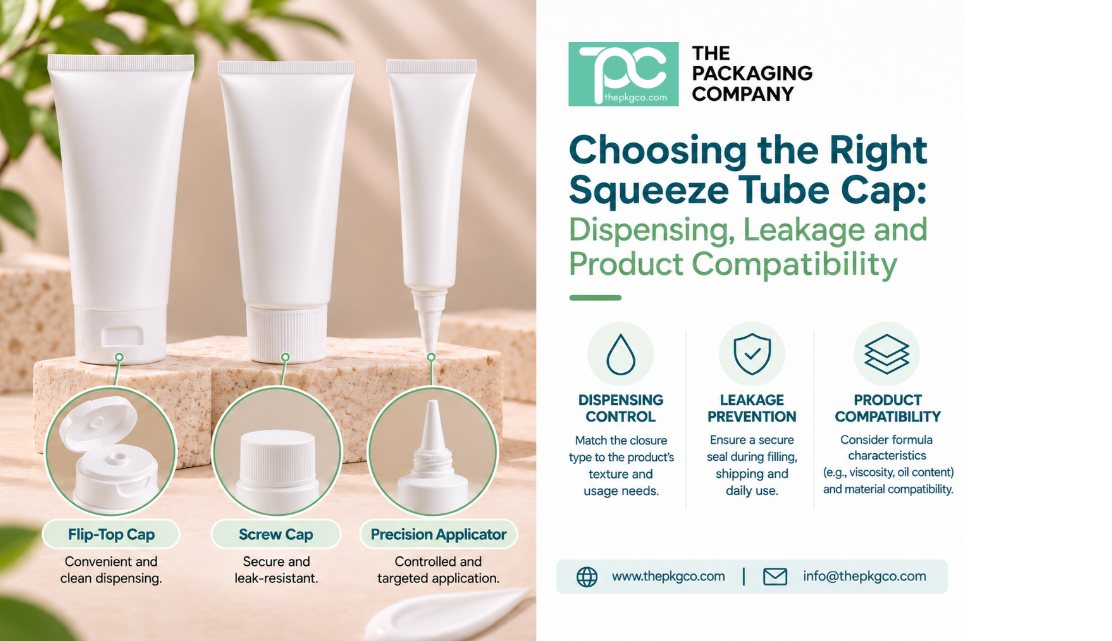
Flip-top caps versus screw caps
Flip-top caps for frequent use
Flip-top closures can suit cleansers, lotions and other products consumers open repeatedly. Check whether the lid opens comfortably, closes securely and maintains its intended function after repeated use. The hinge and closure fit should be evaluated with representative samples.
Screw caps for removable closure designs
Screw caps can be appropriate where a removable closure fits the product experience. Confirm the tube-neck thread, sealing interface, ease of removal and reattachment, and handling requirements during assembly. Neither closure style is universally more leak-resistant; performance depends on the specific package.
Choose the dispensing orifice carefully
The orifice is the opening through which formula is dispensed. An opening that is too small for a thick cream can require excessive squeeze force; an opening that is too large for a fluid product can make dosing difficult. Ask the packaging supplier what opening configurations are available for the proposed tube and cap, then test the actual filled formula.
Record the approved orifice size in the final component specification rather than relying on a visual reference.
When precision applicators make sense
Targeted skincare treatments may benefit from a precision tip or specialty applicator. Before choosing one, review the intended application area, formula compatibility, tube-neck fit and filling or assembly requirements. Specialty designs can add components or handling steps, so availability and suitability should be confirmed early.
Leakage testing should use the complete package
A cap that fits a tube is not automatically a verified leak-resistant system. Sealing performance may be affected by the neck finish, closure design, fill level, formula, temperature changes and transportation conditions.
Evaluate filled samples under conditions relevant to the product and distribution route. Include repeated opening and closing where appropriate, and document any acceptance criteria agreed with the supplier and filling partner.
What to approve before a wholesale order
- Tube and neck specification: material, capacity, dimensions and connection design.
- Closure specification: cap type, color, finish, orifice and any applicator components.
- Dispensing: acceptable flow and user squeeze force with the intended formula.
- Sealing: filled-package leakage checks under relevant conditions.
- Production: closure compatibility with filling and assembly equipment.
- Reference sample: an approved sample or documented standard for bulk inspection.
If a product line uses multiple viscosities, avoid assuming that one closure configuration will perform equally well across every SKU. Test each meaningful formula-and-package combination.
Plan cap selection before production approval
For wholesale buyers, early closure decisions reduce the risk of late specification changes. The Packaging Company’s squeeze tube packaging generally starts at 10,000 units per SKU; specific cap and applicator availability depends on the selected configuration and project requirements.
Explore our squeeze tube packaging options and share your formula type, preferred closure and production requirements when requesting a quote.