


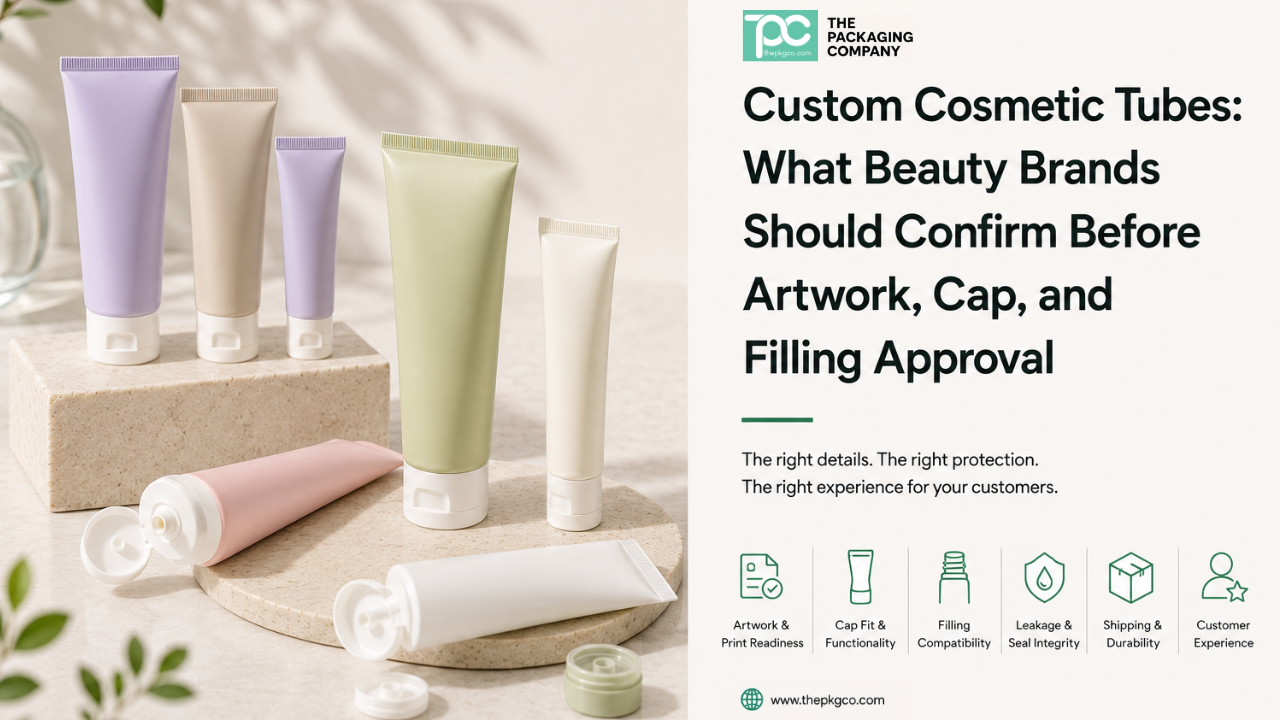
Custom cosmetic tubes can make a skincare or beauty product feel more polished, practical, and retail-ready. But before a brand approves artwork or moves into bulk production, the tube needs to be reviewed as a complete packaging system.
A custom tube is not only a printed container. The tube material, cap, applicator, decoration method, label area, filling process, sealing performance, formula texture, and MOQ all affect whether the final product works well after production.
This guide explains what beauty brands should confirm before approving custom cosmetic tubes for skincare, personal care, and cosmetic product launches.
Why Custom Cosmetic Tube Approval Matters
Cosmetic tubes are commonly used for cleansers, lotions, creams, gels, masks, sunscreens, lip treatments, hand creams, and body care products. They are flexible, lightweight, and practical for formulas that need controlled dispensing.
But customization adds more production details. Brands reviewing squeeze tube packaging should confirm more than the outside design. The tube has to fit the formula, support the filling process, close properly, print cleanly, and remain consistent through production and reorders.
Approving the artwork too early without checking the full package can lead to problems such as cap mismatch, label crowding, poor print alignment, leaking seals, or formula dispensing issues.
1. Confirm the Tube Size and Fill Volume
The first step is confirming the right tube size for the product. A tube that is too small may not support the intended retail size. A tube that is too large may feel underfilled or bulky.
Before approval, brands should confirm:
- Fill volume
- Tube capacity
- Headspace requirements
- Tube diameter
- Tube length
- Retail carton fit
- How the tube feels in hand
The selected size should support the formula amount, price point, usage experience, and shipping needs.
2. Match Tube Material to the Formula
Different formulas may require different tube structures. A lightweight lotion, thick cream, gel cleanser, scrub, sunscreen, or balm may not perform the same way in the same tube.
Brands should review whether the tube material supports the formula’s texture, oil content, fragrance, actives, and shelf-life expectations.
Key questions include:
- Is the formula thick or lightweight?
- Does the formula contain oils or active ingredients?
- Does the product need barrier protection?
- Will the tube maintain shape after repeated squeezing?
- Could the formula stain, soften, or react with the tube?
Testing should be done with the actual formula, not only a sample liquid or empty tube.
3. Review the Cap or Applicator Style
The cap is a major part of the customer experience. A tube can look premium, but if the cap is difficult to open, leaks, or does not match the formula, the product can feel poorly designed.
Common tube closure and applicator considerations include:
- Flip-top cap
- Screw cap
- Fine nozzle
- Slant tip
- Rounded applicator
- Brush or specialty applicator
- Cap color and finish
- Closure strength during shipping
For cleansers, lotions, and creams, a standard flip-top or screw cap may be enough. For lip treatments, eye products, scalp products, or targeted formulas, a specialty applicator may create a better user experience.
4. Confirm the Cap Fits the Filling and Sealing Process
Cap selection should also be reviewed from a production standpoint. A cap that looks good may create issues during filling, sealing, or packing if it does not match the tube structure correctly.
Brands should confirm:
- Cap and neck compatibility
- Thread fit
- Closure tightness
- Whether the cap leaks under pressure
- Whether the cap stays secure during transit
- Whether the cap supports the formula dispensing style
This is especially important for formulas that are thin, oily, or likely to be stored upside down.
5. Prepare Artwork Based on the Tube Dieline
Artwork should be built on the correct dieline for the exact tube size and shape. A design that looks good on a flat screen may not work once wrapped around a curved tube.
Before submitting artwork, brands should confirm:
- Correct dieline
- Bleed requirements
- Safe zones
- Logo placement
- Front and back panel layout
- Ingredient and direction space
- Barcode or QR code placement
- Cap direction and tube orientation
Small text, complex graphics, and tight spacing can become harder to read on a curved tube surface.
6. Check Print and Decoration Limits
Custom cosmetic tube packaging can support different decoration methods, but each method has limits. The right option depends on the tube material, finish, order quantity, budget, and brand design.
Decoration options may include:
- Offset printing
- Silkscreen printing
- Hot stamping
- Labels
- Matte finish
- Glossy finish
- Metallic accents
- Custom color matching
Brands should test whether the design remains clear after printing. Thin lines, small type, gradients, and metallic effects may need adjustment before bulk production.
7. Confirm Color Matching Before Bulk Production
Color can look different on screen, on paper proofs, and on the final tube material. Custom colors should be approved carefully before production.
Brands should review:
- Pantone or color reference
- Tube body color
- Cap color
- Print color
- Matte or glossy finish effect
- Color consistency across samples
- Color repeatability for reorders
If a skincare line uses several cosmetic squeeze tubes across different SKUs, color consistency becomes even more important.
8. Test Formula Dispensing
A cosmetic tube should dispense the formula cleanly and consistently. Thick creams, scrubs, gels, sunscreens, and lotions can each require different opening sizes or applicator styles.
During sampling, test:
- How easily the formula dispenses
- Whether too much product comes out
- Whether the opening clogs
- Whether the formula leaks when stored upside down
- Whether the tube returns to shape after squeezing
- Whether product collects around the cap
Formula dispensing should be tested with realistic customer use, not only one quick squeeze.
9. Confirm Filling and Sealing Compatibility
Filling and sealing are critical for custom cosmetic tubes. The tube must work with the filling process, seal properly, and protect the formula after production.
Brands should confirm:
- Filling method
- Fill temperature
- Seal type
- Crimp or heat-seal requirements
- Formula viscosity during filling
- Whether the tube can be sealed cleanly
- Whether the seal holds during shipping
Even strong artwork cannot fix a tube that does not fill or seal correctly.
10. Review Label and Regulatory Space
Many beauty products need ingredient lists, warnings, directions, barcode space, batch information, net weight, and brand information. These details should be planned before artwork approval.
Brands should check:
- Ingredient list space
- Directions for use
- Warning or caution statements
- Net weight or volume placement
- Barcode readability
- QR code scanning
- Batch or lot code placement
If required information is added after the design is complete, the final tube may look crowded or difficult to read.
11. Confirm MOQ and Production Timeline
Custom cosmetic tubes often have MOQ requirements depending on tube size, material, cap, decoration, and color. Brands should confirm MOQ before finalizing a design direction.
Before production, ask:
- What is the MOQ for this tube size?
- Does custom color increase MOQ?
- Does decoration method affect MOQ?
- What is the sample timeline?
- What is the bulk production timeline?
- What is the reorder lead time?
MOQ and timeline planning help brands avoid packaging decisions that do not match launch schedules or inventory needs.
12. Approve Samples Before Production
Before approving bulk production, brands should review physical samples whenever possible. A production sample helps confirm how the final tube looks, feels, dispenses, seals, and ships.
Sample approval should include:
- Tube size and shape
- Cap fit
- Formula dispensing
- Decoration quality
- Color accuracy
- Seal performance
- Label readability
- Shipping protection
- Overall customer experience
Approving a sample carefully can reduce production risk before the full order is placed.
Custom Cosmetic Tube Approval Checklist
Before approving custom cosmetic tubes, beauty brands should confirm:
- Tube size and fill volume
- Material and formula compatibility
- Cap or applicator style
- Cap fit and closure performance
- Correct artwork dieline
- Decoration method
- Color matching
- Formula dispensing
- Filling and sealing process
- Label and regulatory space
- MOQ and production timeline
- Sample approval before bulk production
Final Recommendation
Custom cosmetic tubes should be approved as a full packaging system, not only as a design file. Before production, brands should confirm artwork, cap choice, tube material, filling compatibility, seal performance, MOQ, decoration quality, and sample approval.
The Packaging Company works with beauty and skincare brands to review cosmetic squeeze tubes, custom tube packaging, decoration options, cap styles, MOQ, sampling, and wholesale production requirements. Brands preparing a custom tube project can speak with our packaging team before approving artwork and production.
FAQ: Custom Cosmetic Tubes
What should brands confirm before ordering custom cosmetic tubes?
Brands should confirm tube size, material, cap style, artwork dieline, decoration method, color matching, filling compatibility, sealing performance, MOQ, and sample approval.
Why is the tube dieline important for custom cosmetic tube artwork?
The dieline shows the correct print area, safe zones, bleed, front and back panels, and tube orientation. Using the wrong dieline can create print alignment and readability problems.
Can cap choice affect cosmetic tube performance?
Yes. Cap style affects dispensing, leakage resistance, customer usability, shipping performance, and the overall product experience.
Should brands test cosmetic tubes with the actual formula?
Yes. The actual formula helps confirm dispensing, leakage, compatibility, residue, sealing, and customer-use performance before bulk production.
Do custom cosmetic tubes have MOQ requirements?
Yes. MOQ can depend on tube size, material, cap, custom color, decoration method, and production requirements, usually start with 10,000 units. Brands should confirm MOQ before finalizing the design.