



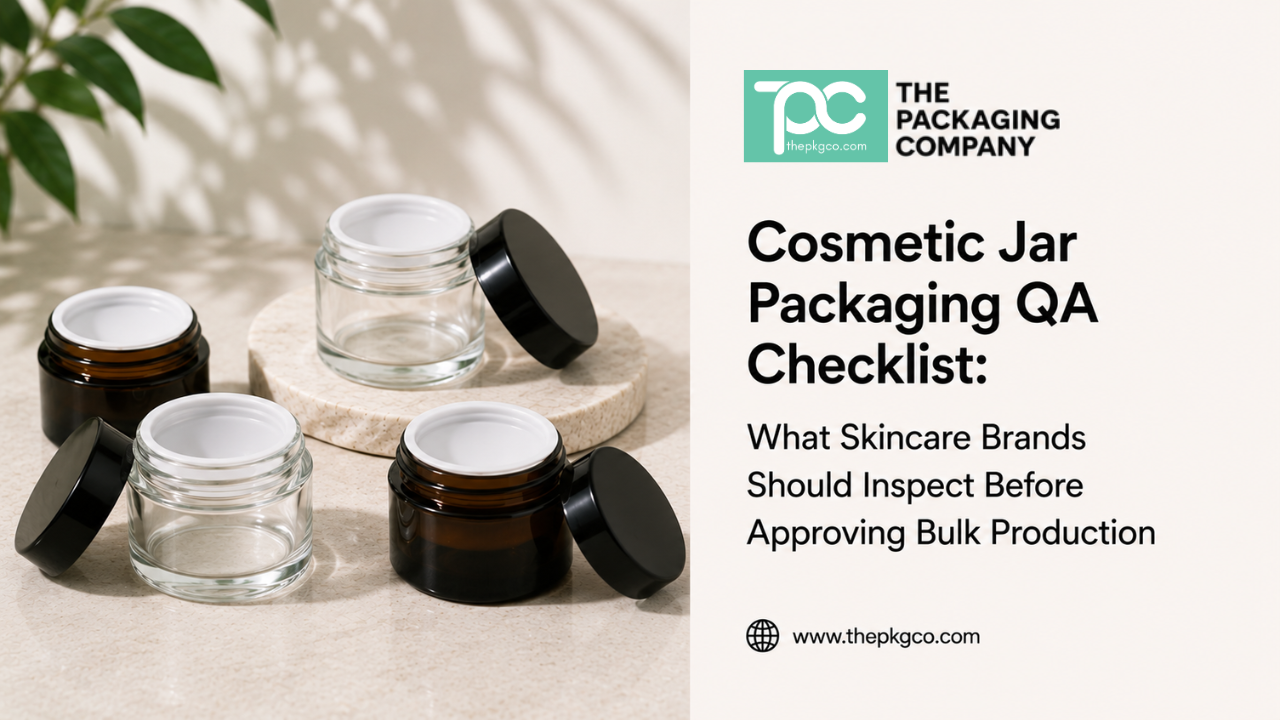
A cosmetic jar can look good in a sample photo and still create problems after bulk production. The cap may not close smoothly. The liner may not sit correctly. The label may wrinkle on the curved surface. The decoration may scratch during handling. Or the formula may leave residue around the rim after repeated use.
For skincare and beauty brands, sample approval should not be based only on appearance. Before approving bulk cosmetic jar packaging, brands should inspect the full package system: jar body, cap, liner, seal, decoration, label fit, formula behavior, and shipping performance.
This QA checklist focuses on what skincare brands should inspect before approving cosmetic jars for production.
Why Cosmetic Jar QA Matters Before Bulk Production
Cosmetic jars are commonly used for creams, masks, balms, scrubs, body butters, and thicker skincare formulas. These products are handled repeatedly by customers, often in bathrooms, vanities, spas, or travel bags.
That means the jar has to perform beyond the first impression. Brands reviewing cosmetic jar packaging should inspect how the package works after filling, shipping, opening, closing, labeling, and repeated use.
A small issue in sampling can become expensive if it appears across thousands of units.
1. Inspect Jar Body Quality
The jar body should be checked carefully before approving production. Surface defects can affect shelf appeal, especially for premium skincare products.
Inspect for:
- Scratches
- Cloudiness
- Uneven wall thickness
- Color variation
- Sharp edges
- Surface dents or marks
- Visible molding lines
- Inconsistent shape between samples
For clear, frosted, glass, or acrylic jars, visual consistency matters because customers can notice small defects quickly.
2. Check Jar and Cap Fit
The cap should feel secure, aligned, and easy to close. A jar that looks premium can feel low quality if the cap is loose, rough, or difficult to thread.
During QA review, check:
- Whether the cap screws on smoothly
- Whether the cap sits evenly on the jar
- Whether the cap feels loose after repeated opening
- Whether the cap cross-threads easily
- Whether the cap finish matches the jar body
- Whether the cap protects the product during shipping
For skincare jars used daily, cap experience becomes part of the customer’s product experience.
3. Review Liner and Seal Performance
The liner or seal can affect leakage resistance, product protection, first-use experience, and customer trust. It should not be treated as a minor component.
Brands should inspect:
- Whether the liner fits the cap properly
- Whether the seal sits flat
- Whether the liner shifts during opening
- Whether the seal supports shipping needs
- Whether product touches or damages the liner
- Whether the first-use experience feels clean
Different formulas may need different liner or seal considerations. Rich creams, oily balms, scrubs, and masks may behave differently inside the same jar.
4. Test the Jar With the Actual Formula
Cosmetic jar QA should include testing with the actual product formula. A jar may perform well when empty but show issues after filling.
Test for:
- Formula compatibility
- Product residue around the rim
- Leakage during storage
- Odor transfer
- Discoloration
- Swelling or material reaction
- Coating or decoration damage
For products such as cosmetic cream jars, formula texture matters. A dense balm, gel mask, body butter, and scrub can each create different packaging issues.
5. Inspect Decoration Quality
Decoration should be checked on the actual jar material, not only in a digital proof. Printing, hot stamping, labels, coatings, and custom colors can all look different once applied to the final package.
Review:
- Logo alignment
- Print clarity
- Hot stamp consistency
- Color accuracy
- Label placement
- Matte or glossy finish quality
- Scratch resistance
- Decoration durability after handling
Brands should also test whether decoration holds up when the jar is handled with product residue, wet hands, or repeated use.
6. Confirm Label Fit and Readability
Jar labels can become difficult if the surface is curved, tapered, small, or heavily decorated. A label that looks fine on a flat proof may wrinkle, lift, or become hard to read on the final jar.
Before production, confirm:
- The label fits the jar curve
- Text remains readable
- Barcode or QR code scans properly
- Ingredients and directions have enough space
- The label does not interfere with the cap or seal
- The label adhesive works with the jar material
This is especially important for small jars, eye cream jars, and products with longer ingredient or claims information.
7. Check Formula Residue After Repeated Use
Some formulas leave residue around the rim, thread, liner, or cap after repeated use. This can affect both appearance and functionality.
During sample testing, open and close the filled jar multiple times. Review:
- Whether product collects around the rim
- Whether residue affects cap closure
- Whether the thread area stays clean enough
- Whether the jar still looks premium after use
- Whether the customer can wipe the rim easily
This is a practical detail, but it can affect repeat purchase perception.
8. Run a Leakage and Storage Test
Before approving bulk production, filled samples should be tested in different positions and conditions.
Review leakage performance through:
- Upright storage
- Side storage
- Upside-down storage
- Temperature exposure
- Travel-style handling
- Shipping movement simulation
If a jar leaks during testing, the issue may come from cap fit, liner selection, formula texture, fill level, or seal design.
9. Review Shipping and Carton Protection
Cosmetic jars should be tested for shipping performance before bulk approval. Glass, acrylic, and premium jars may need stronger carton protection than lightweight plastic jars.
Brands should inspect:
- Carton fit
- Inner packing method
- Surface scratch protection
- Breakage risk
- Cap movement during transit
- Label or decoration damage after shipping
For e-commerce brands, shipping performance is especially important because individual packages may experience more handling than retail bulk shipments.
10. Compare Multiple Samples
One sample is not enough to approve bulk production. Brands should inspect multiple samples to confirm consistency.
Compare:
- Cap fit across samples
- Jar color consistency
- Decoration alignment
- Liner placement
- Surface defects
- Weight and feel
- Label placement
If samples vary too much, brands should discuss production tolerances with the supplier before approving bulk manufacturing.
11. Confirm Production Approval Requirements
Before moving into bulk production, brands should document what has been approved. This helps prevent confusion between design, purchasing, supplier, and production teams.
Approval should include:
- Final jar size
- Material
- Cap style
- Liner or seal
- Decoration method
- Color approval
- Label placement
- Formula compatibility notes
- Shipping test results
- Approved sample reference
Clear approval notes help reduce misunderstandings before bulk production starts.
Cosmetic Jar Packaging QA Checklist
Before approving bulk cosmetic jars, brands should confirm:
- Jar body quality
- Cap fit and alignment
- Liner and seal performance
- Formula compatibility
- Decoration quality
- Label fit and readability
- Formula residue after use
- Leakage resistance
- Shipping performance
- Consistency across multiple samples
- Written production approval details
Final Recommendation
Cosmetic jar packaging QA should happen before bulk production approval, not after the product is filled. A jar should be inspected as a complete system: body, cap, liner, seal, decoration, label, formula, and shipping protection.
For skincare brands working with a cosmetic jar manufacturer, the best approval process should reduce risk before production begins.
The Packaging Company works with skincare and beauty brands to review cosmetic jars, decoration options, sampling, MOQ, liner options, and wholesale packaging requirements. Brands preparing a jar packaging project can speak with our packaging team before approving bulk production.
FAQ: Cosmetic Jar Packaging QA
What should brands inspect before approving cosmetic jar packaging?
Brands should inspect jar body quality, cap fit, liner performance, seal condition, decoration, label fit, formula compatibility, leakage, shipping protection, and sample consistency.
Why is cap fit important for cosmetic jars?
Cap fit affects product protection, leakage resistance, daily usability, and premium perception. A loose or rough cap can make the package feel lower quality.
Should cosmetic jars be tested with the actual formula?
Yes. The actual formula can reveal issues such as residue, leakage, discoloration, odor transfer, swelling, coating damage, or compatibility problems.
Can labels cause problems on cosmetic jars?
Yes. Labels may wrinkle, lift, or become hard to read if the jar surface is curved, tapered, too small, or not compatible with the adhesive.
Why should brands inspect multiple samples before production?
Multiple samples help confirm consistency in cap fit, color, decoration alignment, liner placement, surface quality, and overall production readiness.