



Introduction
Some products require more than premium packaging aesthetics. They require controlled dispensing, formulation protection, and regulatory compliance at the same time.
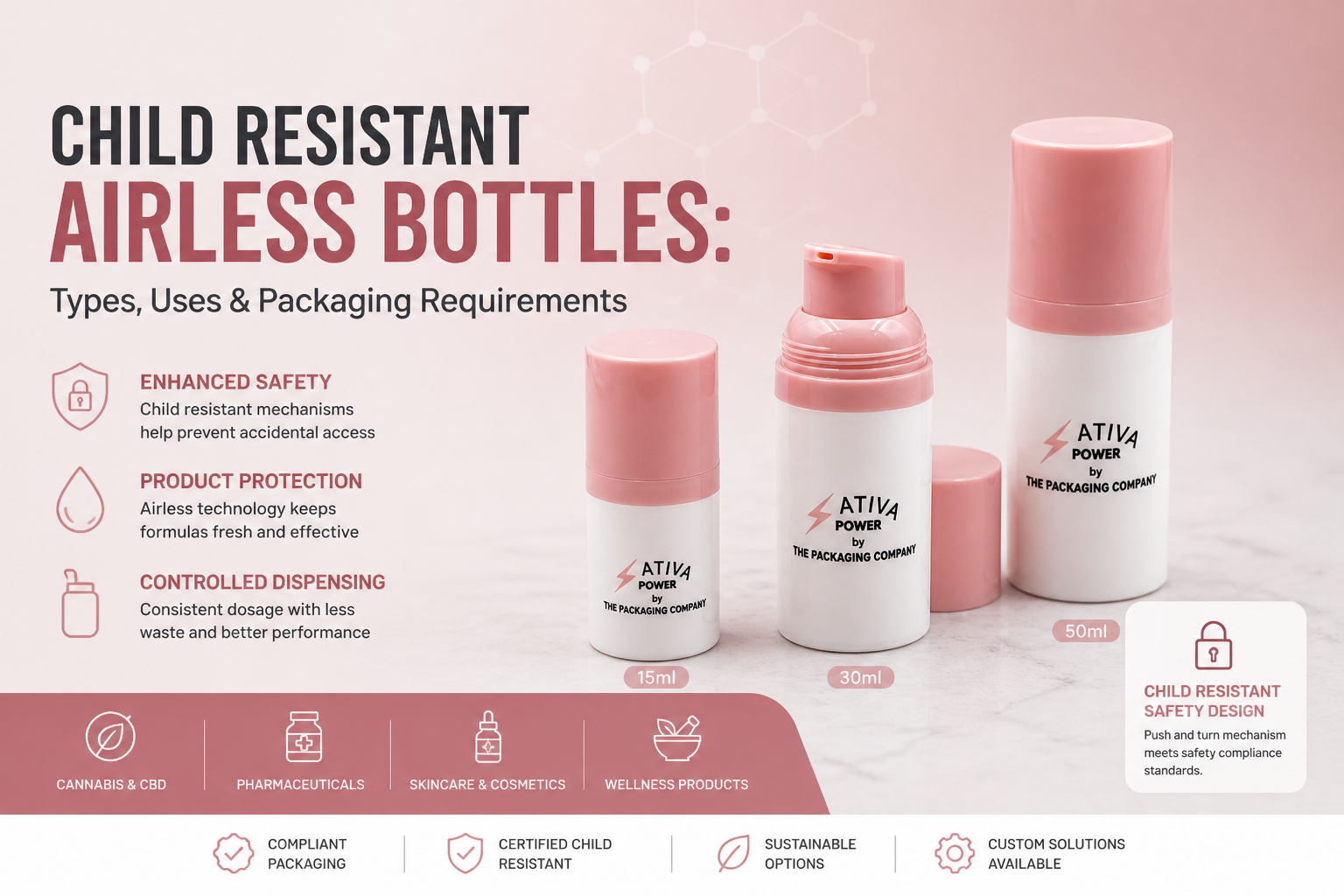
This is where child-resistant airless bottles are becoming increasingly important.
For brands operating in regulated categories—such as cannabis wellness, CBD skincare, medicinal topicals, and certain ingestible formulations—traditional packaging systems often fail to provide the combination of safety and product preservation needed for long-term performance.
Child-resistant airless packaging addresses both challenges in a single system.
This guide explains how child-resistant airless bottles work, the different packaging options available, and what brands should evaluate before selecting a packaging solution.
What Are Child-Resistant Airless Bottles?
Child-resistant airless bottles combine two packaging technologies:
- Airless dispensing systems
- Child-resistant closure mechanisms
Unlike traditional pump bottles that rely on dip tubes, airless systems use vacuum or piston-based dispensing technology to reduce air exposure during product use.
When paired with certified child-resistant functionality, the packaging becomes suitable for products that require both:
- formulation protection
- restricted child access
These bottles are commonly used for:
- CBD skincare
- cannabis topicals
- medicinal creams
- concentrated serums
- regulated wellness products
Why Brands Are Moving Toward Child-Resistant Airless Packaging
Standard packaging systems can create several issues for regulated formulations:
- oxidation from air exposure
- contamination during repeated use
- accidental access by children
- inconsistent dosage dispensing
Child-resistant packaging, especially child-resistant airless pump bottles, helps solve these problems while improving shelf life and user experience.
Key Benefits of Child-Resistant Airless Bottles
1. Improved Product Protection
Airless systems help protect sensitive formulations from:
- oxygen exposure
- moisture contamination
- bacteria transfer
This is especially important for active ingredients such as:
- cannabinoids
- retinol
- vitamin C
- botanical extracts
2. Controlled Dispensing
Many airless systems deliver more consistent product dosage compared to standard pump bottles.
This helps reduce:
- over-dispensing
- formulation waste
- inconsistent application
3. Enhanced Safety Compliance
Child-resistant mechanisms help packaging meet regulatory safety requirements for controlled or restricted products.
Depending on the product category and region, packaging may need to comply with:
- PPPA requirements
- ASTM child resistance testing
- state-specific cannabis packaging regulations
4. Premium Brand Positioning
Child-resistant airless bottles often support a more premium product presentation compared to standard compliant packaging.
Brands can combine:
- clean aesthetics
- regulatory functionality
- product preservation
without sacrificing shelf appeal.
Common Types of Child-Resistant Airless Bottles
Different products require different dispensing and locking systems.
Push-and-Turn Airless Bottles
These systems require simultaneous downward pressure and rotation before opening.
Commonly used for:
- topical products
- medicinal creams
- concentrated skincare
Locking Pump Airless Bottles
Some systems integrate locking pump mechanisms that restrict accidental dispensing.
These are often used for:
- travel packaging
- high-potency formulations
- child-sensitive products
Dual-Layer Airless Packaging
Premium systems may use:
- outer decorative shell
- inner airless refill cartridge
This structure supports:
- luxury positioning
- refillable packaging programs
- formulation protection
Materials Used in Child-Resistant Airless Bottles
Packaging material selection affects:
- compatibility
- sustainability
- product stability
- cost
Common materials include:
Plastic Airless Bottles
- lightweight
- cost-efficient
- easier for large-scale production
Materials often include:
- PP
- PET
- PCR plastic
Glass Airless Bottles
- premium appearance
- stronger chemical resistance
- commonly used for luxury skincare
Glass systems are frequently paired with plastic internal dispensing components.
Industries Using Child-Resistant Airless Bottles
Cannabis and CBD
Used for:
- topical creams
- CBD serums
- cannabis wellness products
Medical and Pharmaceutical
Suitable for:
- prescription topicals
- therapeutic creams
- controlled formulations
Premium Skincare
Some skincare brands adopt child-resistant systems when products contain:
- strong actives
- high-potency ingredients
- restricted-use formulations
Packaging Compliance Considerations
Choosing compliant packaging involves more than selecting a child-resistant cap.
Brands should evaluate:
- testing certification
- supplier documentation
- repeated-use durability
- filling compatibility
- regional packaging requirements
Failure to meet packaging regulations can result in:
- product recalls
- retail rejection
- compliance penalties
Common Mistakes Brands Make
Prioritizing Design Over Compliance
Some packaging appears child-resistant but lacks certified testing.
Visual appearance alone is not enough.
Ignoring Formula Compatibility
Not all airless systems work with every formulation viscosity.
Testing is essential before production.
Choosing Overly Complex Locking Systems
Complicated mechanisms may frustrate adult users and negatively impact customer experience.
How to Choose the Right Child-Resistant Airless Bottle
When evaluating packaging options, brands should consider:
- product viscosity
- required dosage control
- certification standards
- production scalability
- branding requirements
- sustainability goals
The ideal packaging system balances:
- safety
- usability
- product protection
- visual presentation
Conclusion
Child-resistant airless bottles are becoming an important packaging solution for regulated and performance-sensitive products.
As more brands prioritize formulation stability, compliance, and premium user experience, packaging systems must deliver more than basic containment.
Understanding how child-resistant airless systems function helps brands make better long-term packaging decisions while avoiding costly compliance or performance issues.
If you’re evaluating packaging options for regulated skincare, wellness, or cannabis products, explore our range of child-resistant packaging solutions designed for both safety and product performance.
Contact us now!