

Custom cosmetic jars are often used across skincare lines that include creams, moisturizers, masks, balms, scrubs, and treatment products. For brands launching more than one product, the challenge is not only choosing one jar. The bigger challenge is making sure the full jar family looks consistent across multiple products.
A skincare line may include different fill sizes, formulas, price points, and product categories. One product may need a larger jar, while another may need a smaller size. Some products may use glass jars, while others may use acrylic or plastic jars. Even when the jar size changes, the brand still needs a consistent packaging presentation.
That is why custom cosmetic jars should be planned as part of a product line, not only as individual containers.
Why Matching Cosmetic Jars Matter for Skincare Brands
Skincare customers often view packaging as part of the brand experience. When multiple products are placed together online, in retail, or in a product set, the packaging should feel connected.
Matching jar packaging can help brands create:
- A more consistent skincare line
- Cleaner product photography
- Better retail and shelf presentation
- Clearer product hierarchy across different sizes
- Easier reorder management for future production
For brands sourcing cosmetic jar packaging, planning the full jar system early can help avoid mismatched caps, inconsistent decoration, unclear size structure, or unnecessary production complexity.
Start With the Product Line, Not Just One Jar
Many brands begin by selecting a jar for one hero product. That may work for a single product launch, but it can create problems when the brand adds more SKUs later.
Before choosing custom cosmetic jars, brands should review the full product line and ask:
- How many jar-based products are planned?
- Which products are launching first?
- Which products may be added later?
- Do the jars need to look like one matching collection?
- Will the brand need multiple jar sizes?
- Should caps, colors, and decoration stay consistent across all jars?
This approach helps brands avoid choosing one jar that looks good alone but does not work well when the product line expands.
For brands building a broader skincare packaging line, custom jars may also need to coordinate with airless packaging, cosmetic squeeze tubes, or other packaging formats used across the same product collection.
Plan Jar Size Hierarchy Across Multiple Products
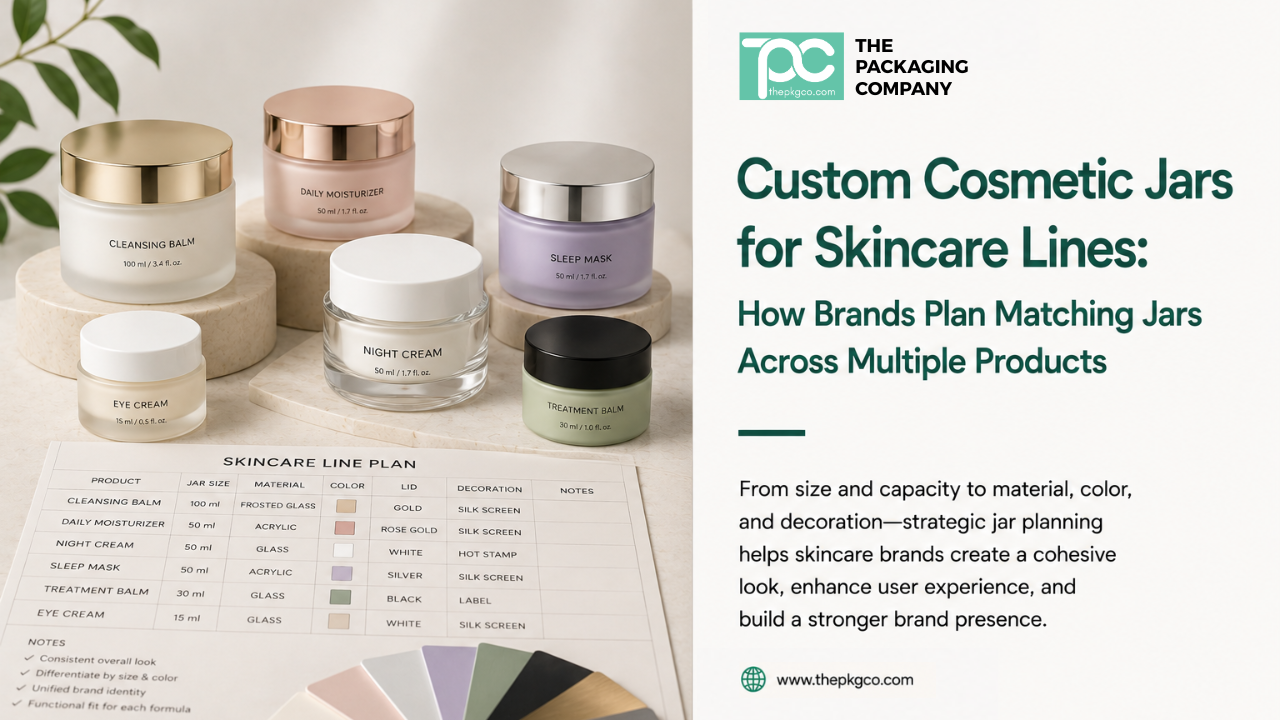
Jar size hierarchy is important for skincare brands with multiple products. A face cream, eye cream, mask, scrub, and body cream may all need different fill sizes, but the jars should still feel related.
For example, a brand may want:
- A small jar for eye cream or treatment products
- A medium jar for face cream or moisturizer
- A larger jar for masks, scrubs, or body products
When sizes are planned together, the product line can look more organized. This also helps with packaging photography, bundle sets, and future reorder planning.
Keep Cap and Lid Direction Consistent
Caps and lids have a major effect on how custom cosmetic jars look as a group. Even if the jar body changes size, keeping the cap style consistent can help the full product line feel more unified.
Brands should consider:
- Cap color
- Cap finish
- Matte, glossy, metallic, or soft-touch effects
- Inner liner requirements
- How the cap looks across different jar sizes
This is especially important for skincare brands selling multiple cream jars or cosmetic cream jar products in the same collection. A consistent lid direction can make the line look more professional even when the fill sizes are different.
Use Color Matching to Create a Stronger Product Family
Color matching is another key part of custom cosmetic jar planning. Brands may use the same jar color across all products, or they may use color variations to separate product types.
For example:
- One color may represent the full skincare line
- Different accent colors may separate day cream, night cream, and mask products
- A premium line may use frosted, tinted, or heavier-looking packaging
- A clean beauty line may use simple neutral colors and minimal decoration
The goal is to create enough difference between products while keeping the packaging connected. This is where planning matters. If every jar is selected separately, the final line may look disconnected.
Choose Decoration Methods That Work Across the Jar Family
Decoration should also be planned across the full jar line. A decoration method that works well on one jar may not work the same way on a smaller size or different material.
Common decoration considerations include:
- Silk screen printing
- Hot stamping
- Label application
- Frosted or matte finishes
- Color coating
- Logo size and placement
- Ingredient and regulatory label space
For custom cosmetic jars, decoration should be reviewed based on the smallest jar as well as the largest jar. This helps brands make sure the logo, label, and product information remain readable and consistent.
Compare Glass, Acrylic, and Plastic Jar Directions Carefully
Different jar materials create different brand impressions. Glass jars may support a premium or classic skincare look. Acrylic cosmetic jars can create a polished, elevated appearance. Plastic jars may be lightweight and practical for certain product lines.
However, this article is not only about choosing one material. The bigger question is whether the selected material direction works across the product line.
Brands should consider:
- Whether the material matches the brand position
- Whether multiple sizes are available in the same jar family
- Whether the cap and decoration options match across sizes
- Whether the material direction works for current and future products
- Whether the order quantity fits the brand’s MOQ plan
For a deeper comparison, brands can review TPC’s guide on acrylic vs glass cosmetic jars.
Plan MOQ Before Creating Too Many Jar Variations
Custom cosmetic jars often involve MOQ planning. A brand may want different colors, caps, finishes, and decoration styles for every product, but each variation can affect production planning.
Before confirming the final packaging direction, brands should review whether the jar line can share:
- The same jar family
- The same cap color
- The same decoration method
- The same finish
- The same packaging supplier records for future reorders
This can help brands keep the product line more consistent while reducing unnecessary complexity. It also makes future reorders easier because approved specifications can be referenced again.
Think About Empty Component Packing and Reorders
Custom jar planning does not end after the first order. Brands should also think about how the empty components will be packed, stored, and reordered.
Important reorder details may include:
- Approved jar size and material
- Cap and liner specification
- Decoration artwork version
- Color standard
- Carton packing details for empty components
- Production notes for future reorders
Keeping these details organized can help skincare brands maintain packaging consistency across future production runs.
Related Cosmetic Jar Guides
Brands comparing jar options can also review TPC’s related guides on cream jars for skincare and cosmetic packaging, acrylic vs glass cosmetic jars, and glass cosmetic jars for skincare packaging.
How The Packaging Company Supports Custom Cosmetic Jar Projects
The Packaging Company works with skincare, beauty, and personal care brands that need cosmetic jars wholesale, custom jar packaging, and product-line packaging support. TPC can help brands review jar material direction, size hierarchy, cap and lid consistency, decoration options, MOQ, and reorder planning.
For brands building a skincare line across multiple products, TPC can help organize jar options so the packaging looks consistent from one SKU to the next.
Brands can explore cosmetic jars, review related cream jar packaging considerations, or contact The Packaging Company to discuss a custom cosmetic jar project.
Custom Cosmetic Jar Planning Checklist
- List all jar-based products in the skincare line
- Decide which products are launching first
- Plan jar size hierarchy across multiple SKUs
- Keep cap and lid direction consistent
- Choose a color system for the product family
- Confirm decoration methods across different jar sizes
- Review glass, acrylic, and plastic jar directions
- Plan MOQ before creating too many variations
- Organize approved specifications for reorders
FAQ
What are custom cosmetic jars used for?
Custom cosmetic jars are commonly used for skincare creams, moisturizers, masks, balms, scrubs, and treatment products. They can be customized by material, size, cap style, color, finish, and decoration method.
How can skincare brands make jars look consistent across multiple products?
Brands can create consistency by using the same jar family, cap direction, color standard, decoration method, and label layout across multiple products. Planning the full jar line before production helps avoid mismatched packaging.
Should skincare brands choose glass, acrylic, or plastic cosmetic jars?
The right material depends on brand positioning, product format, budget, decoration needs, MOQ, and product line goals. Glass may support a premium look, acrylic can create a polished appearance, and plastic may be practical for lightweight packaging needs.
Why does MOQ matter for custom cosmetic jars?
MOQ matters because each unique jar size, color, cap, finish, or decoration variation may affect production planning. Brands can often manage MOQ more efficiently by using shared jar families, consistent caps, and repeatable decoration methods across SKUs.