


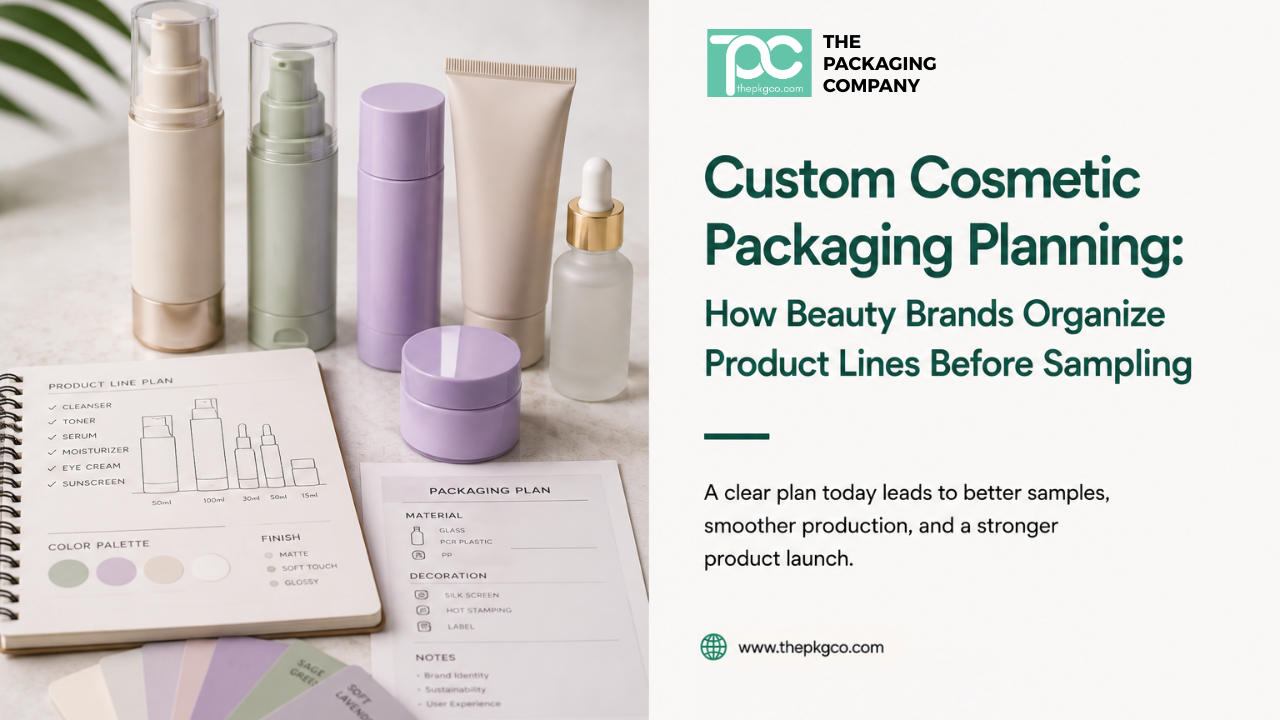
Custom cosmetic packaging is easier to manage when beauty brands plan the full product line before requesting samples. Instead of choosing one bottle, jar, or tube at a time, brands can make better packaging decisions by looking at the product range as a system.
For skincare, beauty, and personal care brands, packaging often needs to support different product formats, formulas, sizes, decoration styles, and launch timelines. A serum may need a bottle, a moisturizer may need a jar, and a cleanser may need a tube, but all of them still need to look like they belong to the same brand family.
That is why many brands work with custom cosmetic packaging suppliers before sampling begins. Early planning helps brands compare packaging categories, confirm material direction, organize decoration needs, and prepare for production more clearly.
Why Product Line Planning Matters Before Sampling
Sampling is an important step, but it should not be the first step. If a brand starts by requesting random samples without a clear packaging direction, the process can become slow and confusing.
Common problems include:
- Different containers that do not match visually
- Inconsistent cap colors or finishes
- Decoration methods that work on one component but not another
- MOQ issues when too many unique packaging styles are selected
- Delays caused by unclear size, material, or artwork direction
Before sampling, brands should understand which products are launching first, which containers are needed, and how the packaging should look across the full line. This helps cosmetic packaging suppliers recommend options that are more realistic for the brand’s launch stage, MOQ needs, and production timeline.
Step 1: Organize Products by Packaging Category
The first step is to separate the product line by packaging category. A skincare or beauty line may include several packaging formats, such as bottles, jars, tubes, droppers, airless packaging, or specialty containers.
For example, a full skincare line may include airless packaging for serums, cosmetic jars for creams, squeeze tubes for cleansers, and dropper bottles for facial oils or tincture-style products.
When the full product list is organized first, cosmetic packaging manufacturers can help brands narrow down the right packaging direction for each product type. This avoids choosing containers only by appearance without considering product format, user experience, or production planning.
Step 2: Match Packaging Format to Product Use
Each cosmetic product has a different use case. A lightweight serum, thick cream, gel cleanser, balm, lotion, or facial oil may require a different packaging format. Even when the brand style is consistent, the container structure may need to change based on how the product is used.
Brands should consider:
- How the customer will dispense the product
- Whether the product should be pumped, squeezed, scooped, or dropped
- How much product should be dispensed per use
- Whether the container needs a cap, pump, dropper, or applicator
- How the product will be displayed online or on shelf
This step helps brands avoid choosing packaging only because it looks attractive. Good custom skincare packaging should support both the formula format and the customer experience.
Step 3: Decide the Material Direction Early
Material direction affects appearance, price range, decoration options, weight, and production planning. Before sampling, brands should decide whether they are leaning toward plastic, glass, acrylic, aluminum, mono-material, PCR, or another packaging direction.
This does not mean every detail must be final. However, brands should have a starting direction so suppliers can recommend samples that match the project better.
For example, a premium skincare line may want heavier jars or glass bottles. A refill-focused line may want more sustainable packaging options. A mass-market product may need lightweight and cost-efficient packaging. A brand planning multiple products may want one material family across several SKUs for a more consistent look.
Step 4: Plan Decoration as a System
Decoration is one of the most important parts of cosmetic custom packaging. It affects brand presentation, shelf appeal, and customer recognition. However, decoration should be planned across the full product line, not only one item.
Brands should think about:
- Logo placement
- Color matching
- Label space
- Printing method
- Hot stamping or metallic details
- Matte, glossy, frosted, or soft-touch finishes
- How the design will look across bottles, jars, and tubes
A decoration style that works well on a large bottle may not work the same way on a small jar or tube. Planning decoration as a system helps brands keep the packaging consistent while allowing each product format to function properly.
Step 5: Review MOQ Before Choosing Too Many Packaging Styles
MOQ is a major part of custom cosmetic packaging planning. Brands often want every product to have a unique container, cap, color, and decoration style. While this can look attractive, it may increase MOQ, cost, and production complexity.
Before sampling, brands should ask whether multiple products can share:
- The same bottle or jar family
- The same cap or closure style
- The same decoration method
- The same color standard
- The same carton packing approach for empty components
This is especially helpful for brands launching several SKUs at the same time. A more organized packaging system can make sampling, production, and reorders easier to manage.
Step 6: Separate Launch Priorities From Future Products
Not every product needs to launch at the same time. Before requesting samples, brands should separate the first launch products from future products.
This helps suppliers understand which packaging items need immediate attention and which ones are part of a later expansion plan. For example, a brand may launch with a serum, moisturizer, and cleanser first, then add eye cream, body lotion, or travel-size products later.
By sharing launch priorities early, brands can focus sampling on the most important packaging items first. This can help reduce delays and avoid spending time reviewing packaging that is not needed for the first production round.
Step 7: Prepare Basic Information Before Sampling
Brands do not need every final detail before contacting a supplier, but having basic information ready can make the process smoother.
Helpful information includes:
- Product type and product category
- Estimated fill size
- Preferred packaging format
- Material preference
- Decoration direction
- Target launch timeline
- Estimated order quantity
- Whether the brand needs matching packaging across multiple SKUs
This information allows cosmetic packaging suppliers to recommend samples that are closer to the brand’s actual needs. It also helps avoid unnecessary back-and-forth during the early planning stage.
Related Packaging Guides
Brands comparing packaging formats can also review related TPC guides on airless containers for skincare packaging lines, cream jars for skincare and cosmetic packaging, and aluminum cosmetic tubes for products that need stronger barrier protection and a metal packaging direction.
How The Packaging Company Supports Custom Cosmetic Packaging Projects
The Packaging Company works with beauty, skincare, and personal care brands that need custom packaging support across multiple product formats. Instead of only selecting from a catalog, brands can discuss product line goals, packaging categories, material direction, decoration needs, MOQ, sampling, and production planning.
TPC supports a wide range of packaging options, including jars, bottles, tubes, airless packaging, dropper bottles, and other cosmetic packaging formats. This allows brands to plan packaging across multiple products while keeping the overall line more consistent.
For brands preparing a new skincare or beauty launch, TPC can help review packaging direction before sampling so the project starts with a clearer plan.
To review available options, visit custom cosmetic packaging for beauty and skincare brands or contact The Packaging Company to discuss your packaging project.
Custom Cosmetic Packaging Planning Checklist
- List all products in the launch
- Group products by packaging category
- Match each product with the right format
- Decide material direction early
- Plan decoration across the full product line
- Review MOQ before choosing too many unique components
- Separate first-launch products from future products
- Prepare sample needs before contacting suppliers
- Keep reorder consistency in mind from the beginning
FAQ
What is custom cosmetic packaging?
Custom cosmetic packaging refers to packaging that is selected or developed around a beauty brand’s product format, material preference, decoration style, MOQ, and production needs. It may include bottles, jars, tubes, airless packaging, droppers, or other cosmetic containers.
When should a beauty brand start planning custom cosmetic packaging?
Brands should start planning packaging before sampling. Early planning helps organize product categories, material direction, decoration needs, MOQ, and launch priorities before selecting final samples.
Why should packaging be planned by product line?
Planning packaging by product line helps brands keep bottles, jars, tubes, caps, colors, and decoration more consistent across multiple products. It can also make sampling, production, and future reorders easier to manage.
What should brands prepare before requesting packaging samples?
Brands should prepare product type, fill size, packaging format, material preference, decoration direction, target quantity, and launch timeline. This helps suppliers recommend more relevant packaging options.