



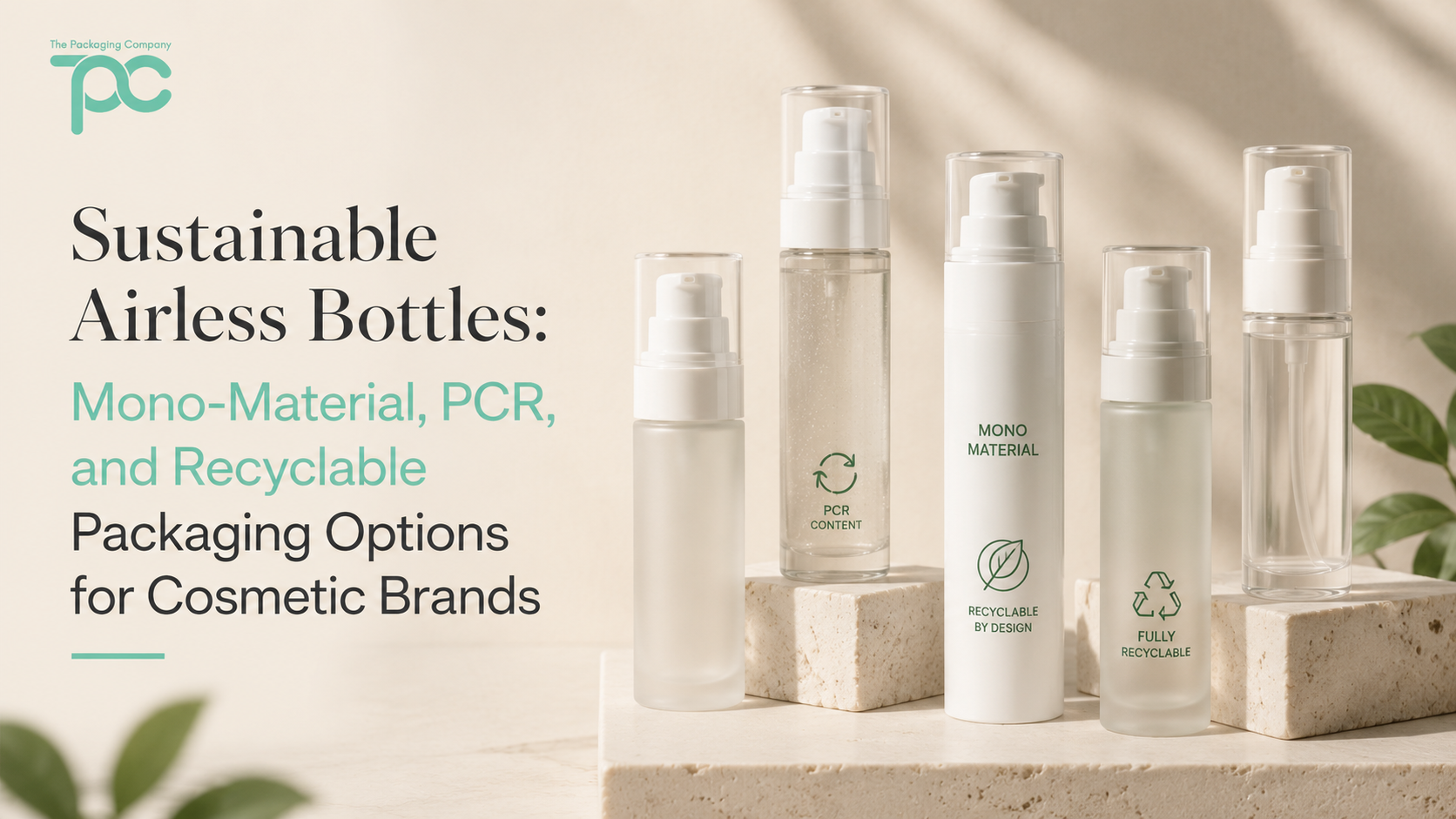
Many cosmetic brands want airless packaging because it feels clean, premium, and protective. At the same time, more brands are being asked to reduce packaging waste, use better materials, and explain their sustainability choices more clearly.
This creates a real packaging challenge. Traditional airless bottles can include multiple materials, pumps, springs, pistons, caps, and decorative components. These structures may support strong product performance, but they can also make sustainability claims more difficult if the package is not designed carefully.
For cosmetic brands comparing sustainable airless bottles, the goal is not to choose the most marketable sustainability phrase. The goal is to understand which packaging structure best fits the formula, brand positioning, decoration needs, MOQ, and end-of-life expectations.
This guide compares mono-material airless bottles, PCR airless bottles, recyclable packaging options, and refillable systems so brands can make a more informed packaging decision.
Why Sustainability Is More Complicated for Airless Packaging
Airless packaging is more technical than a simple bottle and cap. Many airless systems include a pump, actuator, piston, bottle body, cap, collar, gasket, and internal components. Depending on the design, these parts may use different materials.
This is why a package can be called “airless” and still vary widely in sustainability performance.
Some airless bottles are designed mainly for premium appearance. Some focus on formula protection. Some use PCR materials. Others are built around mono-material structures or refillable systems.
Brands comparing airless pump bottles for cosmetics should look beyond the surface design and ask how the full packaging system is built.
What Makes an Airless Bottle More Sustainable?
A sustainable airless bottle may support one or more sustainability goals. These can include using fewer material types, incorporating recycled content, improving recyclability, reducing unnecessary components, lowering packaging weight, or supporting refill systems.
Common sustainability-related features include:
- Mono-material construction
- PCR content
- Refillable design
- Recyclable material selection
- Reduced component complexity
- Lightweight packaging
- Longer-use outer packaging
No single option is automatically best for every brand. The right choice depends on the product formula, target customer, price point, production volume, and market positioning.
Mono-Material Airless Bottles
A mono-material airless bottle is designed using one main material family, such as PP, across the bottle system. The goal is to reduce material complexity and make the package easier to evaluate from a recycling perspective.
For example, a mono material airless bottle may use PP for the bottle body, piston, pump components, and cap instead of combining several different plastics or metal parts.
This type of structure can be useful for brands that want a cleaner sustainability story and less material complexity. It may also support sustainability messaging more clearly than a package made from several unrelated materials.
Best fit for mono-material airless bottles
- Skincare brands focused on recyclability
- Clean beauty product lines
- Brands reducing mixed-material packaging
- Products that still need controlled airless dispensing
- Brands building a sustainability-focused packaging system
What to check before choosing mono-material airless bottles
Brands should confirm the actual material structure, available documentation, decoration compatibility, pump performance, and formula compatibility. Mono-material design can support sustainability goals, but the bottle still needs to work properly with the product.
PCR Airless Bottles
PCR stands for post-consumer recycled material. A PCR airless bottle uses recycled plastic content from previously used materials that have been collected, processed, and reused in new packaging.
PCR airless bottles can help cosmetic brands reduce reliance on virgin plastic and support recycled-content packaging goals.
However, PCR packaging requires practical review. Recycled content can affect color consistency, surface appearance, decoration results, and material availability. Depending on the PCR percentage and material type, brands may need to adjust expectations for exact color matching or finish.
Best fit for PCR airless bottles
- Brands with recycled-content packaging goals
- Skincare lines that want a lower virgin-plastic story
- Personal care brands with sustainability messaging
- Products where slight material variation can be managed
- Brands that want a balance between performance and sustainability
What to check before choosing PCR airless bottles
Brands should review PCR percentage, material source, color consistency, decoration method, MOQ, lead time, and compatibility with the formula. PCR packaging should be tested before production, especially when the brand requires a very precise color or premium finish.
Recyclable Airless Packaging Options
Recyclability depends on more than whether the main material is technically recyclable. It can also depend on local recycling systems, component separation, mixed materials, labels, coatings, and the final package structure.
For cosmetic brands, this means recyclable airless packaging should be reviewed carefully. A bottle may use a recyclable plastic, but if it includes many mixed components, decorative coatings, or hard-to-separate parts, the real-world recycling story may be less simple.
Brands should ask suppliers:
- What materials are used in each component?
- Is the bottle mono-material or mixed-material?
- Can components be separated?
- Does decoration affect recyclability?
- Is PCR content available?
- What documentation can be provided?
These questions help brands avoid vague sustainability claims and choose packaging that better matches their actual goals.
Refillable Airless Bottles
Refillable airless packaging takes a different approach. Instead of focusing only on the material used in one bottle, it creates a system where part of the package may be reused while refill units are replaced.
Refillable airless bottles can support premium skincare, sustainability-focused product lines, and repeat-purchase programs. They can also help brands create a stronger customer experience when the outer package feels durable and worth keeping.
However, refillable packaging requires more planning than standard packaging. Brands need to think about refill pricing, customer instructions, packaging compatibility, shipping, inventory, and how customers will understand the system.
Best fit for refillable airless bottles
- Premium skincare brands
- Sustainability-focused product lines
- Brands with repeat-purchase products
- Moisturizers, serums, and treatment products
- Brands that want a longer-term packaging system
Mono-Material vs PCR vs Refillable: Which Is Better?
There is no single best sustainable airless bottle for every cosmetic brand. Each option supports a different sustainability strategy.
Mono-material airless bottles are useful when the brand wants to reduce mixed-material complexity and support a cleaner recyclability story.
PCR airless bottles are useful when the brand wants to incorporate recycled content and reduce reliance on virgin plastic.
Refillable airless bottles are useful when the brand wants to create a reuse-based product system and encourage repeat purchases.
For some brands, the best choice may combine more than one strategy. For example, a refillable airless system may also use recyclable materials. A mono-material airless bottle may also support a cleaner end-of-life story. A PCR airless option may fit a brand’s recycled-content goals while still offering strong product performance.
Do Sustainable Airless Bottles Still Protect the Formula?
Sustainability should not come at the expense of product performance. A bottle still needs to protect the formula, dispense properly, survive shipping, and support a positive customer experience.
Before choosing sustainable airless packaging, brands should test:
- Formula compatibility
- Pump output
- Priming performance
- Leakage resistance
- Decoration durability
- Material stability
- Shipping performance
This is especially important for active skincare products, sunscreens, serums, moisturizers, and formulas with oils, fragrance, acids, or sensitive ingredients.
What to Ask an Airless Packaging Supplier
A strong airless packaging supplier should be able to explain more than price and bottle size. Brands should ask clear questions about material structure, PCR content, mono-material options, refillable systems, decoration limits, MOQ, sampling, and production timelines.
Useful questions include:
- Is this airless bottle mono-material or mixed-material?
- Is PCR content available?
- What percentage of PCR can be used?
- Can the bottle support custom color or decoration?
- Does the decoration affect recyclability?
- What is the MOQ for sustainable options?
- Can samples be tested with the actual formula?
- What documentation is available?
- What is the production and reorder timeline?
Final Recommendation
Sustainable airless bottles can help cosmetic brands support formula protection, premium user experience, and better packaging goals at the same time. But the right option depends on the product and the brand’s sustainability priorities.
Mono-material airless bottles can help reduce material complexity. PCR airless bottles can support recycled-content goals. Refillable airless bottles can support reuse and customer retention. Recyclable airless packaging options can help brands build a clearer sustainability story when the full structure is reviewed properly.
For cosmetic brands comparing sustainable airless bottles, mono-material airless packaging, PCR options, and wholesale airless packaging solutions, The Packaging Company can help review materials, decoration options, MOQ, sampling, and production requirements for upcoming skincare and cosmetic product launches.
FAQ: Sustainable Airless Bottles
What are sustainable airless bottles?
Sustainable airless bottles are airless packaging systems designed to support better packaging goals, such as mono-material construction, PCR content, recyclability, refillability, or reduced material complexity.
What is a mono-material airless bottle?
A mono-material airless bottle is designed using one main material family, such as PP, across multiple packaging components. This can help reduce mixed-material complexity and support a clearer recyclability story.
What is a PCR airless bottle?
A PCR airless bottle uses post-consumer recycled material in the packaging. PCR options can help brands reduce reliance on virgin plastic, but brands should review color consistency, decoration compatibility, MOQ, and formula compatibility before production.
Are airless bottles recyclable?
Some airless bottles are designed with recyclable materials, but recyclability depends on the full package structure, component materials, decoration, and local recycling systems. Brands should confirm material details with the supplier.
Are refillable airless bottles more sustainable?
Refillable airless bottles can support sustainability goals by allowing part of the package to be reused. However, brands should review refill design, customer instructions, production cost, shipping, and long-term customer behavior before choosing a refillable system.