


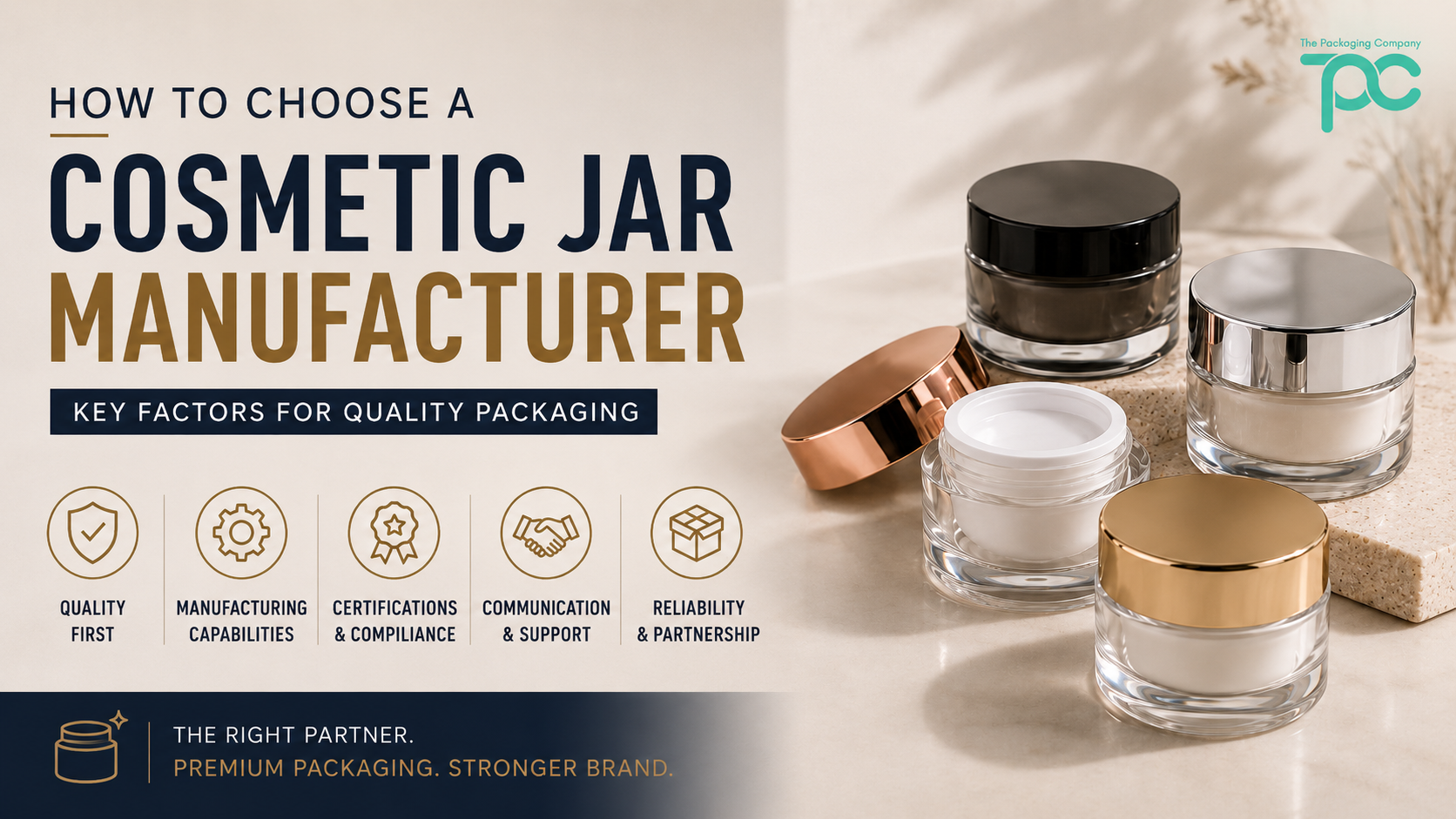
Choosing a cosmetic jar manufacturer is not only about finding a jar that looks good in a catalog. The manufacturer you choose affects material options, decoration quality, sampling, production timelines, packaging consistency, and how smoothly your product moves from concept to launch.
For skincare and beauty brands, cosmetic jars are often used for moisturizers, creams, masks, balms, body care, and premium treatment products. These products may look simple on the outside, but the packaging decision can affect customer perception, formula compatibility, and long-term reorder success.
This guide explains how to choose the right cosmetic jar manufacturer for your brand and what to review before committing to a production order.
Start with the Product, Not the Jar Catalog
Before comparing suppliers, brands should clearly define the product requirements. A cosmetic jar should match the formula, target customer, price point, sales channel, and production plan.
Important questions include:
- Is the formula a cream, balm, mask, gel, scrub, or body product?
- Does the formula require compatibility testing?
- Is the product positioned as premium, clinical, natural, refillable, or mass-market?
- What fill size is needed?
- Will the product be sold online, in retail, through spas, or through distributors?
- Does the brand need custom color, printing, hot stamping, labeling, or special finishing?
A strong manufacturer should help connect these requirements to the right jar structure, material, and decoration method.
Review the Manufacturer’s Cosmetic Jar Material Options
Different materials create different cost, appearance, compatibility, and sustainability outcomes. A reliable cosmetic jar manufacturer should offer or support the material type that matches your product strategy.
Glass jars
Glass jars are commonly used for premium skincare, creams, masks, and balms. They offer weight, clarity, and a high-end feel. They can also support frosted finishes, custom colors, and elegant decoration.
Acrylic jars
Acrylic jars can create a luxury appearance with thick walls and high clarity. They are often used for prestige skincare and products where visual depth matters.
PP and PET jars
PP and PET jars are practical options for lightweight, cost-conscious, or high-volume products. They can still look polished with the right decoration and finishing.
Refillable jars
Refillable jar systems may be useful for brands building a sustainability-focused product line or premium repeat-purchase model.
When comparing suppliers, ask whether they can support different materials, finishes, caps, liners, and decoration options under one production program.
Confirm the Manufacturer Understands Cosmetic Jar Packaging
A general container supplier may not always understand the needs of skincare and beauty brands. Cosmetic packaging requires attention to finish, component matching, formula use, decoration quality, and brand presentation.
If you are reviewing cosmetic jar manufacturer options, look for a partner that understands how cosmetic jars are actually used by customers. A jar for a luxury face cream has different requirements than a jar for a body scrub, travel balm, or spa mask.
The supplier should be able to discuss jar material, cap fit, liner options, decoration limits, carton compatibility, MOQ, and production lead time clearly.
Evaluate Customization and Decoration Capabilities
Decoration can strongly influence how customers perceive the finished product. Before choosing a manufacturer, review what customization options are available.
Common cosmetic jar customization options may include:
- Custom jar color
- Custom cap color
- Silk screen printing
- Hot stamping
- Labeling
- Frosted finish
- Matte or glossy coating
- Metallic accents
- Embossing or debossing, depending on the structure
If your brand is developing luxury cosmetic jars, decoration quality becomes even more important. Small issues such as logo misalignment, weak hot stamping, poor color matching, or coating scratches can make a premium product feel less refined.
Ask About Sampling Before Full Production
Sampling is one of the most important steps in choosing a manufacturer. A product image or catalog mockup cannot confirm how the jar will feel, how the cap closes, how the decoration looks, or how the formula performs inside the package.
Brands should review samples for:
- Material feel and weight
- Cap fit and closure quality
- Opening size
- Decoration accuracy
- Color consistency
- Label or print placement
- Formula compatibility
- Shipping and handling performance
Pre-production sampling helps reduce risk before committing to a larger order.
Understand MOQ and Production Scale
MOQ matters because it affects budget, inventory planning, and launch flexibility. Some cosmetic jar manufacturers may require high minimum orders for custom color, custom molds, specialty decoration, or imported components.
Before choosing a supplier, confirm:
- MOQ for stock jars
- MOQ for custom decoration
- MOQ for custom color
- Lead time for samples
- Lead time for production
- Reorder timeline
- Whether components are consistently available
A manufacturer should be clear about what is realistic for your launch size and reorder plan. This is especially important for growing brands that need production support but do not want to overcommit to packaging inventory.
Check Formula Compatibility Requirements
Cosmetic jars may be used for formulas with oils, acids, fragrance, botanicals, exfoliants, sunscreen ingredients, or active skincare components. These formulas may interact differently with plastic, glass, liners, coatings, or seals.
A responsible manufacturer should encourage formula compatibility testing before production. Testing helps confirm that the selected jar does not cause leakage, discoloration, swelling, coating issues, odor transfer, or formula instability.
This step is especially important for premium skincare, clean beauty, oil-based products, and formulas with active ingredients.
Review Quality Control and Production Communication
Good packaging manufacturing depends on clear communication. Brands should understand how the manufacturer handles specifications, production updates, decoration approvals, and quality control.
Ask whether the manufacturer can provide:
- Technical specifications
- Material details
- Decoration proofs
- Pre-production samples
- Production timeline updates
- Packaging documentation for internal approvals
- Support from sampling through delivery
The right manufacturer should not disappear after the quote. They should support the brand through sampling, approval, production, and reorder planning.
Consider Whether You Need a Manufacturer or a Basic Supplier
Some brands only need a stock jar. Others need a full packaging partner that can support material selection, decoration, sampling, production coordination, and long-term supply.
If your product line requires multiple jar sizes, custom colors, premium finishes, or future expansion, working with a stronger cosmetic packaging supplier may be better than choosing the lowest-cost option.
A basic supplier may be enough for a simple short-term order. A manufacturer with broader production support is usually better for brands planning a full product line, retail launch, or long-term packaging system.
Red Flags When Choosing a Cosmetic Jar Manufacturer
Brands should be cautious if a supplier cannot answer basic questions about materials, decoration limits, MOQ, lead time, compatibility testing, or production process.
Common red flags include:
- No clear specifications
- No sampling process
- Unclear MOQ
- Inconsistent communication
- No decoration guidance
- No support for compatibility testing
- Prices that seem low but exclude important production details
- No clear reorder plan
A packaging issue discovered after filling can be much more expensive than choosing the right manufacturer from the beginning.
Final Recommendation
The right cosmetic jar manufacturer should help your brand choose packaging that fits the formula, customer expectation, decoration goals, MOQ, and production timeline. The best partner is not always the cheapest supplier. It is the one that helps reduce risk and support a better finished product.
For brands comparing cosmetic jar packaging, custom decoration options, premium materials, and wholesale production requirements, The Packaging Company can help review jar options and speak with our packaging team about your upcoming product launch or line expansion.
FAQ: Choosing a Cosmetic Jar Manufacturer
What should I look for in a cosmetic jar manufacturer?
Look for material options, decoration capabilities, sampling support, clear MOQ, production communication, formula compatibility guidance, and experience with skincare or cosmetic packaging.
What materials are commonly used for cosmetic jars?
Common cosmetic jar materials include glass, acrylic, PP, PET, and refillable structures. The best material depends on the formula, brand positioning, budget, sustainability goals, and decoration needs.
Do cosmetic jar manufacturers offer custom decoration?
Many cosmetic jar manufacturers can support decoration options such as silk screen printing, hot stamping, labeling, matte or glossy coating, frosted finishes, custom color, and metallic accents.
Why is sampling important before ordering cosmetic jars?
Sampling helps brands review the jar’s material, weight, cap fit, decoration quality, color, and formula compatibility before committing to full production.
Should I choose the cheapest cosmetic jar supplier?
The cheapest supplier is not always the best choice. Low-cost packaging can become expensive if it causes decoration problems, leakage, poor fit, inconsistent supply, or production delays.