



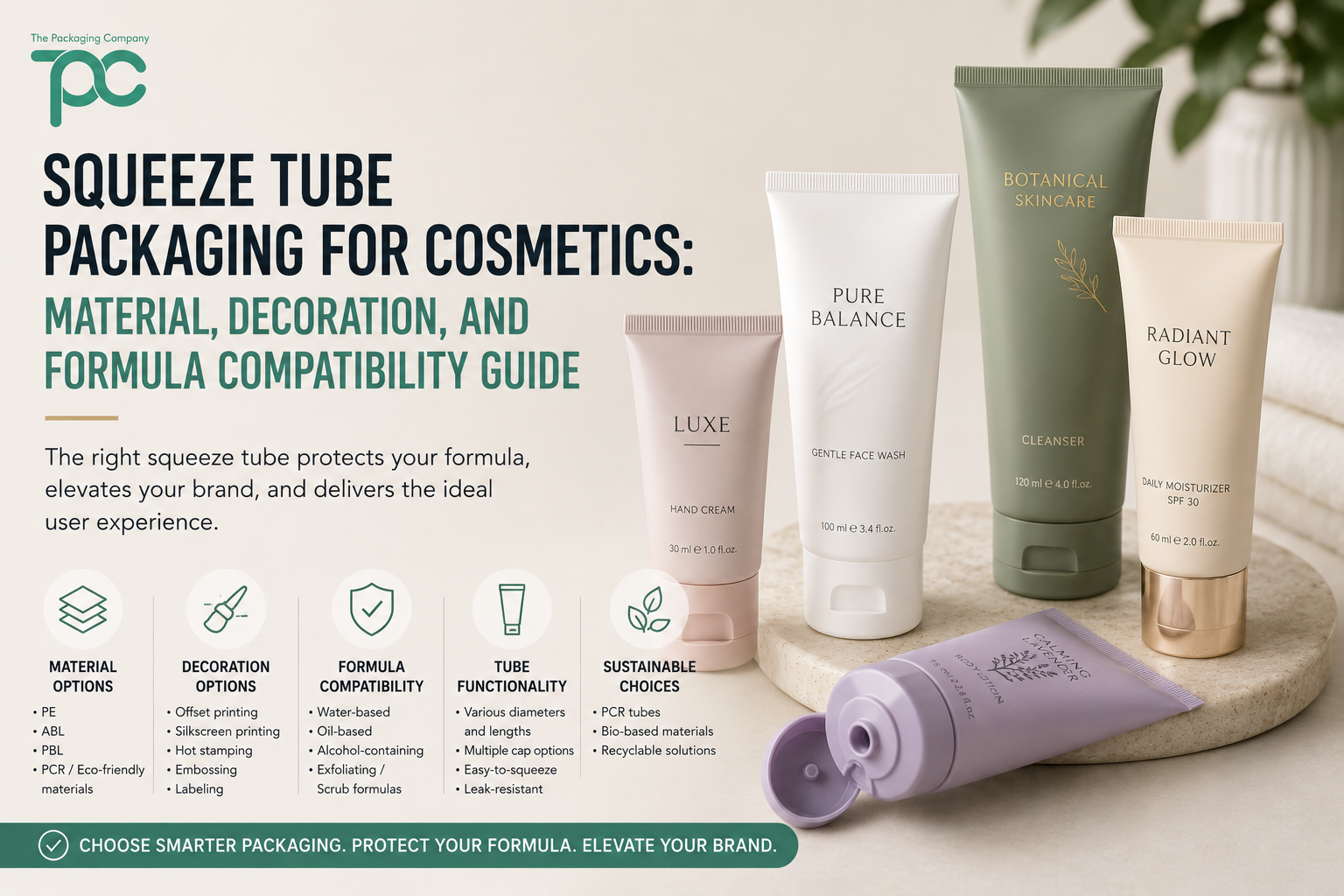
Squeeze tubes look simple, but the wrong tube can create problems for a cosmetic brand quickly. A formula may be too thick to dispense smoothly. A cap may leak during shipping. A decoration method may not hold up after repeated use. Or the material may not match the brand’s sustainability goals.
For skincare, beauty, and personal care products, squeeze tube packaging needs to support the formula, the customer experience, production requirements, and brand positioning. A tube for lip balm, sunscreen, cleanser, hand cream, or lotion may require a different material, cap, decoration method, and filling process.
This guide explains what cosmetic brands should compare before choosing squeeze tube packaging for production.
Why Squeeze Tube Packaging Is Popular in Cosmetics
Squeeze tubes are widely used because they are practical, lightweight, portable, and easy for customers to use. They work well for many products that need controlled dispensing without the complexity of a pump or jar.
Common product types include:
- Facial cleansers
- Hand creams
- Lotions
- Sunscreens
- Lip balms
- Masks
- Scrubs
- Gels
- Hair care products
- Body care formulas
Brands comparing squeeze tube packaging should review material, tube structure, cap style, decoration, formula compatibility, MOQ, and production timeline before ordering.
Compare Tube Materials First
The tube material affects appearance, flexibility, dispensing, decoration, sustainability, and formula compatibility.
Plastic cosmetic tubes
Plastic cosmetic tubes are commonly used because they are flexible, lightweight, and practical for many skincare and personal care products. They can support different shapes, sizes, caps, and decoration methods.
Plastic tubes may be suitable for cleansers, lotions, creams, gels, masks, and sunscreens depending on the formula and material structure.
Mono-material tubes
Mono-material tubes are designed to reduce material complexity by using one main material family. These may be useful for brands focused on recyclability or simpler packaging structures.
Sugarcane-based tubes
Some brands choose sugarcane-based squeeze tubes to support a more sustainable packaging message. This can be useful for beauty brands that want to reduce reliance on traditional fossil-based plastics.
This article on sustainable beauty sugarcane squeeze tubes provides more context for brands comparing eco-focused tube materials.
Laminate tubes
Laminate tubes may be used when the product needs stronger barrier properties or a more structured tube feel. The right choice depends on the formula and product positioning.
Compare Formula Compatibility
Formula compatibility is one of the most important parts of tube selection. A tube should be tested with the actual product before full production.
Brands should review:
- Formula viscosity
- Oil content
- Fragrance level
- Active ingredients
- Acidic or exfoliating ingredients
- Sunscreen ingredients
- Product color stability
- Expected storage conditions
If the formula interacts poorly with the tube material, the brand may experience swelling, leakage, odor transfer, discoloration, separation, or decoration damage.
Compare Cap and Closure Options
The cap affects both function and customer experience. A cap should be easy to use, secure during shipping, and aligned with the product’s positioning.
Common cap options include:
- Flip-top caps
- Screw caps
- Disc-top caps
- Nozzle tips
- Slant tips
- Applicator-style closures
A hand cream may work well with a flip-top cap. A lip balm may need a slant tip or precision applicator. A sunscreen may need a secure cap that reduces leakage during travel.
For products such as lip care, this guide on lip balm squeeze tubes can help brands compare eco-friendly packaging options and product fit.
Compare Decoration Methods
Squeeze tubes offer strong branding space, but decoration must be matched to the material and tube structure.
Common decoration options include:
- Offset printing
- Silk screen printing
- Hot stamping
- Labeling
- Matte finish
- Glossy finish
- Custom color
- Metallic accents
Decoration should be tested for durability. Customers squeeze, bend, handle, and store tubes in bathrooms, bags, and travel kits. If the decoration cracks, rubs off, or wrinkles, the product can feel lower quality.
Compare Tube Shape and Size
Tube size should match the product usage. A travel-size facial cleanser may need a smaller tube. A body lotion may need a larger tube. A lip balm or targeted treatment may need a smaller opening and precision dispensing.
Brands should consider:
- Fill volume
- Tube diameter
- Tube length
- Opening size
- Cap style
- Label or print area
- Retail shelf fit
- E-commerce shipping needs
The tube should feel proportional to the formula and price point.
Compare Sustainability Options
More cosmetic brands are reviewing sustainable tube packaging options. This may include mono-material tubes, PCR tubes, sugarcane-based materials, recyclable structures, or lightweight designs.
The right sustainability direction depends on the brand’s goals. A clean beauty brand may prefer sugarcane-based or mono-material packaging. A mass-market personal care line may focus on lightweight recyclable tubes. A premium skincare brand may want a more refined finish while still reducing material impact.
Sustainability claims should be specific and supported by material details. Instead of using broad language, brands should clarify whether the tube uses PCR content, bio-based material, recyclable structure, or mono-material design.
Compare MOQ and Supplier Support
MOQ can vary depending on tube material, size, decoration, cap, and customization level. Custom colors, custom caps, special finishes, or specialty materials may require higher order quantities.
Brands should ask:
- What is the MOQ for stock tubes?
- What is the MOQ for custom decoration?
- What is the MOQ for custom color?
- Are samples available?
- What is the production lead time?
- What is the reorder timeline?
- Can the supplier support multiple tube sizes?
Brands looking for a cosmetic tube manufacturer or cosmetic tubes suppliers should choose a partner that can support specifications, sampling, decoration review, and production coordination. The squeeze tube category page can be a starting point for reviewing available cosmetic squeeze tubes.
Test Before Full Production
Before approving production, brands should test the actual formula with the selected tube and cap.
Testing should review:
- Dispensing performance
- Tube flexibility
- Leakage resistance
- Cap fit
- Decoration durability
- Formula compatibility
- Shipping performance
- Customer usability
This is especially important for formulas with oils, acids, sunscreen ingredients, fragrance, or thicker textures.
Final Recommendation
Squeeze tube packaging is a strong choice for many cosmetic, skincare, and personal care products, but the right tube should be selected based on more than size and appearance.
Brands should compare material, formula compatibility, cap style, decoration, sustainability options, MOQ, sampling, and production support before placing an order.
For brands comparing squeeze tube packaging, plastic cosmetic tubes, sustainable tube materials, and custom decoration options, The Packaging Company can help review materials, finishes, sampling, MOQ, and wholesale packaging requirements for upcoming product launches.
FAQ: Squeeze Tube Packaging for Cosmetics
What is squeeze tube packaging used for?
Squeeze tube packaging is commonly used for facial cleansers, hand creams, lotions, sunscreens, lip balms, masks, scrubs, gels, hair care products, and body care formulas.
What materials are used for cosmetic squeeze tubes?
Cosmetic squeeze tubes may use plastic materials, mono-material structures, sugarcane-based materials, laminate structures, or PCR options depending on the product and brand goals.
How do I choose the right squeeze tube for a cosmetic formula?
Brands should review formula viscosity, oil content, active ingredients, cap style, tube material, decoration method, MOQ, and compatibility testing before selecting a tube.
Can squeeze tubes be sustainable?
Yes. Sustainable squeeze tube options may include mono-material tubes, PCR tubes, sugarcane-based tubes, recyclable structures, or lightweight designs. Brands should confirm the material details before making sustainability claims.
Why is testing important before ordering squeeze tubes?
Testing helps confirm formula compatibility, dispensing performance, leakage resistance, cap fit, decoration durability, and shipping performance before full production.