


Cannabis flower packaging has more format decisions than almost any other cannabis product category. The weight tier changes the container size. The weight tier changes the price point. The price point changes the brand positioning requirement. And the brand positioning requirement changes which format is appropriate, which decoration method is viable, and how much the packaging investment makes sense relative to the product margin.
Get those decisions in the right sequence and the packaging works for the brand at retail. Get them out of sequence and the packaging creates problems that are expensive to fix after production.
This guide covers the format landscape for cannabis flower packaging across weight tiers, the compliance requirements specific to flower, and how brand positioning should shape the format decision at each price point.
Compliance Requirements for Cannabis Flower Packaging
Every licensed US cannabis state requires child-resistant packaging for cannabis flower sold at retail. The requirement applies regardless of weight tier. One gram through 28-gram packages all require CR packaging certified to the applicable standard.
Most state cannabis regulations require 16 CFR §1700.20 certification for retail flower packaging. Confirm your specific state’s requirement before finalizing any format, and confirm with your supplier that the specific format carries 16 CFR §1700.20 certification with third-party test documentation available.
Beyond the CR requirement, flower packaging has several state-specific requirements that vary enough to warrant confirming for each distribution market:
Opaque packaging. Many states require that cannabis flower packaging be opaque. Confirm whether your state requires opaque packaging for flower before specifying any glass or clear plastic format. For states with this requirement, amber glass provides UV blocking but may or may not satisfy the requirement depending on how the state defines opacity.
Resealability. Most reclosable flower packaging formats (jars, tins) meet state resealability requirements by definition. For bag formats, the CR slide-lock or zip closure must function as a genuine reseal across repeated cycles, not just at first use.
Labeling requirements. Flower packaging typically carries more mandatory label content than other cannabis categories at the same package size. Labels include weight, strain or cultivar name, cannabinoid content, harvest date or best-by date, and the full state-mandated warning block. Map required label content to the package surface area before commissioning artwork.
Format Options by Weight Tier
1g: Portion and Sampler Formats
Single-gram flower packages are typically used for sampler programs, introductory pricing, or high-value single-dose formats. The small fill weight allows smaller container formats that are cost-efficient but still have to meet CR requirements.
CR mylar bags at the 1g fill are the most common format for value-tier 1g flower. The format is familiar, cost-efficient, and available with full custom printing. For premium single-strain 1g offerings at craft or luxury price points, a small glass jar or a compact tin reads significantly better than a bag and supports a higher retail price.
3.5g: The Core Retail Weight Tier
The eighth-ounce (3.5g) is the dominant retail weight tier in the US cannabis market. It’s the weight tier with the most format competition, the most consumer experience, and the most visible format differentiation between value and premium brands.
Mylar bags are the volume standard for value and mid-tier 3.5g flower. Cost-efficient, lightweight, and available in the full range of custom print options. The CR slide-lock closure must be evaluated over repeated use. A closure that degrades with use will not maintain certified performance through the consumer lifecycle. For brands where per-unit packaging cost is the primary driver, bags are the right call at this weight tier.
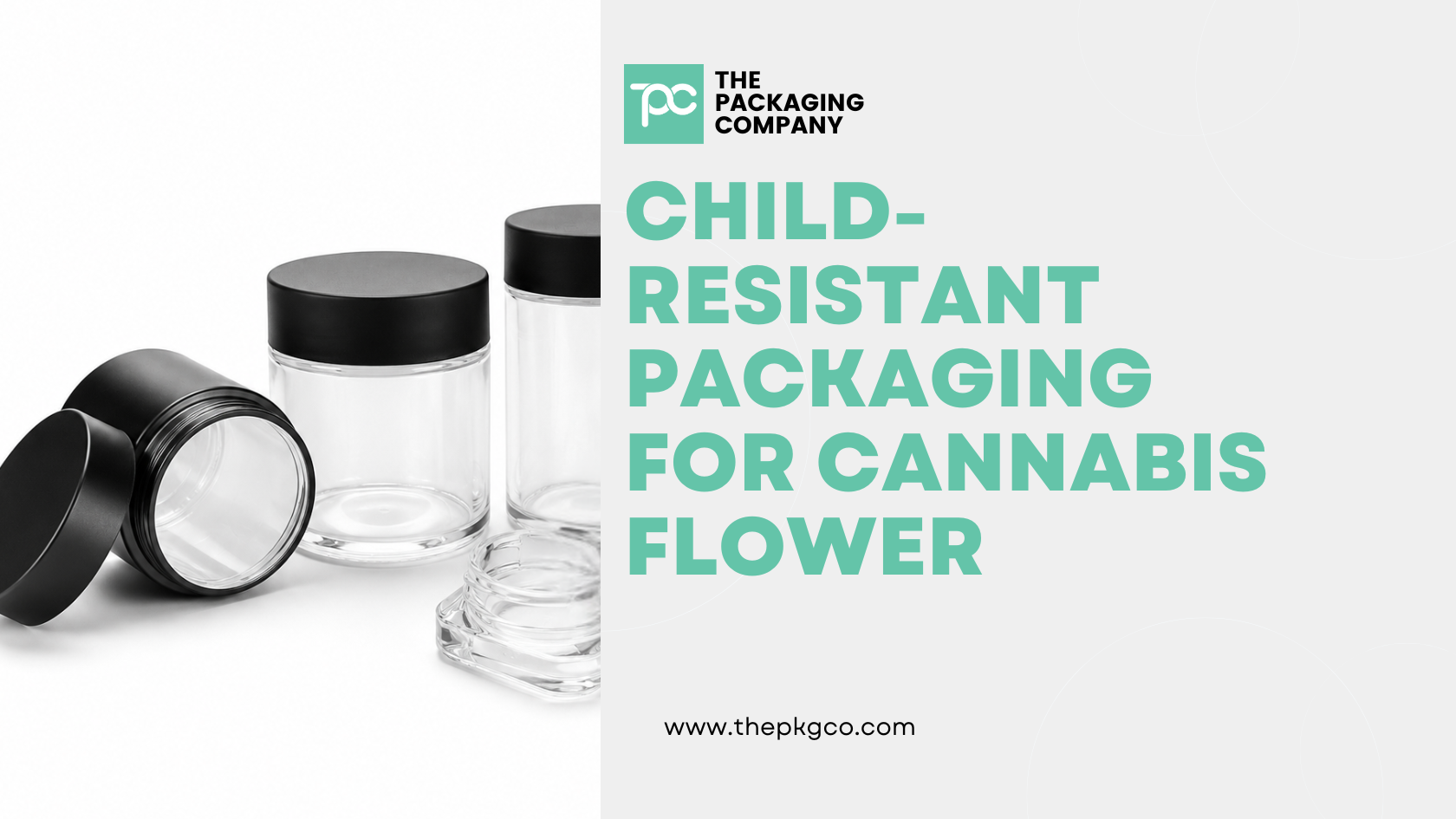
Glass jars with push-and-turn CR lids are the premium standard for 3.5g flower. Completely inert, provides UV blocking in amber variants, and communicates quality through weight and material at the shelf. For craft, single-origin, and premium-priced flower where the terpene profile is a brand claim, glass is the packaging material that can honestly support it. The glass jar body is fully recyclable; the CR lid is a separate component in a different material.
CR tins in compact formats are an increasingly common premium option for 3.5g flower, particularly for brands building retail presence in markets where tin presentation creates shelf differentiation. The tin body provides full light blocking and an airtight seal. The lid surface supports lithographic decoration at a quality level that bags and jar labels cannot match.
7g: Quarter-Ounce
The 7g tier is less common than the eighth but represents a meaningful segment for regular-use consumers buying in larger quantities. Format decisions at 7g follow the same logic as 3.5g but at a larger container scale, where jar formats become more practical (the wide-mouth access makes sense at higher fill weights) and the per-unit packaging cost becomes a more significant margin variable.
14g: Half-Ounce
Half-ounce flower packages primarily go to regular and high-frequency consumers. The larger fill weight shifts the format economics toward bag formats for most brands. The per-unit cost of a glass jar at 14g fill carries a meaningful premium relative to the jar’s contribution to the retail price. Premium and craft brands at this weight tier still use glass jars to maintain brand consistency across weight tiers, but the economics require that the product support the packaging investment at the retail price.
28g: Ounce
Full-ounce flower packaging is almost exclusively sold in bags in the current market. The economics of glass or tin at this fill weight create a packaging cost that most ounce-price products cannot absorb while maintaining margin. High-end craft brands selling ounces at a significant price premium sometimes use specialty large-format jars for brand statement purposes, but this is a niche positioning choice rather than standard practice.
How Brand Positioning Should Shape the Format Decision
The format decision for cannabis flower is ultimately a brand positioning decision before it’s a cost decision. The format communicates to the consumer before they read the label. Weight, material, closure sound, and visual presentation create a price tier impression in under a second.
Value tier (under $15 retail for 3.5g): Bags are appropriate and expected. The consumer at this price point is making a value decision. Premium formatting over-invests in packaging relative to what the margin allows and what the consumer expects. Invest in decoration quality (print finish, design) rather than format premium.
Mid tier ($15 to $25 retail for 3.5g): The format transition zone. Bags still work at the lower end. Moving toward $20 and above, a well-decorated glass jar or compact tin begins to make more sense as a brand differentiator. The format investment supports the price point rather than conflicting with it.
Premium and craft tier (above $25 retail for 3.5g): Glass jars or tins. At this price point, the packaging must communicate quality before the consumer has read anything. A bag at $30-plus creates a price-signal mismatch that works against the brand at retail and makes the budtender’s job harder. The format should match the product’s actual quality tier.
Multi-tier brands: Brands selling flower across price tiers benefit from deliberate format tiering. Bags for the value line, jars or tins for the premium line. The format hierarchy communicates product tier to consumers without requiring label-level reading, and it gives retail buyers a clear visual story about which products belong in which part of their display.
TPC’s CR Flower Packaging Line
TPC’s CR packaging line for cannabis flower includes:
CR Mylar Bags for 1g through 28g fill weights with full custom printing in matte, gloss, metallic, and specialty finishes. 16 CFR §1700.20 certified. MOQ 5,000 units.
CR Jars in glass and plastic formats across the full volume range. Glass CR jars in amber and clear variants with push-and-turn lids. 16 CFR §1700.20 certified. MOQ varies by format.
CR Tins including snap tins and hinge-lid tins for brands positioning at the premium tier. All formats certified to 16 CFR §1700.20. MOQ 5,000 units for most tin formats.
All formats are made to order with full custom decoration. Pre-production samples are standard before any bulk commitment.
For the full CR packaging overview including format comparison across product categories, see our child-resistant packaging solutions guide. To discuss your specific weight tier and brand positioning, contact our team.
Frequently Asked Questions
What CR packaging format is best for premium cannabis flower? Glass CR jars with push-and-turn lids are the premium standard for cannabis flower. Glass is completely inert, with no material interaction with cannabinoids or terpenes, and provides UV blocking in amber variants. The weight and material communicate quality at the shelf before a consumer reads anything. The glass jar body is fully recyclable; the CR lid is a separate component. For brands wanting metal premium presentation, compact CR tins are increasingly used for craft and single-origin flower at premium price points.
Do all cannabis flower packages need to be opaque? It varies by state. Many states require opaque packaging for cannabis flower to prevent products from being visible to children and non-consumers. Confirm your specific state’s packaging regulations before specifying any glass or clear format. Amber glass provides UV blocking but may or may not satisfy an opaque packaging requirement depending on how the state defines the term.
What is the most cost-efficient CR format for high-volume flower? CR mylar bags. They provide the lowest per-unit packaging cost across the volume range (1g through 28g), support full custom decoration, and meet CR requirements when the slide-lock closure is properly evaluated and certified. For value-tier and mid-tier flower where per-unit economics are the primary constraint, bags are the standard industry choice.
How do I decide between glass jars and tins for premium flower? Glass jars allow product visibility. The consumer sees the flower before opening the container, which communicates quality when the product presentation is strong. Tins provide full light blocking, a stronger airtight seal in most configurations, and a decoration surface that supports lithographic print quality that jar labels cannot match. If terpene expression and visual product quality are primary claims, glass is the better fit. If shelf presence and decoration quality are the priority, tin is the stronger choice.
What MOQ applies to CR flower packaging at TPC? MOQ starts at 5,000 units for CR bags and most tin formats. CR jars vary by format and volume. Contact TPC for current MOQ and lead time for your specific weight tier and container format.
What label content is required on cannabis flower packaging? Required label content varies by state but typically includes: cultivar or strain name, total THC and CBD content, net weight, harvest date or best-by date, producer name and license number, track-and-trace identifier, state-mandated warning language, and universal symbol. Map the full required content to your package dimensions before briefing a designer. The surface area for brand design is what remains after compliance content is placed.