



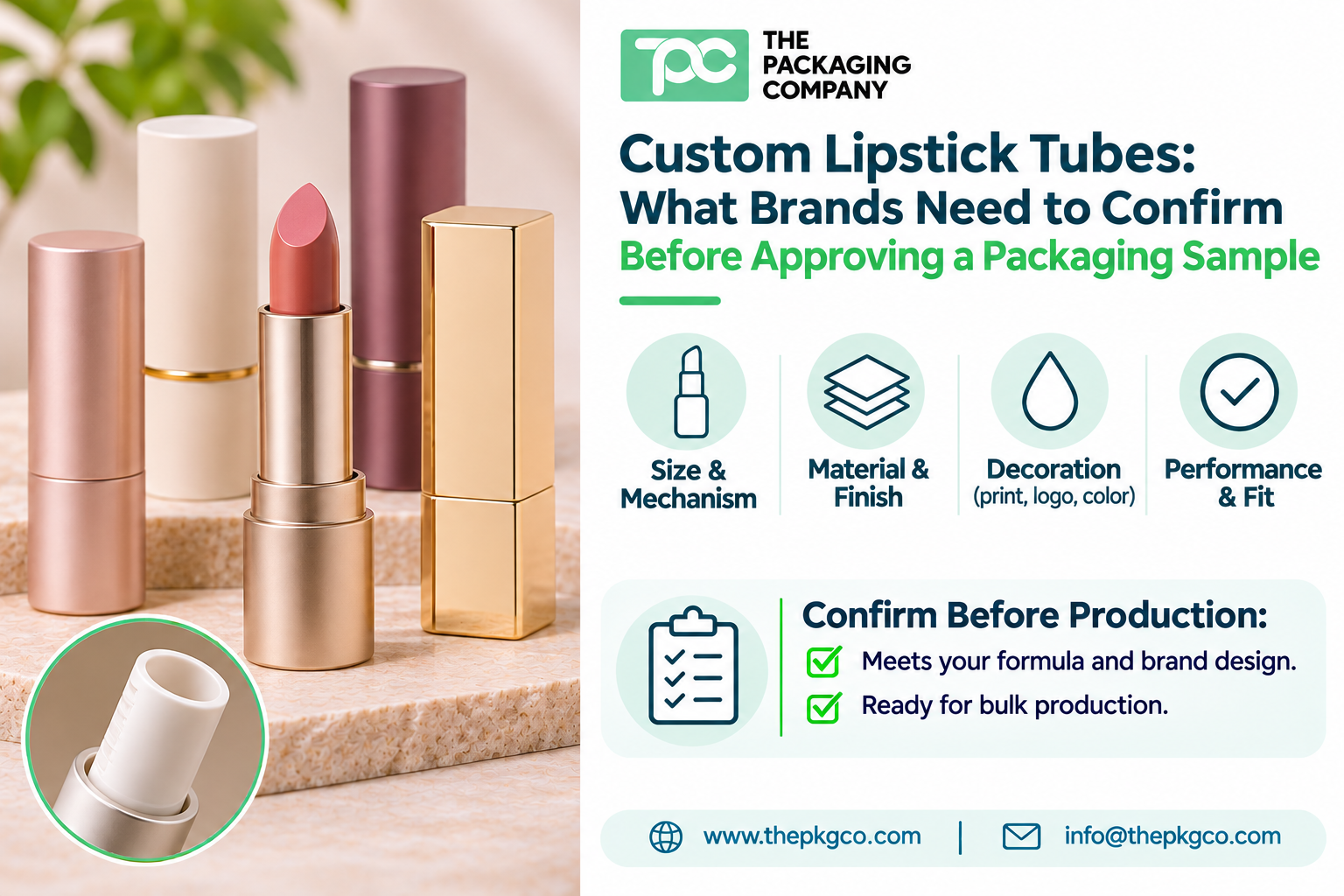
For beauty brands developing new lipstick collections, sample approval is the point where packaging design meets actual product performance.
Before approving custom lipstick tubes, purchasing and product development teams should evaluate the complete assembly—not just its color, shape, or surface finish.
Start With the Lipstick Cup and Formula Fit
One of the first details to confirm is the internal cup that holds the lipstick bullet.
The cup must accommodate the intended lipstick shape and dimensions while providing appropriate retention during use. Even if two lipstick cases look identical externally, their internal cup specifications may differ.
For example, TPC offers lipstick packaging designs with cup sizes such as 12.1mm and 12.7mm, as well as slimmer options for smaller-diameter lipstick formats.
Before approving a packaging sample, confirm:
- The required lipstick bullet diameter and shape.
- The internal cup dimensions and retention design.
- Whether the formula and bullet geometry are suitable for the selected cup.
- Whether the lipstick can be assembled without damage or distortion.
- Whether the bullet remains secure during handling and normal application.
A cup-size specification is a starting point, not proof of compatibility. The filling or molding partner should verify the actual lipstick formula and bullet design with the proposed packaging.
Brands can review available designs in TPC’s custom lipstick tubes and packaging collection.
Check the Twist-Up Mechanism Before Approving the Design
For traditional twist-up lipstick packaging, the mechanism is one of the most important functional components.
A lipstick case should allow the bullet to move upward and downward without unusual resistance, excessive looseness, or sudden movement.
When reviewing a sample, operate the mechanism repeatedly and check its behavior throughout the full travel range.
What Should Buyers Look For?
- Smooth rotation: The mechanism should operate consistently without sticking or grinding.
- Controlled movement: The lipstick cup should rise and retract as intended.
- Appropriate resistance: Rotation should not feel excessively loose or difficult.
- Full retraction: The bullet should retract sufficiently to avoid interference with the cap.
- Stable assembly: The internal mechanism should not shift or become loose during ordinary handling.
Brands should also consider whether the selected mechanism supports the intended consumer experience. A luxury lipstick may require a different tactile feel from a mass-market or slim lipstick format.
For designs using push-button, magnetic, or other alternative closure systems, the relevant operating and retention characteristics should be checked instead of assuming twist-up testing covers every format.
Confirm That the Lipstick Cap Fits and Stays Secure
A loose or poorly aligned cap can affect the customer’s perception of packaging quality, even when the lipstick mechanism functions correctly.
During custom lipstick case sample approval, examine how the cap engages with the case and whether it remains secure during typical handling.
Check for uneven gaps, excessive movement, unexpected friction, or interference between the cap and other components.
For magnetic lipstick cases, verify that the closure engages reliably and aligns with the intended orientation.
For friction-fit or snap-fit caps, confirm that the opening and closing force feels appropriate for the product’s intended use.
There is no single cap-retention requirement that applies to every lipstick tube design. Acceptance criteria should be established for the selected packaging configuration.
Review Decoration on the Fully Assembled Lipstick Tube
Custom colors, metallic finishes, printing, and decorative elements can give lipstick packaging its identity. However, these details should be reviewed on the complete assembled product.
A cap may match the approved color reference individually but appear different next to the base because of material, coating, gloss, or lighting differences.
Other potential issues include a logo that looks centered on a flat artwork file but appears misaligned on the finished case.
Check These Visual Details
- Color consistency between the cap, base, and decorative components.
- Logo placement and orientation when the case is closed.
- Printing sharpness and legibility.
- Scratches, visible molding marks, or coating imperfections.
- Alignment of decorative bands and metallic accents.
- Surface appearance after normal handling.
For packaging with metallic or glossy surfaces, review samples under consistent lighting conditions so acceptable appearance differences can be documented.
TPC offers aluminum lipstick tube packaging in various designs and decorative finishes, allowing brands to evaluate different premium packaging directions.
Test the Lipstick With the Actual Formula
Empty packaging samples are useful for reviewing dimensions, operation, and appearance. They cannot establish whether a completed lipstick product will perform correctly.
Formula characteristics, bullet geometry, filling conditions, and packaging construction can all influence the finished product’s behavior.
Before committing to bulk production, coordinate with the lipstick manufacturer or filling partner to evaluate filled samples.
Relevant checks may include:
- Bullet retention after filling and cooling.
- Interaction between the lipstick formula and internal packaging components.
- Damage or movement during cap closure.
- Mechanism operation with the finished lipstick installed.
- Performance following appropriate storage and transportation simulations.
Product stability and formula compatibility should be evaluated under conditions appropriate for the intended market and distribution channels.
Packaging samples should not be considered approved for the finished product solely because an empty case functions correctly.
Understand the Difference Between Stock Samples and Pre-Production Samples
For custom lipstick packaging projects, it is important to distinguish between evaluating an available sample and approving the specific configuration intended for bulk production.
A stock sample can help a brand review case dimensions, mechanism style, material, and general construction.
However, it may not include the final custom color, finish, artwork, or component configuration.
For TPC custom packaging orders, a pre-production sample (PPS) is provided after the order is placed so the brand can review the agreed production configuration before bulk manufacturing.
The final PPS approval should therefore cover the relevant custom specifications, rather than relying entirely on the earlier stock sample.
For more context, read TPC’s guide to stock samples versus pre-production cosmetic packaging samples.
Create a Clear Lipstick Packaging Sample Approval Record
Once the appearance and functionality have been reviewed, document the approved sample and its specifications.
This helps purchasing teams, suppliers, and filling partners work from the same production reference.
A practical lipstick packaging sample approval checklist should include:
- Product identification: Packaging item number and approved configuration.
- Cup specification: Internal size and intended lipstick bullet compatibility.
- Mechanism: Approved operating characteristics and functional checks.
- Cap: Retention, closure alignment, and accepted fit.
- Materials: Approved component materials and construction.
- Decoration: Color standards, surface finishes, printing, and logo placement.
- Sample reference: Approved physical sample or other controlled approval reference.
- Filling compatibility: Confirmation of applicable testing by the brand or filling partner.
Any subsequent changes to the approved configuration should be reviewed before they are adopted for production.
Approve Lipstick Packaging Based on More Than Appearance
Custom lipstick tubes need to deliver both the visual presentation and everyday functionality expected by the brand’s customers.
Before finalizing a packaging design, confirm the lipstick cup dimensions, twist-up mechanism, closure fit, surface decoration, and compatibility with the intended formula.
Documenting the approved sample gives purchasing teams and manufacturing partners a clearer production reference and helps avoid misunderstandings during bulk manufacturing.
The Packaging Company works with beauty brands sourcing custom lipstick tubes, aluminum lipstick cases, and wholesale lipstick packaging for new launches and established product collections.
Developing a new lipstick collection? Explore our wholesale lipstick packaging collection or contact TPC to discuss available designs, customization options, and sample requirements.
Frequently Asked Questions About Custom Lipstick Tube Samples
How do I know if a lipstick tube cup fits my lipstick formula?
Confirm the cup’s internal dimensions and retention design, then have your filling or molding partner test it with the intended lipstick bullet and formula. Matching the nominal diameter alone does not establish complete compatibility.
What should brands test on a twist-up lipstick packaging sample?
Check smooth rotation, consistent cup movement, full retraction, appropriate operating resistance, and overall assembly stability. Test the mechanism repeatedly, including with a representative lipstick bullet where appropriate.
Can I approve custom lipstick packaging using an empty sample?
An empty sample can be used to review dimensions, appearance, and basic mechanical operation. Final product compatibility should also be evaluated with the intended lipstick formula and filling process before bulk production.
Why does the lipstick cap feel different after customization?
Changes to materials, coatings, finishes, or component tolerances can affect cap fit and operating feel. Review production-representative samples to confirm that the final customized configuration meets the agreed acceptance criteria.
What is the difference between a stock lipstick tube sample and a PPS?
A stock sample helps buyers evaluate an available packaging design. A pre-production sample (PPS) represents the agreed custom production configuration and is reviewed before bulk manufacturing. For TPC custom orders, PPS review follows order placement.