



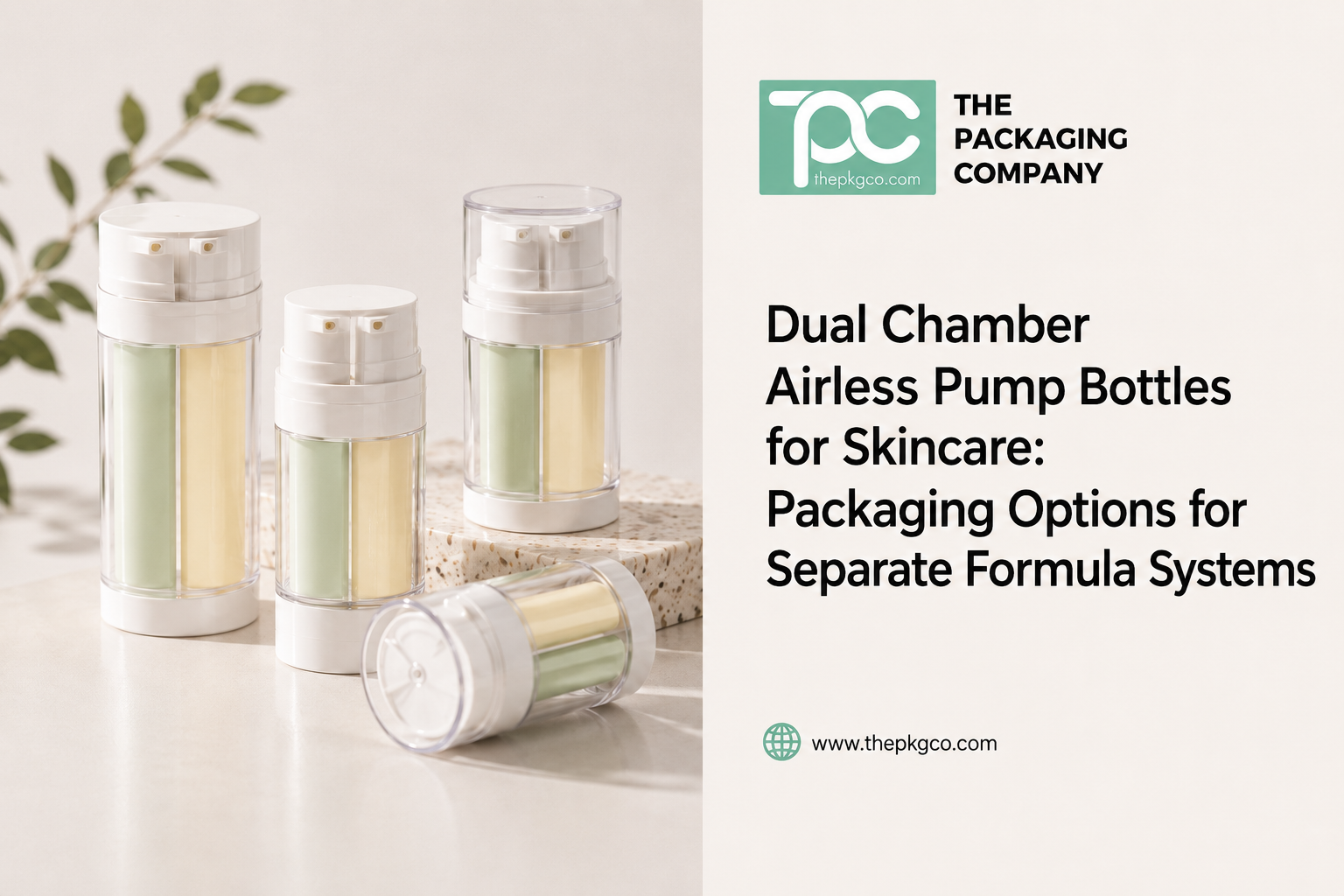
Dual chamber airless pump bottles are used by skincare brands that want to package two product components inside one bottle format. Instead of using two separate containers, a dual chamber bottle allows the brand to present a more specialized packaging system for products that are designed around two separate formula paths, paired skincare steps, or a more advanced product experience.
This type of packaging can be useful for serums, moisturizers, treatment products, eye care, targeted skincare, and premium product lines where the brand wants the packaging to feel more technical and elevated.
For brands comparing dual chamber airless pump bottle options, the planning process should focus on product concept, chamber structure, pump direction, bottle appearance, label space, MOQ, sample review, and production support before moving into bulk orders.
What Is a Dual Chamber Airless Pump Bottle?
A dual chamber airless pump bottle is an airless packaging format with two separate internal chambers inside one bottle design. Each chamber can be used for a different product component, formula direction, or skincare step depending on the brand’s product concept.
The purpose of the dual chamber structure is to let the brand present two components in one packaging unit while keeping the overall bottle appearance clean and unified.
For skincare brands, this format can create a more premium look than using two separate bottles. It can also help the product feel more specialized, especially when the brand wants to communicate a system-based or treatment-focused skincare concept.
When Skincare Brands Use Dual Chamber Packaging
Dual chamber packaging is usually considered when a product concept involves two related components. For example, a brand may want to present a serum and cream, oil-based and water-based direction, day and night concept, booster and base product, or two complementary skincare steps in one bottle format.
The packaging does not decide whether the formulas should be separated. That decision should come from the brand’s product development team, formulator, and filling partner. The packaging role is to provide a bottle structure that can support the brand’s separate-component concept.
This makes dual chamber airless packaging especially useful for brands that want to introduce a more advanced product story instead of using a standard single-chamber airless bottle.
Separate Formula Systems Should Be Planned Clearly
The phrase “separate formula system” means the product is planned around two different components or formula directions. The two chambers may support different product textures, product steps, or product benefits depending on the brand’s concept.
Before selecting a dual chamber bottle, brands should clearly define what each chamber will represent. This can include which component goes into each side, whether the chambers need similar or different capacities, how the product will be named, and how the consumer should understand the two-part concept.
If the product story is not clear, the packaging may look interesting but become harder to explain on the label, product page, or sales material.
Chamber Structure Affects Product Presentation
Dual chamber bottles can vary in structure, shape, and appearance. Some designs make the two chambers visually obvious, while others keep the bottle appearance more unified. The right direction depends on how strongly the brand wants to show the dual formula concept.
For a technical skincare product, a visible dual chamber design may help communicate a more advanced product system. For a cleaner premium skincare line, a more subtle design may feel more polished.
Brands should review physical samples to understand how the bottle feels in hand, how the chambers appear from the front, and how the format fits with the rest of the skincare line.
Pump Direction Is a Key Part of the User Experience
The pump system is one of the most important details in a dual chamber airless bottle. Depending on the packaging structure, the pump may be designed to dispense both sides together or support a specific dispensing direction based on the bottle design.
Brands should review the pump head, actuator style, output direction, cap or overcap, and how the pump looks with the full bottle. The pump should match the product concept and brand presentation, not only the bottle body.
Before production, brands should also coordinate sample review with their filling partner or testing team. TPC supplies empty packaging components, while the brand or filler should confirm filling, formula behavior, and finished-product performance based on the actual product.
Dual Chamber Bottles Can Support Premium Skincare Positioning
Dual chamber airless pump bottles can help a skincare product feel more specialized. Because the format is less common than a standard bottle, it can support products positioned as treatment-focused, premium, technical, or system-based.
This can be useful for brands selling advanced serums, paired skincare systems, targeted treatments, or products that need a more elevated packaging presentation.
However, the packaging should still match the brand’s customer and price point. A dual chamber bottle may not be necessary for every product. It is strongest when the product concept truly benefits from a separate-component story.
Label Space and Product Explanation Matter
Dual chamber packaging often needs clear label communication. Because the product concept may be more complex than a standard single-chamber bottle, the packaging should help the customer understand what each chamber represents and how the product should be used.
Brands should review front label space, logo placement, product name, chamber callouts, usage direction, ingredient information, back label space, and any required product details before approving the bottle.
A dual chamber bottle may look strong visually, but the artwork still needs enough room to explain the product clearly. This is especially important for e-commerce, retail shelves, product photography, and sales presentations.
Decoration Should Support the Dual Chamber Concept
Decoration can help make the dual chamber format easier to understand. Brands may use color contrast, product naming, label layout, screen printing, hot stamping, matte finishes, metallic details, or other decoration methods depending on the bottle style and project requirements.
For example, a brand may use two subtle colors to represent two formula directions, or it may keep the bottle minimal and use the product name to explain the concept. The right direction depends on whether the brand wants the dual chamber system to feel technical, clinical, premium, or clean and minimal.
Decoration should be planned around the actual bottle shape and chamber layout, not only the flat artwork file.
MOQ and Sample Review Should Happen Early
Dual chamber airless packaging is more specialized than standard airless packaging, so brands should review MOQ, sample availability, customization options, decoration requirements, and production timing early in the process.
If the product is still in development, the brand should avoid finalizing artwork too early. It is better to review bottle samples, decoration direction, cap or overcap style, and empty component packing details before locking the final packaging plan.
Early sample review helps the brand understand whether the dual chamber format fits the product concept, launch plan, and production needs.
How Dual Chamber Bottles Fit Into an Airless Packaging Line
A dual chamber bottle may be used as the hero product in a broader skincare line. For example, a brand may use standard airless pump bottles for daily products, airless jars for creams, and one dual chamber bottle for a more specialized treatment product.
This approach allows the dual chamber bottle to stand out without making the entire packaging line too complex.
Brands can also review TPC’s broader airless packaging options to compare standard airless bottles, airless jars, refillable airless packaging, glass airless bottles, and dual chamber formats as part of a complete skincare packaging direction.
Product and Component Records Still Matter
Although this article is not focused on reorder planning, brands should still keep clear records once a dual chamber bottle is approved. This includes the approved bottle style, chamber structure, pump direction, cap or overcap, decoration method, artwork file, color reference, and packing details.
Dual chamber packaging has more component details than a simple single bottle, so clear records can make communication easier if the brand expands the product line or repeats the same packaging direction later.
Related Airless Packaging Resources
Brands comparing dual chamber packaging can review TPC’s airless dual chamber packaging category for related options.
For other airless formats, TPC also offers airless pump bottles, airless jars, and refillable airless packaging for skincare and cosmetic product lines.
How TPC Supports Dual Chamber Airless Bottle Projects
The Packaging Company supports skincare and cosmetic brands with dual chamber airless bottle options, airless pump bottles, airless jars, refillable airless packaging, decoration direction, color matching, MOQ planning, sample review, empty component packing, and production support.
Our team helps brands compare airless packaging formats so the selected bottle supports the product concept, brand presentation, and production direction.
If your brand is planning a dual chamber airless pump bottle for a skincare product, contact TPC to discuss bottle options, samples, customization, MOQ, and production support.
Dual Chamber Airless Bottle Planning Checklist
- Confirm why the product needs two separate chambers.
- Define what each chamber represents in the product concept.
- Review bottle shape, chamber visibility, and shelf presentation.
- Compare pump direction, actuator style, cap, and overcap options.
- Check label space for product explanation and usage details.
- Plan decoration around the actual bottle structure.
- Review MOQ, sample availability, and production timing early.
- Coordinate with the brand’s filler or testing partner before final production.
- Save approved component details for future production communication.
Dual Chamber Airless Pump Bottles FAQ
What is a dual chamber airless pump bottle?
A dual chamber airless pump bottle is an airless packaging format with two separate internal chambers inside one bottle. It is used when a brand wants to present two product components or formula directions in one packaging unit.
What skincare products use dual chamber airless bottles?
Dual chamber airless bottles may be used for serums, moisturizers, eye care, treatment products, paired skincare systems, and products that are designed around separate formula concepts.
Why would a brand use dual chamber packaging?
A brand may use dual chamber packaging to create a more specialized product presentation, support a separate-component skincare concept, or make a treatment product feel more premium and system-based.
Can dual chamber airless bottles be customized?
Yes. Dual chamber airless bottles may support customization such as color matching, decoration, labeling, printing, finish direction, cap or overcap selection, and other project-specific options depending on the bottle style and order requirements.
Does TPC test the finished product inside the dual chamber bottle?
TPC supplies empty packaging components. The brand, formulator, or filling partner should confirm filling, formula behavior, dispensing, and finished-product performance with the actual product before final production.
Can TPC help brands review dual chamber airless bottle samples?
Yes. TPC can help brands review dual chamber airless bottle options, sample direction, decoration choices, MOQ, empty component packing, and production support before moving into bulk orders.