



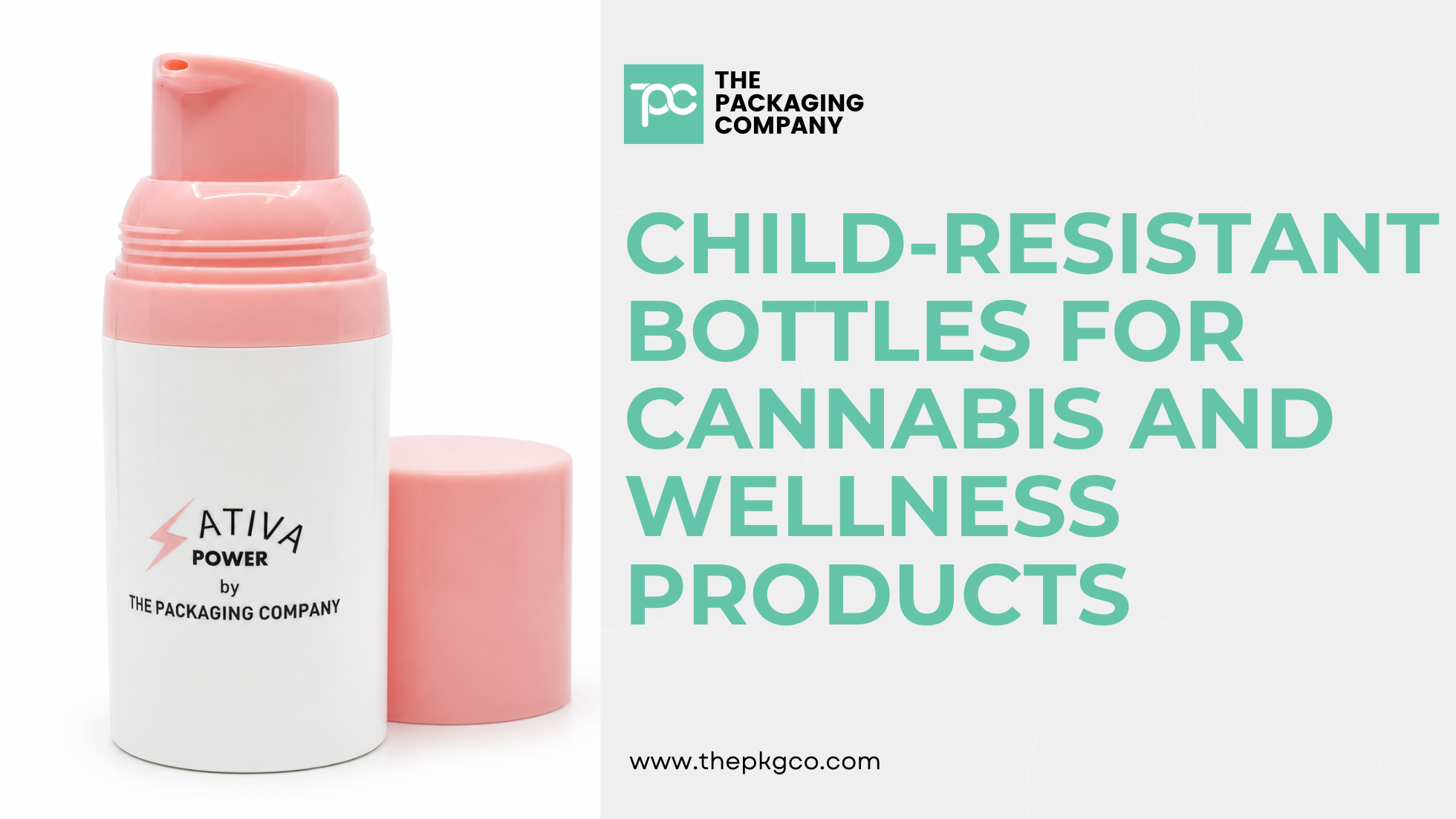
Child-resistant bottles cover a wider range of product applications than most brands initially realize. Tinctures, CBD oils, cannabis-infused topical serums, dropper-format concentrates, roll-ons, and regulated wellness liquid products all share a need for a container that meets CR requirements while functioning correctly for the formulation inside it.
The bottle format decisions (material, neck finish, closure mechanism, fill volume, and decoration) interact with each other in ways that affect compliance, product protection, consumer experience, and cost. Getting them right requires working through the variables in sequence before sampling, and sampling before production.
When CR Bottles Are Required
CR bottle requirements apply across several regulated product categories:
Cannabis tinctures and oils sold in licensed US cannabis markets require CR packaging at the point of consumer sale. Most state cannabis regulations require 16 CFR §1700.20 certification for retail tincture products. The standard dropper bottle is the most common format. The CR closure is the cap, not the glass bottle itself.
Cannabis topical serums and oils in dropper or roller bottle formats sold through licensed retail channels require the same CR compliance as other cannabis products.
CBD oils and tinctures sold through licensed cannabis retail channels are subject to the same CR requirements as cannabis products in most regulated states. CBD products sold outside the licensed cannabis channel have more variable requirements. Some states have implemented CR requirements for hemp products at retail; others have not.
OTC pharmaceutical liquids fall under federal CR requirements under the Poison Prevention Packaging Act for certain active ingredient categories and concentration levels. Brands in this category should confirm applicable requirements with regulatory counsel.
Regulated wellness liquids positioned for licensed retail channels may encounter CR requirements as a channel prerequisite even where no specific mandate applies. Pharmacy buyers and cannabis retail buyers increasingly require CR packaging for liquid wellness products being placed in their stores.
Bottle Materials and What Each Does
Glass
Glass is the premium standard for tinctures, cannabis oils, and CBD extracts. It is completely inert: no material interaction with cannabinoids, terpenes, or botanical extracts. Glass does not leach, does not absorb compounds from the formulation, and creates no off-gassing. For products where chemical purity and stability are quality claims, glass eliminates the material interaction variable entirely.
Amber glass is the standard for light-sensitive formulations. Cannabinoids and terpenes degrade under UV and visible light exposure over time. Amber glass blocks the spectrum that causes that degradation. Clear glass provides no light protection and is appropriate only for products with short shelf life expectations or opaque secondary packaging.
Glass bottles for cannabis tinctures and oils are typically available in 15ml, 30ml, 60ml, and 100ml volumes. The 30ml format dominates the cannabis tincture category. It’s the standard retail size and what most consumers expect.
The CR closure on a glass tincture bottle is the dropper cap assembly: the cap with the squeeze bulb and glass dropper pipette. The CR mechanism sits in the cap, not the bottle. Push-and-turn or squeeze-and-turn CR dropper caps are the standard options. The cap must be tested as a system with the specific bottle neck finish it’s designed for. Certification is not transferable to a different bottle with a different neck finish.
Plastic (PET/HDPE/PP)
Plastic bottles for regulated liquid products are appropriate for formulations where glass breakage risk is a significant concern: delivery-first cannabis operations, products shipped directly to consumers, or formats where the weight of glass at volume creates logistic cost issues.
PET (polyethylene terephthalate) is the most common plastic for cannabis tincture and oil bottles. It’s clear, lightweight, and has adequate barrier properties for most cannabis oil formulations. HDPE (high-density polyethylene) is opaque and provides better chemical resistance for formulations with higher concentrations of certain botanical extracts.
The limitation of plastic for cannabis oils and tinctures is that PET in particular can absorb certain terpene compounds from the formulation over extended contact, a process called sorption, that reduces active compound concentration over shelf life. For formulations where terpene expression is a quality claim, glass is the more reliable choice. For value-tier products with shorter shelf life expectations, PET provides adequate performance at lower cost.
Aluminum
Aluminum bottles and the related roll-on format provide full light blocking, good barrier properties, and a premium tactile signal at a lower weight than glass. They are increasingly used for cannabis-adjacent wellness products, CBD roll-ons, and topical serums where the brand is positioning at a premium level without requiring the fragility management of glass.
Aluminum bottles require an interior coating for compatibility with most cannabis and botanical formulations. The uncoated aluminum surface can react with certain acids and terpene compounds. Confirm interior coating compatibility with your specific formulation before committing to an aluminum bottle format.
CR Closure Types for Bottles
Push-and-Turn CRC Dropper Cap
The standard CR closure for tincture and oil dropper bottles. The cap pushes down and turns counterclockwise to open. This two-step action requires both downward pressure and rotation simultaneously, which young children cannot reliably coordinate. Once learned, the opening action is intuitive for adults.
The dropper pipette length within the cap must be matched to the bottle fill level. A pipette that doesn’t reach the formulation at full fill, or that sits too close to the bottle bottom at low fill, creates a poor consumer experience regardless of the cap mechanism’s compliance performance.
Push-and-Turn Roll-On Cap
The standard CR closure for roll-on format products. The roll-on ball is seated in the applicator head, and the cap uses the same push-and-turn mechanism as the dropper cap. Roll-on formats are well suited to cannabis topical oils, CBD topicals, and wellness products where direct skin application with controlled delivery is the use case.
Child-Resistant Pump Closure
For larger-volume liquid cannabis topicals and wellness formulations, a CR pump closure provides metered dose delivery with CR compliance. The CR mechanism on a pump closure is typically a directional lock that must be pressed in a specific orientation before the pump can actuate. Less common than push-and-turn caps but appropriate for higher-volume formats where pump dispensing is preferable to dropper.
CR Airless Pump Bottles
For brands where formula protection is as important as CR compliance, airless pump bottles are the format to evaluate alongside standard pump closures. The airless mechanism creates a vacuum-sealed environment that eliminates air exposure with each dispense, preserving oxidation-sensitive actives, terpene compounds, and high-performance ingredients over the full product use period in a way that standard pump bottles cannot.
TPC offers three CR airless pump bottle configurations. The Child-Resistant Airless Pump Bottle is the standard format for serums, lotions, and active-ingredient topicals. The Child-Resistant Airless Pump Bottle, Large Format serves higher-volume applications. The Child-Resistant Airless Pump Bottle, Mono-Material uses a single-polymer construction that supports recyclability claims for brands with sustainability positioning. All three are certified to 16 CFR §1700.20.
Fill Volume and Neck Finish: Getting the Fit Right
The bottle volume and neck finish are the two dimensional variables that have to be confirmed before any other sourcing decision, because they determine which caps are even compatible.
Fill volume should reflect the expected dose count per unit at the intended serving size, not a round number that sounds good on a label. A 30ml tincture at a 1ml serving size provides 30 doses, an appropriate retail unit for most cannabis tincture applications. A 60ml format at the same serving size provides 60 doses, which may be appropriate for higher-volume or subscription-format products but creates a higher price point that needs to be supported by the formulation value.
Neck finish is the standardized interface between the bottle and the cap, defined by inner diameter, thread profile, and thread count. Standard neck finishes include 18/400, 20/400, 24/400, and 28/400, with the first number being the inner diameter in millimeters and the second being the thread count. The CR closure must be specified for the exact neck finish of the bottle. A cap designed for an 18/400 neck will not function correctly on a 20/400 bottle even if the outer diameter appears similar.
When sampling a CR bottle and cap combination, confirm the neck finish match explicitly, not by visual inspection alone,, but by confirming the specific neck finish specification of both components with the supplier before production.
Decoration Options for CR Bottles
Label Application
Pressure-sensitive labels are the most common decoration method for glass and plastic CR tincture and oil bottles. Labels can accommodate full-color graphics, variable data (lot code, batch number, expiration date), and the mandatory compliance content required for regulated products.
Label material selection matters for cannabis and wellness products that may be handled with oily or wet hands. Matte and gloss laminated label stocks hold up significantly better than uncoated paper labels in these use conditions. Confirm label material with the specific use environment in mind.
Silk Screen Printing
Direct printing on glass and aluminum bottles without a label layer. Provides a premium, clean aesthetic appropriate for high-end cannabis oils, CBD wellness products, and luxury-positioned formulations. Silk screen printing is more durable than labels in high-contact-use applications and eliminates the edge peeling that can occur with pressure-sensitive labels on cylindrical surfaces.
Setup costs for silk screen printing are higher than for label programs, and minimum order quantities typically start higher. Appropriate for established brands with confirmed volume, not the right choice for SKU launches where demand validation is still in progress.
Shrink Sleeve
A full-wrap printed sleeve applied over the bottle that provides the maximum decoration surface, covering the entire bottle body including the shoulder, which label application cannot cover cleanly. Used for products where full surface decoration is a brand priority. The sleeve is applied post-fill and requires compatible sleeve application equipment at the filling facility.
MOQ and Reorder Planning for CR Bottle Programs
MOQ for glass CR tincture bottles at TPC starts at 5,000 units for standard volumes (15ml, 30ml, 60ml) with standard CR dropper cap configurations. Custom bottle shapes, non-standard volumes, or specialty finishes carry different MOQ requirements.
CR closure MOQ is typically matched to the bottle MOQ for orders placed as a system. Caps ordered separately, for reorders where the bottle inventory is adequate but the cap supply needs replenishment, may have their own minimum quantities. Confirm cap MOQ separately from bottle MOQ if reordering components independently.
Reorder lead time for glass CR tincture bottles runs 4–8 weeks for standard configurations. For decorated bottles with silk screen printing or shrink sleeve application, add decoration production time. For labeled bottles where label printing is managed separately, the label lead time and the bottle lead time should be coordinated to arrive together rather than sequentially.
Documentation at reorder. The CR certification applies to the specific bottle and cap combination as tested. At each reorder, confirm with your supplier in writing that the current production run matches the tested and certified combination: same bottle neck finish, same cap mechanism, same torque specification. This written confirmation is the documentation currency that maintains compliance across reorders.
TPC’s CR Bottle and Topical Packaging Line
TPC’s child-resistant topical packaging line includes the following bottle and dispenser formats for cannabis tinctures, CBD oils, regulated wellness liquids, and topical formulations, all certified to 16 CFR §1700.20:
- Child-Resistant Glass Dropper Bottle — for tinctures and cannabis oils
- Child-Resistant Roll-On Bottle — for topical oils and wellness roll-on applications
- Child-Resistant Roll-On Bottle, Clinical Format — precision clinical applicator format
- Child-Resistant Airless Pump Bottle — standard format for serums, lotions, and active-ingredient topicals
- Child-Resistant Airless Pump Bottle, Large Format — higher-volume applications
- Child-Resistant Airless Pump Bottle, Mono-Material — single-polymer construction for brands with sustainability positioning
MOQ varies by format: dropper bottles, squeeze tubes, and glass-format products typically start at 10,000 units; roll-on bottles start at 10,000 units for the standard format and 20,000 units for the Clinical Format. Pre-production samples are standard before any bulk commitment.
For the full CR packaging format overview, see our child-resistant packaging solutions guide. For brands evaluating the complete landscape of CR options before making a format decision, our 10 questions guide covers what to ask any supplier before placing a bulk order. To discuss your specific formulation and format requirements, contact our team.
Frequently Asked Questions
Do cannabis tinctures require child-resistant packaging? Yes. Cannabis tinctures and oils sold in licensed US cannabis markets require CR packaging at the point of consumer sale. Most state cannabis regulations require 16 CFR §1700.20 certification for retail liquid cannabis products. The CR closure, typically a push-and-turn dropper cap, must be tested as a system with the specific bottle neck finish it’s designed for.
What is the best bottle material for cannabis tinctures? Glass is the premium standard. It is completely inert, eliminates any risk of material interaction with cannabinoids and terpenes, and provides light protection in amber glass variants. Plastic PET is the cost-efficient alternative for shorter shelf life products or delivery-first operations where breakage risk justifies the trade-off in formulation stability performance.
How do I confirm the CR closure fits my bottle? Confirm the neck finish specification (e.g., 18/400, 20/400) of both the bottle and the cap explicitly with the supplier. A CR cap must be specified for the exact neck finish of the bottle to function correctly. Visual inspection is not sufficient. Confirm the specification in writing before ordering.
What is the most common volume for cannabis tincture bottles? 30ml is the most common retail volume for cannabis tinctures in the US market, providing approximately 30 doses at a 1ml serving size. 15ml travel-size and 60ml higher-volume formats are available for brands building multi-size product lines or serving different consumer use patterns.
Can I order bottles and CR caps separately for reorders? Yes, but confirm the MOQ for caps independently. They may have a minimum order quantity separate from the bottle MOQ. More importantly, confirm with your supplier at every reorder that the cap being supplied matches the tested and certified combination on file. Any change to the cap mechanism, material, or torque specification may affect the certification currency.
What decoration method is best for CR tincture bottles? Pressure-sensitive labels with laminated stock (matte or gloss) are the standard. They accommodate full-color decoration and variable data, and laminated label stock holds up well in the oily-hands handling conditions common to tincture use. Silk screen printing directly on glass is the premium option for established brands with confirmed volume where a label-free aesthetic is a brand priority.