



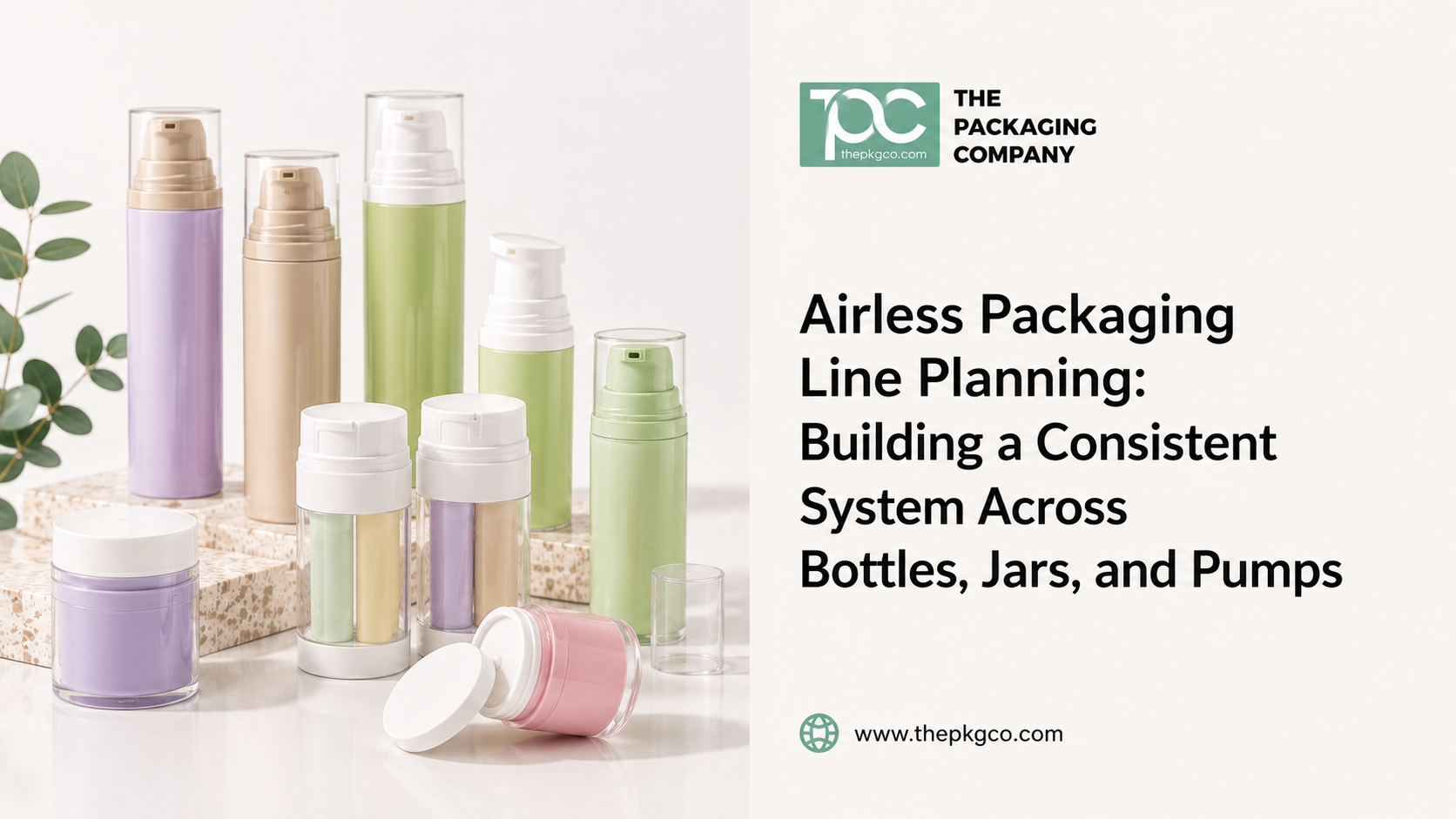
Airless packaging is often used by skincare brands that want a clean, modern, and controlled dispensing format across serums, lotions, moisturizers, creams, masks, primers, sunscreens, and treatment products. But for brands with more than one SKU, airless packaging should not be selected one container at a time.
A skincare line may include airless pump bottles, airless jars, refillable airless bottles, dual-chamber packaging, or other airless containers. Each format may serve a different product role, but the full line still needs to feel organized, easy to produce, and easy to reorder.
This guide explains how skincare brands can organize airless packaging as a product-line system instead of choosing bottles, jars, pumps, and components separately.
Why Airless Packaging Should Be Planned as a Line
Many brands begin packaging development by looking for one attractive bottle or jar. That may work for a single product, but it can create problems when the brand expands into a full skincare line.
For example, a serum may need an airless pump bottle, a moisturizer may need an airless jar, and a treatment product may need a more premium airless container. If each item is chosen separately, the product line may end up with different pumps, caps, finishes, label layouts, and reorder records.
Planning airless packaging as a line helps brands create a more consistent product collection. It also helps organize MOQ, decoration direction, empty component packing, approved samples, and reorder details before bulk production.
Start With the Product Line Map
Before choosing specific airless containers, brands should create a simple product line map. This map should list each SKU, product type, expected fill size, packaging format, launch priority, and future reorder needs.
A product line map helps the brand see how each item fits into the full collection. It also makes it easier to decide which products should use airless pump bottles, which products may need airless jars, and which products may need a refillable or more specialized airless format.
This step keeps the packaging process more organized. Instead of comparing random samples, the brand can review airless packaging options based on actual product roles.
Assign a Clear Role to Each Airless Format
Different airless packaging formats serve different purposes. Airless pump bottles are often used for serums, lotions, moisturizers, primers, sunscreens, and treatment products. Airless jars may be used for creams, masks, balms, or products that need a jar-style presentation with controlled dispensing.
Refillable airless packaging may support brands that want a more sustainable or premium refill system. Dual-chamber or specialty airless formats may be considered for products that need a more advanced shelf presentation or a clear separation between product components.
The key is to assign a clear role to each packaging format. This helps the brand avoid using too many unrelated formats without a clear reason.
Keep the Airless System Visually Connected
Airless packaging does not need to look identical across every product, but the full line should feel connected. Brands can create consistency through bottle shape, jar shape, pump color, cap direction, finish, label layout, logo placement, and decoration method.
For example, a brand may use airless pump bottles for serums and lotions, then use airless jars for creams and masks. Even though the formats are different, they can still belong to the same packaging family if the color, finish, and decoration direction are planned together.
This is especially important for skincare sets, retail displays, e-commerce product pages, and product photography. A consistent system helps customers understand that the products belong to the same brand family.
Separate Hero Products From Everyday SKUs
Not every product in a skincare line needs the same packaging investment. Some products may be hero products that need a stronger shelf presence, while other SKUs may need a simpler and more practical packaging direction.
For example, a premium serum may use a more elevated airless cosmetic bottle, while a daily moisturizer may use a cleaner and simpler airless bottle style. A treatment cream may use an airless jar that feels more substantial, while a travel-size product may use a smaller format that still matches the line.
By separating hero products from everyday SKUs, brands can make better packaging decisions without overcomplicating the entire line.
Plan Pumps, Caps, and Closures as a Family
Pumps, caps, overcaps, and closure details can quickly make an airless packaging line feel inconsistent if they are not planned together. A product line with too many unrelated pump colors, cap shapes, or closure styles may look less organized.
Brands should review whether several products can share the same pump color, cap finish, or closure direction. This does not mean every component must be the same, but the choices should follow a clear packaging system.
Consistent component planning can also make production communication and reorder records easier to manage.
Build One Decoration System Across the Line
Decoration should be planned across the full airless packaging line, not only one bottle or jar. Brands should review how logo placement, product names, color coding, label size, printing method, finish, and back label information will work across different airless formats.
A label or print layout that works well on one bottle may need adjustment on another container. Smaller airless bottles may have limited decoration space, while jars may allow a different label structure.
When decoration is planned as a system, future product launches become easier. The brand already has a clear design direction that can be adapted across additional airless containers.
Use MOQ Planning to Control Packaging Complexity
MOQ planning is important when a brand uses several airless packaging formats. Each bottle size, jar size, pump color, cap direction, finish, decoration method, or artwork version may affect production planning.
Brands should review which products are launching first, which SKUs can share components, and which packaging details should remain consistent across the line. This helps prevent the packaging program from becoming too complex too early.
A strong airless packaging plan should support the launch without creating unnecessary production or reorder confusion later.
Organize Empty Component Packing Details Early
Airless packaging is supplied as empty packaging components. Depending on the selected format, this may include bottles, jars, pumps, actuators, caps, overcaps, refill components, or other related parts.
Before bulk production, brands should confirm how the empty components will be packed and shipped. This helps the brand, operations team, or filling partner understand how the packaging will arrive and how components should be organized before filling.
This does not replace filling-line testing, but it helps keep packaging communication clear between the brand, supplier, and filling partner.
Reorder Records Should Be Built From the First Order
Airless packaging line planning should always include reorder control. Once a product launches, the brand may need to reorder the same airless bottle, jar, pump, cap, color, finish, decoration, and packing details.
To keep future orders consistent, brands should save approved sample records, product codes, component specifications, artwork files, color references, decoration methods, carton packing notes, and production records.
These records become more important as the brand adds more SKUs. A clear reorder file helps the brand avoid confusion when repeating a previous order or expanding the line with new products.
How This Supports the Main Airless Packaging Category
For brands comparing airless packaging options, it can be helpful to start with the main airless category and then narrow the selection by product type, bottle style, jar style, refill direction, decoration needs, and production plan.
TPC offers airless packaging options for skincare and cosmetic brands, including airless pump bottles, airless jars, refillable airless packaging, glass airless options, and other airless containers for product lines that need controlled dispensing and a clean shelf presentation.
Brands can explore TPC’s airless packaging category to review available formats, then contact the team to discuss samples, customization, MOQ, and production planning.
Related Airless Packaging Resources
Brands building an airless packaging line can also review TPC’s related guides on airless containers for skincare packaging lines, airless cosmetic bottles for skincare products, and refillable airless bottles.
For brands comparing specific formats, TPC also offers airless pump bottles, airless jars, and refillable airless packaging.
How TPC Supports Airless Packaging Line Planning
The Packaging Company supports skincare and cosmetic brands with airless packaging options, including airless pump bottles, airless jars, refillable airless packaging, glass airless options, custom finishes, decoration direction, MOQ planning, empty component packing, and reorder support.
Our team helps brands compare airless containers across product lines so each packaging format has a clear role and the full collection feels consistent.
If your brand is planning airless packaging for a skincare product line, contact TPC to discuss airless bottle, jar, pump, refillable, decoration, MOQ, and production options.
Airless Packaging Line Planning Checklist
- List each SKU, product type, and launch priority.
- Decide which products need airless pump bottles, jars, or refillable formats.
- Assign a clear role to each airless packaging format.
- Keep pump, cap, color, and finish direction visually connected.
- Plan decoration as a system across bottles, jars, and pumps.
- Review MOQ before final packaging selection.
- Confirm empty component packing and carton details.
- Save approved samples, artwork files, component specs, and reorder records.
Airless Packaging FAQ
What is airless packaging used for in skincare?
Airless packaging is commonly used for skincare and cosmetic products such as serums, lotions, moisturizers, creams, masks, primers, sunscreens, and treatment products where brands want controlled dispensing and a clean packaging presentation.
How should brands organize airless packaging across a product line?
Brands should map each SKU, choose the right airless format for each product, keep pumps and caps visually connected, plan decoration across the line, review MOQ, and save reorder records from the first order.
What airless packaging formats are available?
Common airless packaging formats include airless pump bottles, airless jars, refillable airless bottles, glass airless options, dual-chamber packaging, and other airless containers depending on the product line and packaging goals.
Why is product-line planning important for airless packaging?
Product-line planning helps brands avoid mismatched bottles, jars, pumps, caps, colors, decoration methods, and reorder records. It also helps the full skincare collection look more consistent.
Can airless packaging be customized?
Yes. Airless packaging can be customized through bottle or jar selection, pump and cap direction, color matching, printing, labeling, hot stamping, matte finishes, metallic finishes, and other decoration options depending on the project requirements.
Can TPC help brands compare airless packaging options?
Yes. TPC can help skincare and cosmetic brands compare airless pump bottles, airless jars, refillable airless packaging, decoration options, MOQ, empty component packing, and reorder planning before bulk production.