



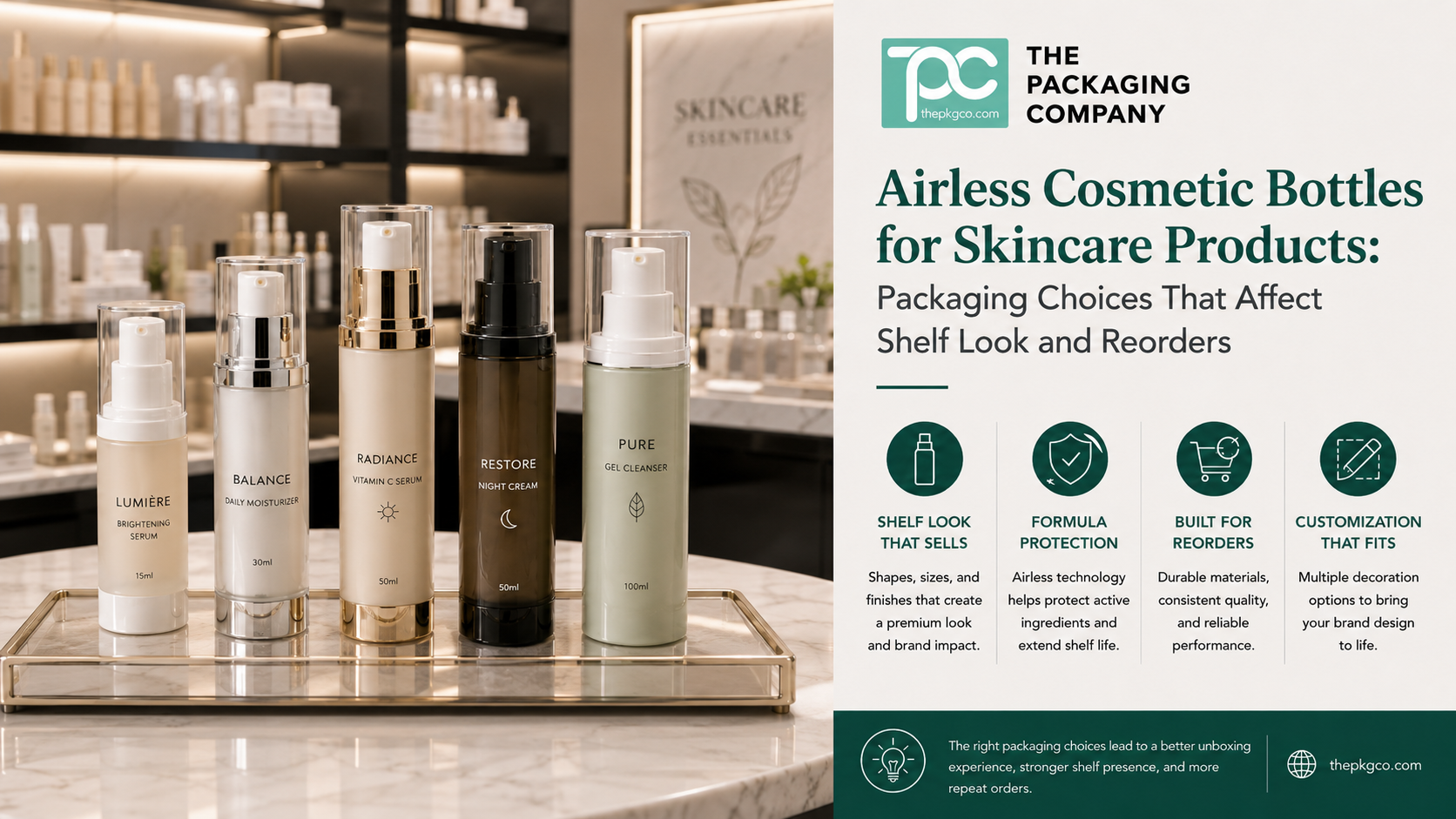
Airless cosmetic bottles are often used by skincare brands that want a clean, controlled, and polished packaging format for serums, lotions, moisturizers, primers, sunscreens, and treatment products. The right bottle can help a product look more professional, support a consistent skincare line, and make future reorders easier to manage.
However, choosing an airless cosmetic bottle should not be based only on how the packaging looks in a sample photo. Brands also need to review bottle shape, pump style, cap direction, decoration space, material and finish direction, MOQ, empty component packing, and reorder records before confirming production.
For skincare brands building a product line, airless pump bottles should be planned as part of the full packaging system, not as a single container decision.
Why Airless Cosmetic Bottles Are Popular in Skincare Packaging
Airless cosmetic bottles are commonly selected because they offer a modern dispensing format and a clean shelf appearance. For skincare products, the packaging needs to support both daily use and brand presentation.
A serum, moisturizer, lotion, primer, or treatment product may all use airless packaging, but each product may require a different bottle size, pump style, cap direction, and decoration layout. That is why brands should compare packaging choices carefully before sampling approval.
The goal is not only to find a bottle that looks good. The goal is to find an airless cosmetic bottle that fits the product, looks consistent with the brand, and can be reordered without confusion later.
Bottle Shape Affects Shelf Presentation
The bottle shape is one of the first details customers notice. A tall slim bottle, rounded bottle, square bottle, or heavier premium-style bottle can create a very different impression.
For skincare brands, bottle shape should match the product’s position in the line. A lightweight daily serum may work well in a slim airless bottle. A moisturizer or treatment product may need a larger bottle with a stronger shelf presence. A premium skincare product may require a more elevated bottle style, finish, or cap direction.
Brands should also think about how the bottle will appear across product photography, e-commerce product pages, retail displays, and skincare sets. A bottle that looks attractive by itself may not always work well when placed next to other products in the line.
Pump Fit Changes the Packaging Experience
The pump is a key part of airless pump packaging. It affects how the packaging looks, how the customer interacts with the product, and how the bottle feels during use.
Brands should review the pump style, actuator shape, pump color, cap or overcap direction, and how the pump works visually with the bottle body. A simple pump may support a clean skincare line, while a more refined pump and cap combination may fit a premium skincare product.
If the brand plans to use airless cosmetic bottles across multiple SKUs, it may also be helpful to keep the pump style consistent. This can make the product line look more organized and make future reorders easier to communicate.
Cap and Overcap Direction Should Match the Brand
Some airless cosmetic bottles use an overcap, while others use a capless or twist-lock style. This choice affects the overall look and user experience of the packaging.
An overcap can give the bottle a more complete and protected appearance. A capless or twist-lock format may create a cleaner, more modern look depending on the bottle design. The right direction depends on the product type, brand style, target customer, and how the product will be sold.
Brands should review physical samples whenever possible so they can see how the bottle, pump, and cap fit together as a complete packaging component.
Decoration Space Should Be Reviewed Early
Decoration space is one of the most important details to confirm before approving an airless cosmetic bottle. Smaller bottles may have limited space for logo placement, product name, usage directions, ingredient information, and regulatory text.
Before production, brands should review whether the bottle surface works for the intended artwork. Labeling, screen printing, hot stamping, color matching, matte finishes, glossy finishes, metallic details, and other decoration methods may all require different planning.
A bottle that looks clean when blank may become harder to use if the artwork feels crowded or if important information does not fit well. For brands planning multiple SKUs, decoration should also be repeatable across the full product line.
Material and Finish Direction Influence Brand Perception
Airless cosmetic bottles can be produced in different material and finish directions depending on the packaging style and project requirements. Brands may compare plastic airless bottles, glass airless bottles, refillable formats, PCR options, mono-material airless options, matte finishes, frosted effects, metallic accents, or custom color matching.
The right choice depends on how the brand wants the product to feel. A clean skincare brand may prefer a simple matte or white bottle. A premium serum line may choose a more elevated finish. A sustainability-focused brand may review refillable, recyclable, PCR, or mono-material packaging directions.
Brands comparing different airless packaging options should make material and finish decisions before final artwork approval, because these choices can affect decoration planning and production setup.
Airless Cosmetic Bottles Should Fit the Full Product Line
Many skincare brands do not launch only one product. They may launch a serum, moisturizer, cleanser, eye treatment, mask, or sunscreen together as part of a product line. If each product uses unrelated packaging, the full collection can feel inconsistent.
Airless cosmetic bottles should be reviewed alongside the rest of the packaging system. A brand may use airless bottles for serums and lotions, airless jars for creams, squeeze tubes for cleansers, and jars for masks. Even if the formats are different, the line can still feel connected through color, finish, cap style, decoration method, and label direction.
This is why packaging should be planned at the product-line level instead of one bottle at a time.
MOQ Planning Matters Before Final Selection
MOQ can affect which airless cosmetic bottle is practical for a brand’s launch plan. A bottle may look ideal during sampling, but if the MOQ, decoration method, or custom finish does not match the brand’s production plan, it may create problems later.
Before selecting a final bottle, brands should review how many SKUs they are launching, which sizes are needed, whether several products can use the same bottle family, and how decoration will be managed across different products.
Planning MOQ early helps brands avoid selecting packaging that is too complex for the first production run.
Empty Component Packing Should Be Clear
Airless cosmetic bottles are supplied as empty packaging components. Before bulk production, brands should confirm how the bottle, pump, cap, and any related components will be packed and shipped.
Clear packing information helps the brand, filler, or operations team understand how components will arrive and how the packaging should be handled before filling. This does not replace filling-line testing, but it does help keep packaging communication more organized before production and shipment.
For brands working with outside fillers or contract manufacturers, component details should be shared early so everyone understands the approved packaging direction.
Reorder Records Help Maintain Consistency
Reorder consistency starts with the first order. Once a skincare product launches, the brand may need to reorder the same airless cosmetic bottle, pump, cap, color, finish, and decoration details.
To make reorders easier, brands should keep records of approved samples, bottle size, pump style, cap direction, material, color references, decoration method, artwork files, carton packing details, and any production notes.
These records help reduce confusion when the same packaging is reordered or when a new SKU is added to the line. Reorder control is especially important for brands selling through retail, e-commerce, distributors, or product sets where packaging consistency matters.
Related Airless Packaging Resources
Brands comparing airless cosmetic bottles can also review TPC’s related guides on airless containers for skincare packaging lines, troubleshooting airless pump bottles, and glass airless pump bottles for skincare packaging.
For brands planning a broader airless system, TPC also offers airless jars, refillable airless packaging, and other airless packaging options for skincare and cosmetic product lines.
How TPC Supports Airless Cosmetic Bottle Projects
The Packaging Company supports skincare and cosmetic brands with custom airless packaging options, including airless cosmetic bottles, airless pump bottles, airless jars, refillable airless formats, decoration options, color matching, custom finishes, MOQ planning, empty component packing, and reorder support.
Our team helps brands compare bottle styles, pump options, cap directions, decoration space, and production details before moving into bulk orders.
If your brand is planning airless cosmetic bottles for a skincare product line, contact TPC to discuss packaging options, samples, customization, MOQ, and production planning.
Airless Cosmetic Bottle Planning Checklist
- Confirm the product type and intended packaging use.
- Review bottle size, shape, and product-line fit.
- Compare pump style, actuator shape, and cap direction.
- Check available decoration and label space.
- Decide on material and finish direction before artwork approval.
- Review MOQ by bottle style, decoration method, and customization level.
- Confirm empty component packing details.
- Save approved samples, artwork files, colors, and production records for reorders.
Airless Cosmetic Bottles FAQ
What are airless cosmetic bottles used for?
Airless cosmetic bottles are commonly used for skincare and cosmetic products such as serums, lotions, moisturizers, primers, sunscreens, gels, and treatment products where brands want a clean and controlled dispensing format.
How should skincare brands choose an airless cosmetic bottle?
Brands should review product type, bottle size, pump style, cap direction, decoration space, material direction, MOQ, empty component packing, and reorder needs before choosing an airless cosmetic bottle.
Can airless cosmetic bottles be customized?
Yes. Airless cosmetic bottles can be customized through color matching, screen printing, hot stamping, labeling, matte finishes, metallic finishes, specialty decoration, and other finish options depending on the project requirements.
Are airless cosmetic bottles only used for serums?
No. Airless cosmetic bottles are often used for serums, but they can also be used for lotions, moisturizers, primers, sunscreens, gels, and other skincare or cosmetic products depending on the formula category and packaging direction.
Why is reorder planning important for airless cosmetic bottles?
Reorder planning helps brands keep bottle style, pump color, cap direction, decoration, artwork, finish, and packing details consistent from one production run to the next.
Can TPC help with airless cosmetic bottle samples?
Yes. TPC can help brands review airless cosmetic bottle options, sample direction, customization details, MOQ, decoration choices, and bulk production planning before confirming an order.